Press Conference with Cha Jeongin, Chairperson of the National Education Commission, Held on November 3
Mid- to Long-Term Plan for 2026?2035 Postponed to '2028?2037'
"Medical School Admissions Should Be Separated; Residents in Less Popular Specialties Should Receive Military Service Exemptions"
The schedule for the National Education Commission's "Mid- to Long-Term National Education Development Plan," which was prepared with the aim of establishing a "century-long blueprint" for education in South Korea, is expected to be postponed from the original 2026-2035 period to 2028-2037. The plan developed here is highly likely to be applied starting with the 2032 university entrance examination, but as the announcement of the draft has been delayed, the time available for preparation has been shortened. The National Education Commission stated that, as this is a foundational step towards becoming an advanced educational nation, it intends to proceed with caution.
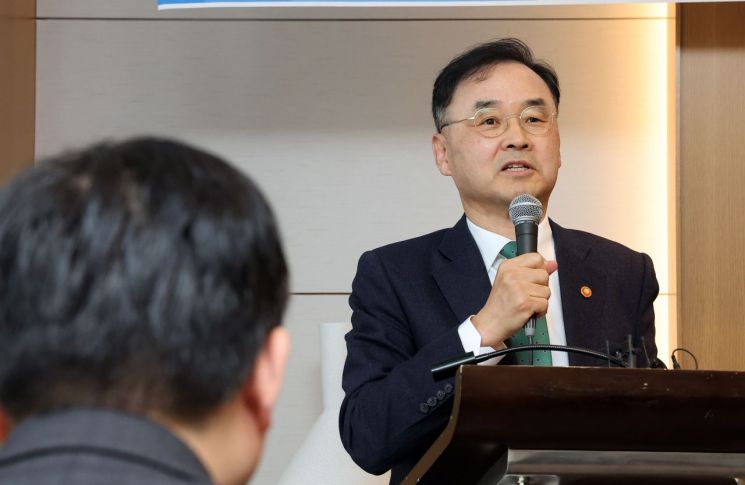
On November 3, at a press conference held at the Courtyard by Marriott Hotel in Sejong, Cha Jeongin, Chairperson of the National Education Commission, said regarding the "Mid- to Long-Term National Education Development Plan," "The previous commission initially aimed to create a draft by September this year, but was unable to do so, and it is already delayed. At this point, everything needs to be postponed by another year. We are currently preparing to announce the draft of the '2028-2037 plan' in September next year."
Previously, the former National Education Commission, while preparing the "2026-2035 Mid- to Long-Term National Education Development Plan," had set out a roadmap of "draft announcement in September 2024 - finalization in March 2025 - implementation in January 2026." However, after experiencing internal strife, including disruptions within the advisory committee of experts, the schedule for the National Education Development Plan was postponed by a year to 2027-2036. Subsequently, as the commission failed again to prepare a draft, the schedule was delayed by yet another year.
Chairperson Cha stated, "Some of the discussions from the previous commission regarding the Mid- to Long-Term National Education Development Plan will be carried forward. It is not possible to scrap everything that has been done so far."
He further commented on the "essay- and short-answer-based internal assessment and university entrance exam questions" discussed in the development plan, saying, "Both are reflected in university admissions, so we must make the decision very carefully," and added, "We need to thoroughly examine the ripple effects such a system would have on both public and private education sectors."
Regarding proposals from some in the education sector for a dual-track university entrance exam system or the integration of early and regular admissions, Chairperson Cha emphasized, "Consistency among the university admissions systems is crucial. Internal assessments, the university entrance exam, and university-specific evaluations must all operate in a highly coherent manner, so it is inappropriate to mention any one system out of the many in isolation."
He also remarked, "There have been several instances in the past where attempts to improve the university admissions system ended up only intensifying private education. While there is a sense of urgency, we must take our time and review the matter carefully rather than rushing."
Regarding the timing for announcing improvements to the high school credit system, such as easing credit completion requirements, Chairperson Cha said, "It should be possible within December," and added, "We will make a prompt decision to provide direction so that it can be implemented in March next year."
Meanwhile, on this day, Chairperson Cha proposed "separating medical school admissions tracks" and granting military service exemptions to residents in less popular specialties such as obstetrics and pediatrics as solutions to the shortage of essential medical personnel.
Chairperson Cha suggested dividing medical school admissions into three tracks: ▲ essential medical track ▲ physician-scientist track ▲ general admissions track. He stated, "The core of the medical personnel shortage problem is the lack of residents," and explained, "For residents in essential medical specialties, we could grant licenses valid only in those fields and require mandatory service in those specialties until they complete their residency."
He also cited obstetrics and pediatrics, which are specialties avoided by residents, as examples, saying, "Applicants to these specialties should be granted military service exemptions," and added, "Given the national significance of this issue, I believe such policies can be implemented." He further noted, "The policy ideas I have mentioned will be subject to in-depth discussion within the National Education Commission."
© The Asia Business Daily(www.asiae.co.kr). All rights reserved.

















