Korea-US Tariff Agreement, Restoration of Korea-China Relations
"Overall a Passing Grade... An A"
Korea-China and US-China Summits Also Successful
Experts Cite Resolution of Uncertainties in Economy and Security
Practical Follow-up Tasks Remain After Bilateral Summits with the US, China, and Japan
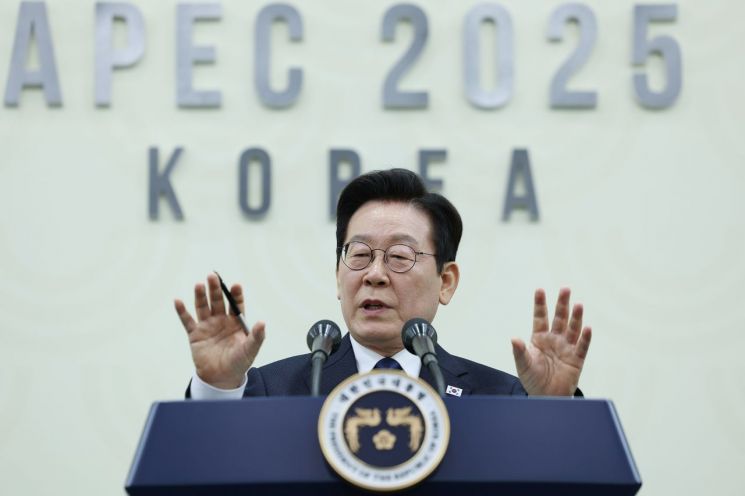
President Lee Jaemyung has smoothly completed the 'Diplomatic Super Week,' which included the ASEAN (Association of Southeast Asian Nations) Summit and the Asia-Pacific Economic Cooperation (APEC) Summit. In particular, at the 2025 APEC Summit held in Gyeongju, he led the adoption of the 'Gyeongju Declaration,' which consolidated the consensus of the participating leaders. Additionally, by holding consecutive bilateral meetings with the leaders of the United States, Japan, and China, and agreeing to expand cooperation in the fields of economy, security, and culture, the early phase of the 'pragmatic diplomacy' of the Lee administration has been evaluated as having passed its most significant test.
The Dramatic Conclusion of the Korea-US Tariff Negotiations Was the Highlight
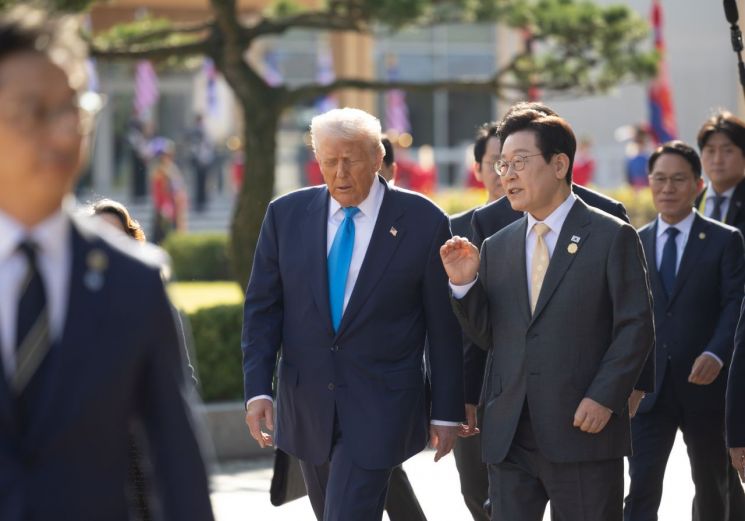
The most notable achievement during the APEC meeting was the dramatic conclusion of the follow-up negotiations on tariffs between Korea and the United States. There were concerns that the summit might end without tangible results, but on the morning of October 29, the day of the Korea-US summit, the US side informed Korea that they would accept the Korean proposal, reversing the situation. Korea and the United States agreed on 'annual investments of up to 20 billion dollars.' Furthermore, President Lee raised the issue of 'nuclear-powered submarine fuel supply' during a state visit by US President Donald Trump and secured approval, resolving a long-standing issue that had been stagnant for 30 years. President Trump praised Korea during the talks, saying, "Korea is the country that negotiated tariffs the best." The atmosphere was notably warm, with Trump repeatedly saying, "If you need anything, let me know anytime."
Korea-China Summit, "Full Restoration of Korea-China Relations"
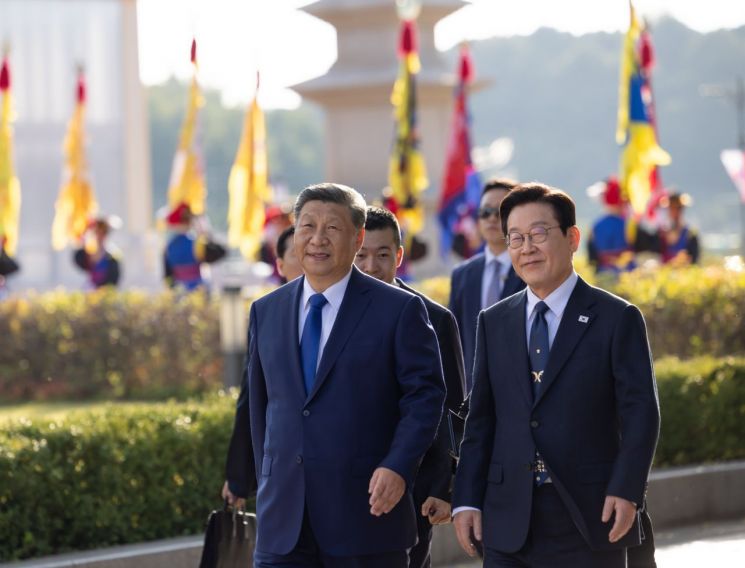
Following the Korea-US summit, the first Korea-China summit, held on the 1st, proceeded in a consistently amicable atmosphere for 95 minutes. Unlike the Korea-Japan summit, which was tense due to discussions on issues such as the East China Sea and human rights, the Korea-China summit reached a consensus on expanding cooperation in the fields of economy, security, and culture. In particular, the two countries agreed to regularize high-level channels and expand exchanges between people and regions, raising the possibility of easing or lifting the Hallyu (Korean Wave) restrictions. Wi Sunglak, Director of the National Security Office, explained at a briefing at the International Media Center (IMC) in Gyeongju, "We achieved the full restoration of Korea-China relations."
APEC 'Gyeongju Declaration' Reaches Final Agreement
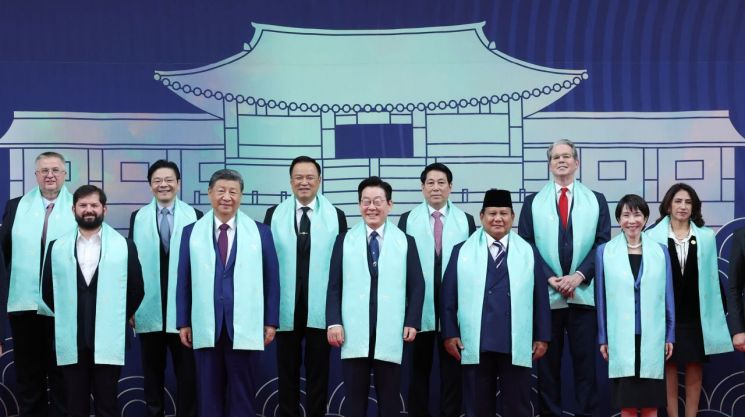
The APEC 'Gyeongju Declaration' was adopted after considerable difficulty, reflecting the consensus of all 21 member economies. Amid the spread of nationalism and protectionism, especially led by the United States, there were significant disagreements over the wording related to 'free trade.' However, after final adjustments to the wording until 7:30 a.m. on November 1, the closing day of the APEC Summit, a final agreement was reached. The 21 member economies included the phrase, "We will promote economic integration in the Asia-Pacific region in a market-driven manner, including discussions on the Free Trade Area of the Asia-Pacific (FTAAP) agenda." The content related to 'free trade' was also included in the joint declaration of the Ministerial Meeting on Foreign Affairs and Trade (AMM).
Experts Evaluate the Outcome as "Successfully Concluded"
Experts have evaluated the APEC Summit and the major bilateral meetings as having been successfully concluded. Choi Changryeol, a special professor at Yongin University, stated, "Korea's diplomatic standing has risen," and added, "Overall, it was a success." He continued, "Although the US and China were heading toward conflict, at least a customary truce was achieved through the summit, and since this happened in Korea, it can be seen as beneficial to the national interest. Even though there are details to be discussed in the future, the broad framework has been agreed upon, so a difficult issue has been resolved."
Lee Sinhwa, a professor of political science and international relations at Korea University, said, "There was also 'K-Pop Demon Hunters,' and since there has been interest in modern Korean culture such as idol groups, holding the event in Gyeongju at a time when attention was also turning to our traditional culture, like museums, created a synergy effect." She added, "Holding it in Gyeongju was a significant boost to Korea's political and diplomatic stature."
Resolution of Uncertainties in Trade and Security
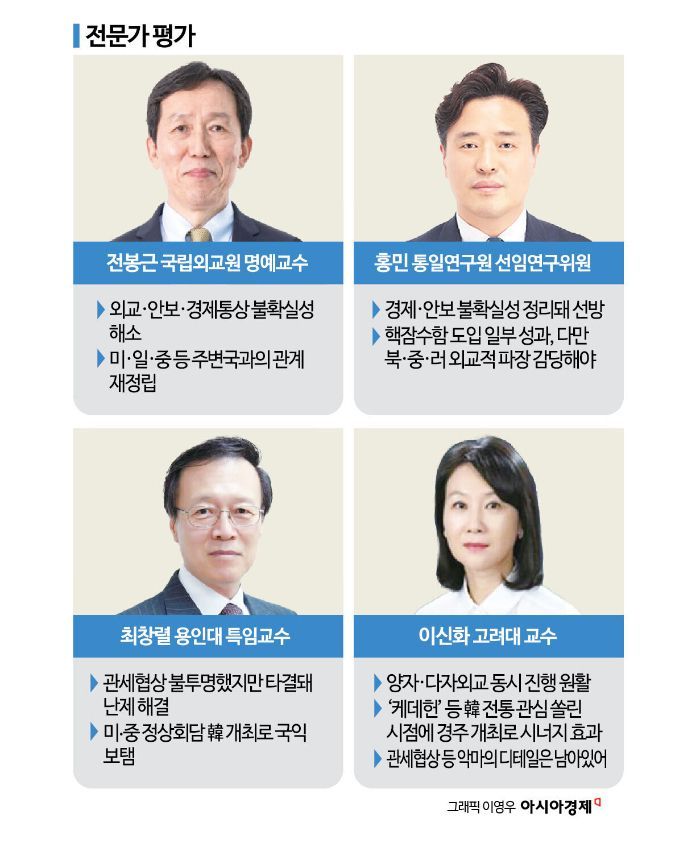
In particular, the resolution of uncertainties in the areas of trade and security has been cited as the most significant achievement. Hong Min, Senior Research Fellow at the Korea Institute for National Unification, said, "From the perspective of economic security, various uncertainties that existed have been partially resolved, so it can be evaluated as a good outcome." Jeon Bonggeun, honorary professor at the Korea National Diplomatic Academy, said, "The biggest achievement of this APEC Summit is that uncertainties in diplomacy, security, and economic and trade relations, such as the Korea-US tariff negotiations and alliance modernization, have been resolved." He added, "It deserves an A grade." He further stated, "Trust was built and communication channels were confirmed between the leaders of neighboring countries such as Japan and China. Relations with the United States, China, and Japan had been unstable, causing significant public anxiety, but a foundation for a more stable new beginning has been laid."
Detailed Follow-up Tasks to Be Addressed Practically
There were also opinions that preparations should be made for detailed follow-up tasks to be addressed practically after the APEC Summit and the bilateral meetings with the United States, China, and Japan. Professor Choi commented on Korea-China relations, "Relations had cooled since 2016, but since the two leaders met and agreed in principle to restore relations, it is meaningful." However, he added, "On issues such as dialogue with North Korea or denuclearization, we did not hear anything from China, so these remain diplomatic challenges to be addressed."
Research Fellow Hong noted that, regarding the introduction of nuclear-powered submarines, the greatest achievement in the field of diplomacy and security, "While it can be seen as an achievement, Korea now faces the challenge of dealing with diplomatic repercussions related to North Korea, as well as China and Russia." He continued, "Possessing nuclear-powered submarines could further worsen inter-Korean relations, make US-North Korea dialogue more difficult, and provoke China and Russia, potentially triggering a 'nuclear domino' effect." Professor Lee added, "We need to keep an eye on the details of the Korea-US tariff negotiations and other issues where the devil is in the details."
© The Asia Business Daily(www.asiae.co.kr). All rights reserved.



















