The supply of apartment units in the Seoul metropolitan area is decreasing significantly, and the resulting supply-demand imbalance is expected to further intensify the new-build premium.
According to data released by KB Real Estate on October 27, the number of new apartments scheduled for occupancy in the metropolitan area next year is projected to be 83,622 units, a sharp decrease of 35.3% compared to this year’s 129,241 units. This is the lowest supply since 2000 and is expected to mark the first time since 2013 (94,230 units) that the annual supply will fall below 100,000 units.
The problem is further compounded by a decline in leading indicators of housing supply, such as building permits and construction starts. According to Statistics Korea, the number of building permits issued in the metropolitan area was 303,255 units in 2021, but only 85,346 units were recorded this year (from January to July). Construction starts in the first half of this year also fell by 8.1% compared to the same period last year.
Typically, construction begins within two years of obtaining a building permit, and occupancy starts about three years after that. Therefore, in the metropolitan area, the supply shortage is likely to worsen for the next two to three years.
As a result, the perception is spreading that securing a new apartment at this time could be an opportunity to buy at a low point, leading to increased interest in new apartment complexes throughout the metropolitan area.
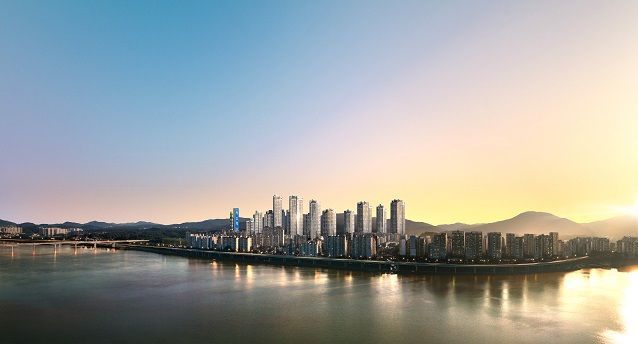
In fact, 'Deokso Station Raon Private River Foret,' a new development in Namyangju, Gyeonggi Province, has recently seen a surge in inquiries from potential buyers.
'Deokso Station Raon Private River Foret' consists of 10 buildings with three basement levels and 29 floors above ground, offering a total of 999 units ranging from 39 to 114 square meters of exclusive area. Notably, the complex is being supplied at a reasonable price compared to nearby developments, and a flat-rate contract deposit of 10 million won has recently been implemented, significantly reducing the initial financial burden. Furthermore, the complex is not included in the regulated areas expanded by the real estate measures announced on October 15, so financing conditions are relatively favorable, attracting even more attention.
The complex is a station-area development located about a five-minute walk from Deokso Station on the Gyeongui-Jungang Line and KTX, allowing access to Cheongnyangni Station in about 20 minutes and Jamsil Station in about 30 minutes. Additionally, Deokso Station is planned to be served by the GTX-E and GTX-F lines, and the F line will be directly connected to the D line, enabling direct, transfer-free travel from Deokso Station to Gangnam.
Moreover, the nearby Deokso Sam-Pae Interchange provides easy access to Olympic-daero, Seoul Ring Expressway, Bukbu Expressway, and Seoul-Yangyang Expressway, making it possible to reach Gangdong-gu and Jamsil in Seoul in about 20 minutes, while also offering excellent connectivity to areas outside the metropolitan region.
Furthermore, the complex is located in Wabu-eup, which is home to a local high school, making students eligible for the special university admissions program for rural areas. Prestigious schools in Namyangju, as well as Deokso High School, Deokso Elementary School, Wabu Middle School, and Yebong Middle School, are also nearby, providing excellent educational conditions for children.
The residential environment is also highly favorable. The complex is adjacent to the Han River, offering river views for some units, and the Sam-Pae District of Hangang Park, which is the size of 33 soccer fields, is within walking distance. Deokso Yusuji Ecological Park and Wolmuncheon are also close by.
The future value of the area is also promising. Deokso New Town, where the complex is being built, is a redevelopment project in Deokso-ri, Wabu-eup, Namyangju, Gyeonggi Province, and will feature approximately 8,500 residential units and various amenities across nine zones, leading to expanded infrastructure and improved living conditions. In addition, large-scale development projects such as the Yangjeong Station Area Urban Development Zone and Wangsuk 2 District are underway nearby, which are expected to further enhance the residential environment in the future.
The development is also highly rated for its product quality, thanks to various specialized design features. In particular, there will be ample parking space, with 1.77 parking spaces per unit, minimizing parking conflicts among residents. The floor plans focus on small and medium-sized units, which are highly preferred by buyers, making it easier to attract a wide range of demand. Additionally, a children's park of about 600 pyeong (approximately 1,983 square meters) will be created within the complex, allowing residents to enjoy an eco-friendly living environment.
Meanwhile, the promotional center for 'Deokso Station Raon Private River Foret' is located in the vicinity of Guri Station, Inchang-dong, Guri, Gyeonggi Province.
© The Asia Business Daily(www.asiae.co.kr). All rights reserved.

















