Large Quantities of Nanoparticles Detected in Paper Cups, Both Domestically and Internationally
Concerns Over Health Effects Such as Immune Cell Inflammation and Hormone Disruption
Countless paper cups pass through our hands every day. Takeout coffee from cafes and water served during office meetings are all poured into disposable cups. Statistics show that more than 3 billion paper cups are used annually in South Korea alone. While paper cups have become a symbol of convenience and an everyday necessity, a growing body of research warns that hidden health risks lurk behind this convenience. When hot beverages are poured into paper cups, microplastics and chemicals can leach from the inner coating layer and be absorbed into the human body.
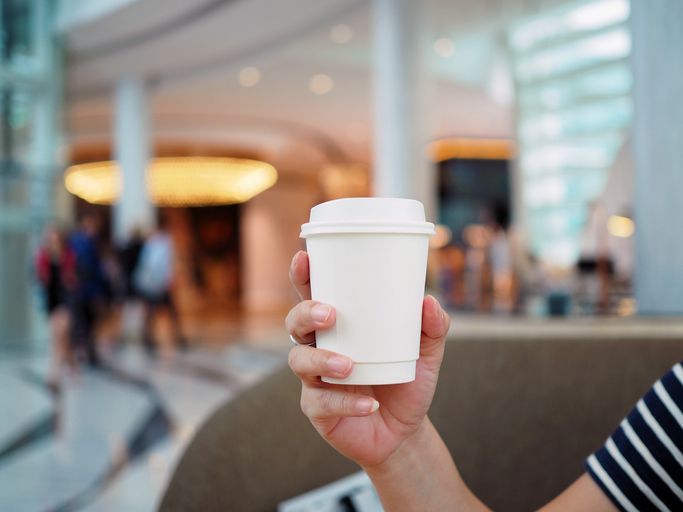
The inside of disposable paper cups is lined with a thin plastic film made of polyethylene (PE) or polypropylene (PP) to prevent leaks. The problem is that this coating cannot withstand high temperatures of 80 to 90 degrees Celsius and gradually melts. According to a study published in the international journal Science of the Total Environment, when 95-degree water was poured into a paper cup and left for just 20 minutes, hundreds to thousands of microplastic particles per liter were detected. The U.S. National Institute of Standards and Technology (NIST) warned that "the longer the exposure to high temperatures, the more dramatically the release increases."
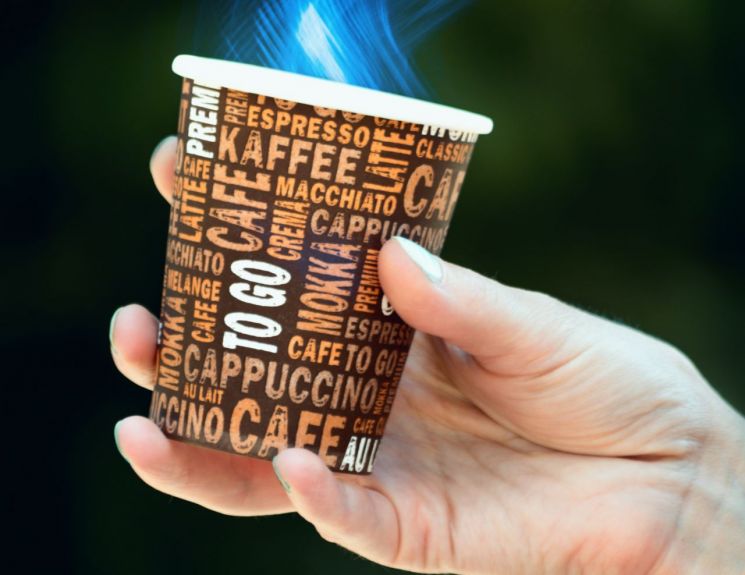 When hot beverages are poured, microplastics and chemicals can leach from the inner coating layer of paper cups and be absorbed into the human body. Pixabay
Similar results have been confirmed in South Korea. A research team at Inha University published a paper in the international journal Chemical Engineering Journal last year, reporting that when hot water was poured into a paper cup coated with polyethylene, plastic particles as small as one hundred-thousandth the thickness of a human hair (in nanometers) were detected. The researchers used nanopore sensing technology to measure these ultra-fine particles in real time and also confirmed that these particles promote inflammatory responses in immune cells. The analysis suggests that the smaller the particles, the more easily they are absorbed by the body, which can lead to chronic inflammation and cell damage over time.
The World Health Organization (WHO) has pointed out that "when microplastics enter the human body through food or beverages, there is a possibility of increased immune response and oxidative stress." Some studies have suggested that these micro-particles can disrupt the balance of gut bacteria and may cause inflammation in the liver or kidneys. Other research has raised concerns that long-term exposure could be linked to cell damage, hormonal disruption, and even cardiovascular diseases.
 When hot beverages are poured, microplastics and chemicals can leach from the inner coating layer of paper cups and be absorbed into the human body. Pixabay
Another concern is per- and polyfluoroalkyl substances (PFAS). Some paper cup waterproof coatings contain PFAS, which, once inside the body, are barely broken down and tend to accumulate. A study by the University of Michigan in the United States reported that groups with higher blood concentrations of PFAS had a more than 40% increased risk of high blood pressure. However, there is still insufficient evidence to conclude that paper cups themselves are a direct cause.
Experts advise that "leaving hot beverages in paper cups for extended periods or reusing them accelerates damage to the coating, increasing exposure." They recommend that "using reusable cups is the most practical preventive measure." According to a survey by the Korea Consumer Agency, the amount of microplastics detected in reusable tumblers was about one-fourth that of disposable paper cups.
The environmental issue cannot be overlooked either. Because paper cups are bonded with both paper and plastic, they are almost impossible to recycle. Discarded cups eventually break down into microplastics, polluting the soil and oceans.
Ultimately, the path to protecting both our health and the environment is simple. To enjoy the comfort of a warm cup of tea without ingesting the 'invisible particles' that may dissolve within, we should start carrying a tumbler from today. This small action is the first step toward safeguarding both our bodies and the planet.
© The Asia Business Daily(www.asiae.co.kr). All rights reserved.



















