"Threat to Livelihoods, Infringement on Consumer Convenience"
Improving Working Conditions Requires Practical Institutional Reforms
Recently, the National Courier Workers' Union under the Korean Confederation of Trade Unions (Courier Workers' Union) demanded a ban on early morning (nighttime) deliveries, citing the need to improve working conditions for delivery drivers. In response, organizations representing small and medium-sized business owners strongly objected, arguing that such a measure would threaten the livelihoods of small business owners and undermine consumer convenience. They urged the government to respond with caution.
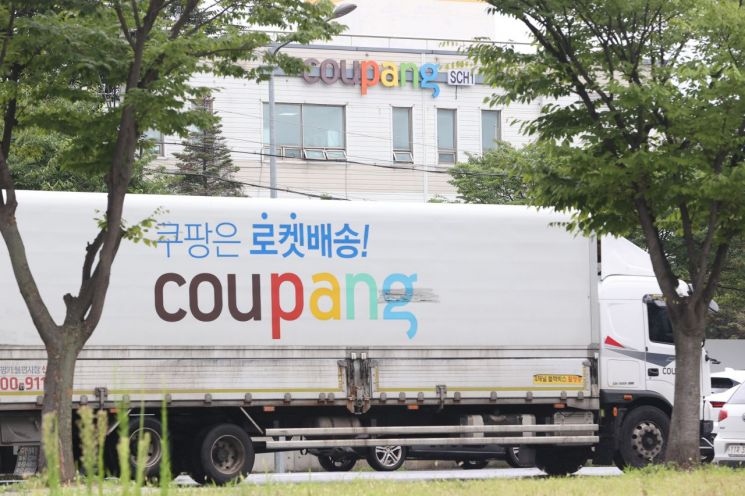
The Korea Platform Store Merchants Association stated in a declaration released last month, "The Courier Workers' Union's demand to halt early morning deliveries is an anti-economic act that tramples on the livelihoods of small business owners and online sellers," adding, "It is an irresponsible claim that pours cold water on the government's efforts to revive the economy."
On the 22nd, at a meeting organized by the Ministry of Land, Infrastructure and Transport titled "Social Dialogue Forum to Address Overwork Issues for Delivery Drivers Working at Night and on Holidays," the Courier Workers' Union proposed a complete ban on deliveries between midnight and 5 a.m. and suggested operating a daytime delivery system divided into morning and afternoon shifts. The union advocated for eliminating early morning deliveries, leaving only morning and afternoon deliveries, and also demanded compensation measures for the resulting decrease in drivers' income.
In response, the association emphasized, "Early morning delivery is not just a simple logistics service; it is a key pillar of the people's economy, providing stable sales channels for small business owners, convenience for consumers, and job creation for workers. If it is discontinued, self-employed business owners will lose sales opportunities, consumers will lose convenience, and even workers who wish to work at night will lose their means of livelihood. This is not coexistence, but destruction."
The Korea Federation of Micro Enterprises also stated, "Early morning delivery is not a business exclusive to large retail companies; it is an ecosystem relied upon by countless small food companies, suppliers, farms, and small logistics firms. Halting deliveries would lead to severed business networks and a sharp drop in sales, directly threatening the survival of small business owners." The federation also pointed out that "a significant number of nighttime delivery workers and small business owners voluntarily choose this work arrangement," adding, "Depriving people of their freedom to work and means of livelihood under the pretext of protecting workers is not justifiable."
Both organizations stressed the need for realistic and balanced institutional improvements, such as adjusting working hours, guaranteeing rest, and improving safety equipment, instead of banning early morning deliveries. They further stated, "The government and National Assembly should not be swayed by the unilateral logic of the labor sector, but should prepare reasonable institutional improvements that allow consumers, workers, and business owners to coexist," adding, "Early morning delivery is an important foundation of the people's economy, built together by small business owners and consumers."
© The Asia Business Daily(www.asiae.co.kr). All rights reserved.

















