Regional Concentration of Cancer Types Varies in Seoul, Gangwon, and Other Areas
Westernized Diets and Demographic Shifts Drive Changes
The patterns of cancer incidence in South Korea have been found to differ significantly by region.
The Asia Business Daily, citing the National Health Insurance Service's "2024 Regional Medical Utilization Statistical Yearbook," reported these findings.

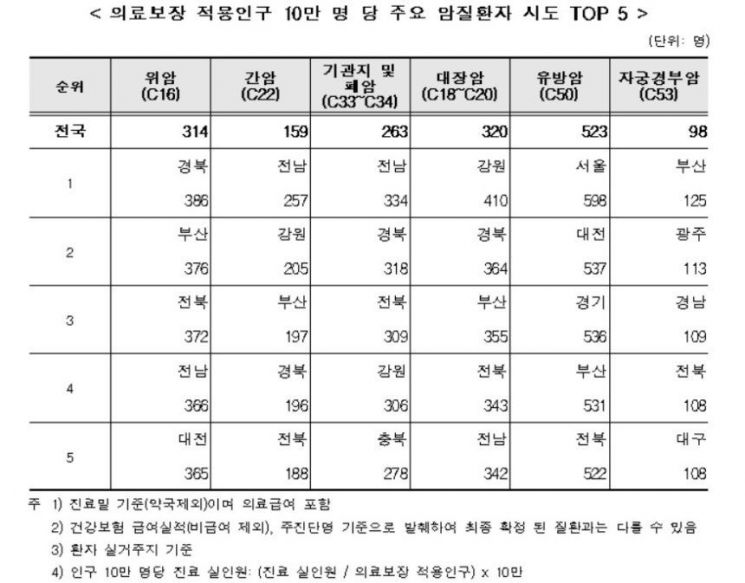
According to the statistics, breast cancer had the highest incidence, with 523 patients per 100,000 people covered by medical insurance last year. This was followed by colorectal cancer with 320 patients, lung cancer with 263, liver cancer with 159, and cervical cancer with 98 patients per 100,000 people.
Notably, for the first time, the number of colorectal cancer patients surpassed that of stomach cancer patients. While stomach cancer, once common in Korea, has decreased due to milder dietary habits and the widespread adoption of endoscopic screening, colorectal and breast cancers are believed to have increased as a result of lifestyle changes such as a more Westernized diet, higher rates of delayed or non-marriage, and weight gain.
The regions with the highest number of patients also varied by cancer type. Stomach cancer was most prevalent in North Gyeongsang, lung and liver cancers in South Jeolla, colorectal cancer in Gangwon, breast cancer in Seoul, and cervical cancer in Busan. This trend was also observed last year, indicating that the structural factors behind regional cancer incidence are becoming entrenched.
Regional differences were also evident in other major chronic diseases. Periodontal disease had the highest number of patients nationwide, followed by infectious diseases, hypertension, arthritis, mental disorders, and diabetes. Among these, hypertension was most prevalent in Gangwon, arthritis and diabetes in South Jeolla, and mental disorders in North Jeolla.
There were also clear regional disparities in medical expenses. The total cost of medical care covered by insurance was 128.0751 trillion won, with the national average monthly medical expense per person at 212,955 won. South Jeolla had the highest average at 267,235 won, while Sejong had the lowest at 171,485 won, a difference of 1.7 times.
Experts believe that these statistics reflect not just differences in medical utilization, but also health disparities among regions due to factors such as living environment, dietary culture, and the level of population aging. They particularly emphasized that for cancers with a high potential for prevention, early screening and region-specific health policies are crucial.
© The Asia Business Daily(www.asiae.co.kr). All rights reserved.
![Clutching a Stolen Dior Bag, Saying "I Hate Being Poor but Real"... The Grotesque Con of a "Human Knockoff" [Slate]](https://cwcontent.asiae.co.kr/asiaresize/183/2026021902243444107_1771435474.jpg)

















