Ministry of Health and Welfare to Amend Pharmaceutical Affairs Act Enforcement Rules by Year-End
Overuse of Over-the-Counter Drugs Can Also Cause Side Effects
The government has moved to curb the potential misuse of pharmaceuticals sold at so-called "warehouse pharmacies," which sell over-the-counter drugs in a manner similar to large supermarkets.
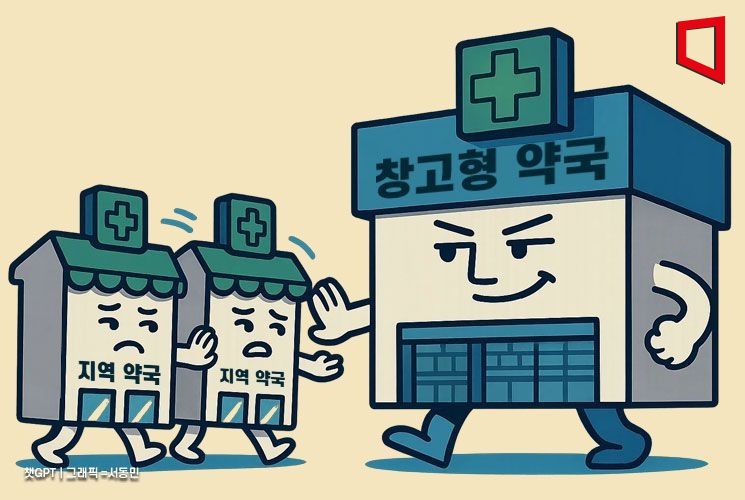
The Ministry of Health and Welfare announced on the 29th that it will pursue an amendment to the Enforcement Rules of the Pharmaceutical Affairs Act within this year. The amendment will restrict pharmacy names, signs, and advertisements that could mislead or excessively entice consumers.
This move is interpreted as an effort to proactively prevent potential risks that could arise if pharmaceuticals are consumed in large quantities like everyday necessities, following the recent increase in pharmacies displaying and selling large volumes of over-the-counter drugs in large retail spaces.
The Ministry stated, "It is difficult to conclude that all consumers visiting warehouse pharmacies will purchase and misuse drugs in large quantities," but added, "There is a possibility that some consumers may purchase more pharmaceuticals than necessary and misuse them."
In particular, the government judged that using names such as "warehouse," "wholesale," or "mart," which imply bulk or low-cost sales, or engaging in advertising that excessively attracts consumers, could encourage such risks. This is because even easily accessible over-the-counter drugs like headache or cold medicine can cause side effects if not taken according to the specified directions and dosages.
The government also drew a clear line against some views that warehouse pharmacies represent "pharmacies of the future." Under current law, pharmacies are not simply retail stores selling drugs; they are required to check patients' conditions, review prescriptions, accurately prepare medications, and help ensure safe usage. Warehouse pharmacies, however, focus solely on selling over-the-counter drugs rather than prescription dispensing, which is seen as deviating from the essential functions of a pharmacy.
However, there are limitations in management, as current laws do not separately define warehouse pharmacies, making it difficult to accurately assess their establishment status. Accordingly, the government believes it is necessary to clearly define warehouse pharmacies in the future by comprehensively considering not only the size or area of the pharmacy, but also whether they dispense prescriptions, how drugs are displayed, and their sales methods.
Previously, on October 15, Minister of Health and Welfare Chung Eun-kyung expressed agreement with concerns raised during the National Assembly Health and Welfare Committee's audit at the National Assembly in Yeouido, Seoul, that the emergence of warehouse pharmacies could disrupt the order of pharmaceutical distribution. Minister Chung stated, "It is necessary to thoroughly analyze what impact this will have on the overall pharmaceutical market and to prepare countermeasures." She added, "In the short term, we are preparing to revise the enforcement rules to prohibit misleading advertisements such as 'best or biggest mart-type special prices,' and we will also review ways to maintain accessibility to pharmaceuticals while considering the overall impact on the distribution order."
© The Asia Business Daily(www.asiae.co.kr). All rights reserved.

















