"Silla Gold Crowns: Power and Prestige" Exhibition
At Gyeongju National Museum Until December 14
The Gyeongju National Museum will hold a special exhibition titled "Silla Gold Crowns: Power and Prestige" in celebration of the APEC 2025 Summit and the 80th anniversary of the museum's opening. The exhibition will take place in Hall 3a of the Silla History Gallery from October 28 to December 14. For the first time in 104 years since Silla gold crowns were first introduced to the world, six gold crowns will be displayed together in one place. In addition, six gold belts symbolizing the dignity of the Silla royal family will also be showcased, offering a comprehensive look into the majestic world of beauty left behind by the golden kingdom of Silla.
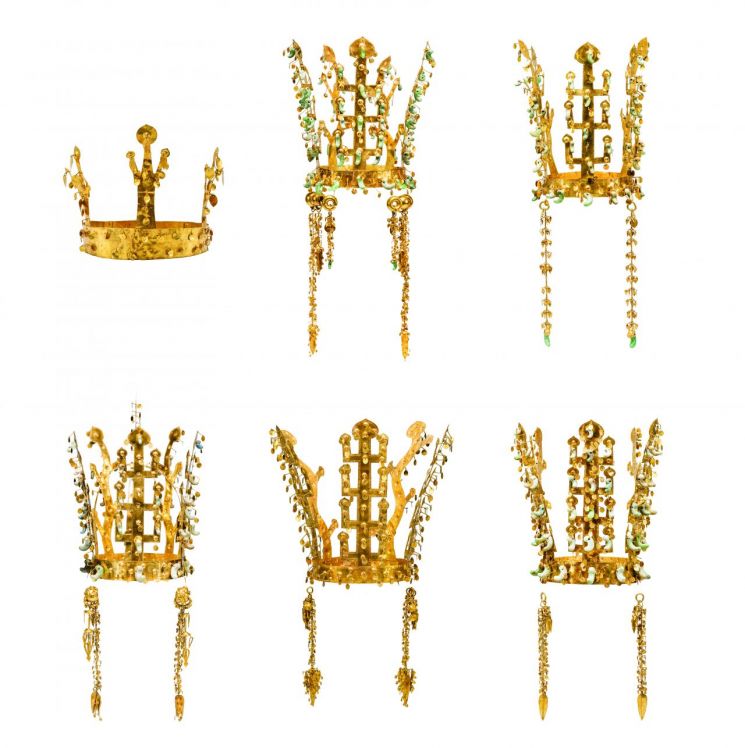
The main exhibits include the National Treasure gold crown and gold belt from the Geumgwanchong Tomb, the National Treasure gold crown and gold belt from the northern mound of Hwangnamdaechong Tomb, the National Treasure gold crown and gold belt from Cheonmachong Tomb, the Treasure gold crown and gold belt from Seobongchong Tomb, the Treasure gold crown and gold belt from Geumryeongchong Tomb, the Treasure gold belt from the southern mound of Hwangnamdaechong Tomb, and the Gyodong gold crown. In total, six Silla gold crowns and six gold belts will be unveiled. Additionally, 20 golden cultural artifacts excavated from Cheonmachong Tomb, such as gold earrings, bracelets, and rings, will be introduced. Among these, seven are designated as National Treasures and seven as Treasures.
The exhibition opens with an introductory video interpreting the forms and symbolism of Silla gold crowns. The branch-shaped upright ornaments represent sacred trees connecting heaven and earth, while the deer antler and bird-shaped decorations symbolize abundance and transcendent power. The comma-shaped jade and pendants signify vitality and regeneration, and the golden color itself is a symbol of absolute power and wealth.
The exhibition then unfolds the narrative of the discovery and owners of the crowns, starting with the gold crown and belt from Geumgwanchong Tomb, followed by those from Seobongchong and Geumryeongchong Tombs. The core section focuses on the gold crowns and belts of the king and queen unearthed from Hwangnamdaechong Tomb, highlighting that these were not merely ornaments but symbols of royal authority and prestige.
Finally, through the gold crown and golden ornaments from Cheonmachong Tomb, the exhibition explores the enduring power of gold beyond death. The image of the tomb's owner adorned in gold from head to toe reflects the Silla people's belief that wealth and power would continue in the afterlife.
The greatest significance of this special exhibition is that, for the first time, visitors can directly compare and closely examine the six representative Silla gold crowns and six gold belts in one place. Previously, the crowns were dispersed across different institutions, making comparison difficult. This exhibition allows for a direct observation of the differences and changes in form, style, and decoration. For example, while some crowns follow traditional forms with branch and deer antler-shaped upright ornaments, others, such as the Seobongchong gold crown with bird decorations or the Geumryeongchong gold crown without comma-shaped jade, showcase originality and experimentation.
This exhibition also reflects a century of academic research, comprehensively addressing the manufacturing techniques and purity analysis of the gold crowns, interpretations of their symbolism, and discussions on the origins of their materials. In particular, the exhibition presents video content on scholarly debates about whether the crowns were used for funerary purposes or actually worn, interpretations of the deer antler-shaped ornaments, and the latest research on the sources of gold and comma-shaped jade. Furthermore, digital magnification videos will allow visitors to closely observe details of the crowns that are difficult to see with the naked eye, enabling them to experience the exquisite craftsmanship and beauty of Silla metalwork up close.
Beyond the forms and symbolism of the crowns, the special exhibition also sheds light on the historical context and social significance of their creation. It offers a new interpretation of the reality of "the golden kingdom, Silla," and demonstrates how Silla's golden culture continues today as the prototype of K-culture.
As one of the official cultural events of the APEC 2025 Summit, this special exhibition is designed to introduce Silla's golden culture, the essence of ancient Korean culture and the root of K-culture, to the world. "The golden kingdom, Silla" was a hub of ancient East Asian exchange and international culture, and this exhibition highlights the international status of Silla at the time and traces of its cultural exchanges.
Yoon Sangdeok, Director of the Gyeongju National Museum, stated, "Through this exhibition, we aim to raise global awareness of the value of Korean cultural heritage and expand it into a platform for cultural diplomacy that connects the past and present, Gyeongju and the world."
© The Asia Business Daily(www.asiae.co.kr). All rights reserved.

















