Hana Securities: "Leading Sectors Remain Unchanged in a Bull Market"
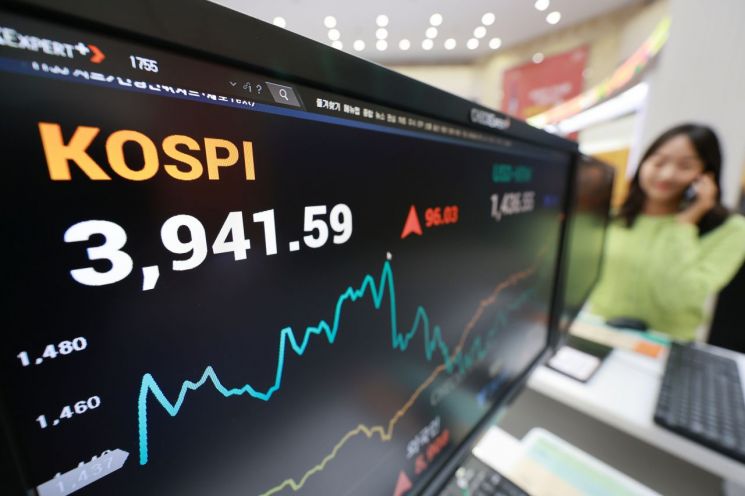
The KOSPI is experiencing an unprecedented upward trend. One notable feature of this strong market is that the leading sectors remain unchanged. Typically, leading sectors change when an unexpected system crisis causes the index to plummet, and a new upward cycle for the index begins.
On October 27, Hana Securities published a report titled "2026 Outlook: Which Sectors and Stocks Will Lead?" In this report, the company identified semiconductors, shipbuilding, machinery, secondary batteries, energy, healthcare, defense, and IT hardware as the sectors expected to lead the domestic stock market next year.
Leading Sectors Drive Profit Growth
Looking at the history of domestic and global stock markets: in the 1990s, the tech sector led the market, followed by the tech bubble burst (crisis); in the 2000s, the investment sector took the lead, then the global financial crisis occurred; in the 2010s, the consumer goods sector became dominant, followed by a sharp drop in international oil prices, a slowdown in the Chinese economy, and Federal Reserve tightening (crisis); and in the 2020s, the tech sector has once again taken the lead. The commonality among sectors that drive bull markets is that they lead profit growth during their respective eras.
In the case of the U.S. stock market, the leading stocks have changed over time, and as the number one company by market capitalization changed, the index also rose. For example, in the S&P 500 index, the top company by market capitalization shifted from GE to Microsoft in the 1990s, from Microsoft to ExxonMobil in the 2000s, from ExxonMobil to Apple in the 2010s, and from Apple to Nvidia in 2025.
Semiconductors and IT Hardware Lead Both Korea and the U.S.
Lee Jaeman, a strategist at Hana Securities, commented, "Although the leading stocks differ by era, the birth, growth, and decline of leading stocks follow a similar pattern. Leading stocks are born when sales grow based on a high rate of investment growth; they grow when operating margins rise and reach record highs; and they decline when operating margins start to fall."
Based on this analysis, Hana Securities suggested that in 2026, the sectors expected to expand their share in the U.S. S&P 500 index are semiconductors, software, media, technology and hardware, diversified financials, and pharmaceuticals/biotechnology. For the Korean KOSPI, there is a high correlation between the sales and operating margins of these sectors and those in the S&P 500. By applying changes in net profit share and market capitalization within the KOSPI, Hana Securities identified semiconductors, shipbuilding, machinery, secondary batteries, energy, healthcare, defense, and IT hardware as the leading sectors.
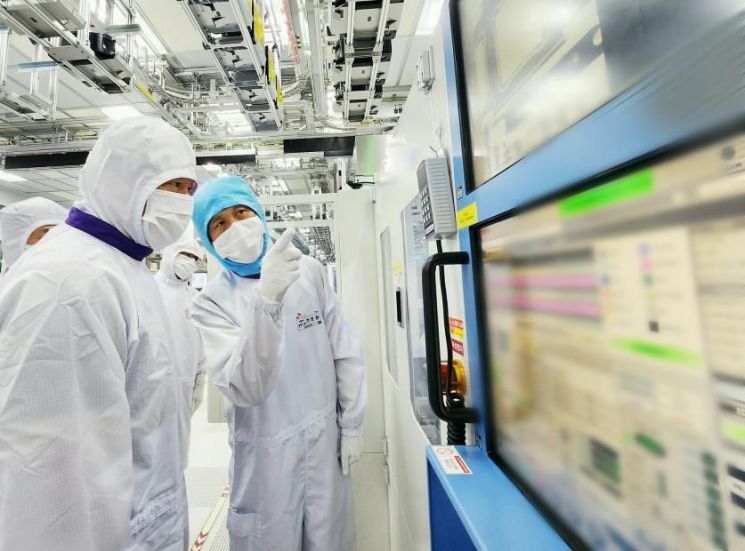
Hana Securities categorized next year's leading stocks into two groups. The first group consists of companies with ample cash reserves that can invest, and whose sales and investment returns increase as they invest. In the S&P 500, these include Microsoft, AMD, Caterpillar, GE Vernova, Newmont, Intuitive Surgical, and Tesla. In the KOSPI, these include Samsung Electronics, Hanwha Aerospace, Celltrion, Samsung SDS, Doosan Bobcat, and LG Innotek.
The second group consists of companies with strong pricing power that continue to set record-high operating margins, and whose profit growth is significant when operating margins rise. In the S&P 500, these include Nvidia, Alphabet, AbbVie, GE, Philip Morris, RTX, and Uber. In the KOSPI, these include SK Hynix, HD Hyundai Heavy Industries, Hanwha Ocean, Hyundai Rotem, HD Hyundai Electric, and Korea Aerospace Industries.
© The Asia Business Daily(www.asiae.co.kr). All rights reserved.
![Clutching a Stolen Dior Bag, Saying "I Hate Being Poor but Real"... The Grotesque Con of a "Human Knockoff" [Slate]](https://cwcontent.asiae.co.kr/asiaresize/183/2026021902243444107_1771435474.jpg)

















