Key Figure in Supplying 1.8 Tons of Fentanyl to the Americas
Apprehended and Extradited After Cross-Border Escape Attempt
A Chinese national identified as a key figure in the fentanyl supply chain for major drug distribution networks in the Americas has been apprehended after a cross-border escape attempt.
Omar Garcia Harfuch, Mexico’s Secretary of Security, announced on social media on the 24th (local time) that "an international drug trafficker was arrested in Cuba and extradited to the United States," according to a report by Yonhap News on the 25th.
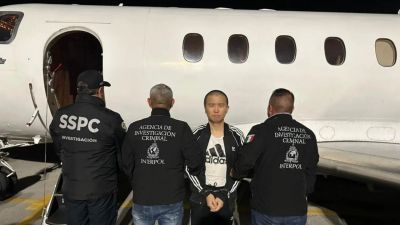
The trafficker, a Chinese national named Jiang Zidong, is also known by the alias "Brother Wang." He is considered a central figure in a network that distributed over 1,800 kilograms of fentanyl, 1,000 kilograms of cocaine, and more than 600 kilograms of methamphetamine to the United States and Central and South America.
Jiang Zidong collaborated with major Mexican crime organizations such as the Sinaloa Cartel and the Jalisco New Generation Cartel (CJNG), serving as a logistics broker connecting the procurement, manufacturing, and transportation of raw materials. He is also accused of dispatching Chinese manufacturers to local laboratories to transfer drug production techniques.
The U.S. government has described Jiang as a "vital link" between chemical precursor producers in China and manufacturing and distribution cartels in Mexico. The U.S. Department of Justice classifies him as one of the world’s most high-ranking criminals, on par with cartel leaders. Mexican prosecutors estimate Jiang’s annual criminal proceeds at approximately $150 million (about 210 billion won).
Before the pandemic, Jiang married a Mexican woman and obtained citizenship. Last year, as he was awaiting extradition to the United States, he was under house arrest in Mexico City. However, in July, he escaped surveillance, traveled to Havana, Cuba, on a private jet, and attempted to enter Russia using forged identification. After failing to enter Russia and returning to Havana, he was apprehended.
This extradition is being hailed as a significant achievement in simultaneously disrupting drug manufacturing and distribution networks spanning China, Mexico, and the United States. Ronald Johnson, U.S. Ambassador to Mexico, stated, "The more international cooperation is strengthened, the more we can reduce the damage."
Meanwhile, the U.S. government has recently made curbing the spread of fentanyl, which is 50 times more potent than heroin, its top priority. As a result, the number of fatal drug overdoses across the United States reportedly decreased by about 25% last year.
© The Asia Business Daily(www.asiae.co.kr). All rights reserved.

















