Younger Generations Seek New Experiences Abroad
Domestic Tourism Remains a Functional, Convenience-Driven Choice
Redesigning the Domestic Travel Experience Is the Key
The domestic travel market is facing a dual crisis: a lack of satisfaction relative to price and a shortage of compelling content. As a result, younger generations are increasingly looking abroad, while domestic tourism is becoming more reliant on demand from older adults. Experts point out that what is needed is not just price competition, but a fundamental "redesign of the travel experience."
According to a survey by the Korea Economic Research Institute released on October 25, the overall preference for domestic travel (39.0%) and overseas travel (38.4%) among all respondents was nearly identical. However, the results varied significantly by age group. Among respondents in their 20s and younger, the preference for overseas travel was 48.3%, nearly 1.7 times higher than the preference for domestic travel (28.6%). Similarly, in their 30s, overseas travel (45.9%) far outpaced domestic travel (33.8%). In contrast, those in their 50s (domestic 42.7% vs. overseas 34.9%) and those aged 60 and above showed a stronger preference for domestic travel.
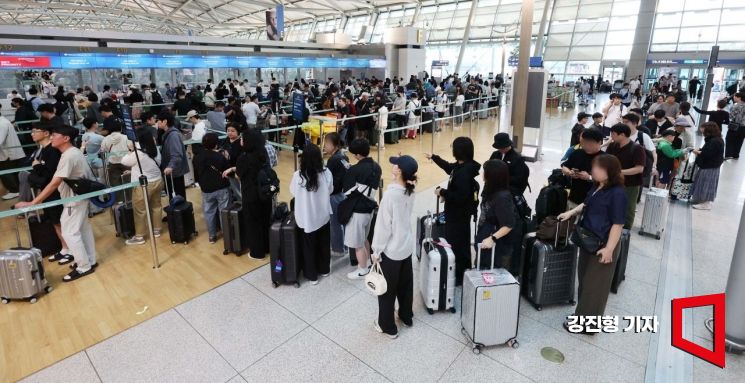
Younger Generations Look Abroad... Remaining Demand Comes from Older Adults
This indicates that the current domestic tourism market is sustained by the preferences of older and senior generations, while younger people have already shifted their interest entirely to overseas destinations. This suggests a structural risk, as the outflow of demand is likely to accelerate over time.
The most powerful reason for choosing overseas travel was a desire for "experiential value." The survey found that the top reasons for choosing overseas travel were "the opportunity for new and unique experiences" (39.1%) and "a wide variety of attractions and tourist sites" (28.1%). This clearly demonstrates that consumers prioritize the quality and diversity of experiences over economic factors or convenience.
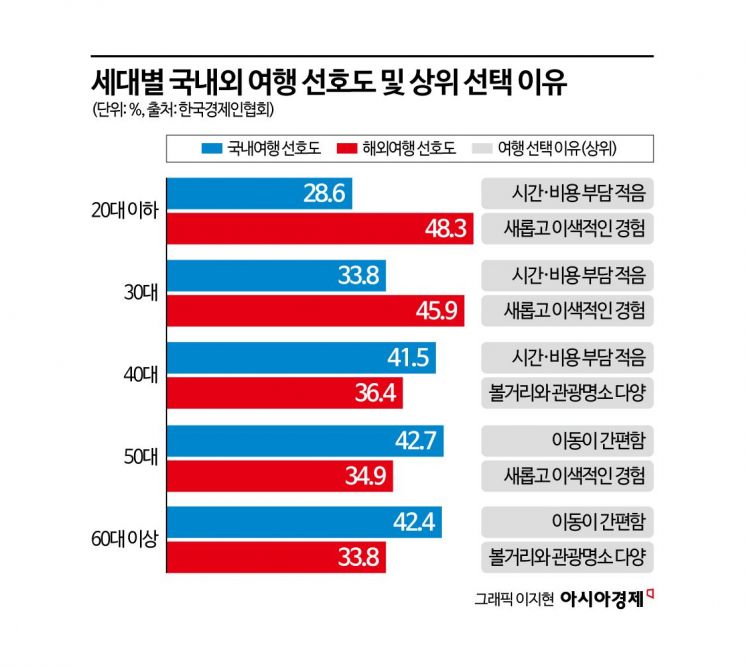
In contrast, reasons for choosing domestic travel are mainly focused on functional and practical aspects. The leading reasons for preferring domestic travel were "lower time and cost burden" (32.8%), "convenient transportation" (30.1%), and "no language or cultural barriers" (9.4%). All of these factors fall under the functional values of "convenience" and "efficiency."
The biggest source of dissatisfaction with domestic travel is the "decline in satisfaction relative to price." In the survey, 45.1% of respondents cited "excessively high prices at tourist destinations" as the main source of dissatisfaction with domestic travel. This is not just about high absolute prices, but rather a "value mismatch"-the sense that the quality and experience do not match the amount paid. In particular, dissatisfaction with accommodation prices reached 69%, and dissatisfaction with food and beverage prices was also high at 41%, indicating a deep-seated mistrust around core elements of the travel experience.
The second major issue is "a lack of distinctive tourism content." Some 28.2% of survey respondents pointed to this as a primary source of dissatisfaction with domestic travel. This reflects the perception that domestic travel activities are mostly limited to dining, enjoying natural scenery, and visiting cafes, with few opportunities for in-depth experiences that capture the unique identity and stories of each region.
The third issue is the "concentration of tourism demand in specific regions." When planning domestic travel, destinations are heavily concentrated in a few areas such as Seoul, Busan, Gangwon, and Jeju. Even if travelers want to explore new destinations, they often end up returning to familiar, well-known places due to a lack of information, inconvenient transportation, or insufficient attractions.
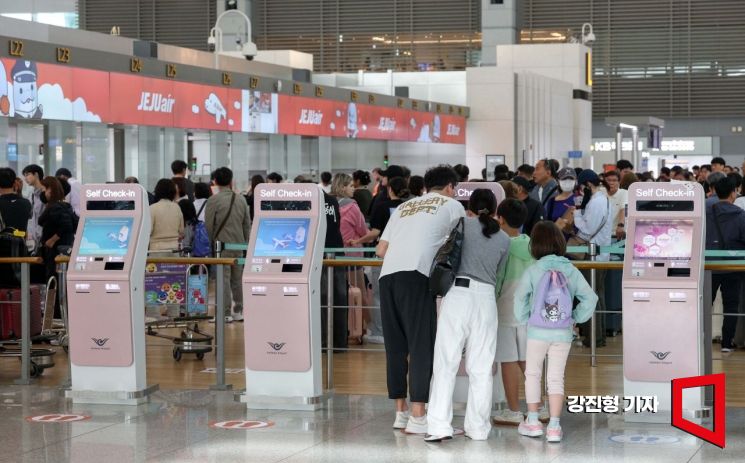
Monotonous Attractions... Content Shortage Is the Core Issue
To resolve the mistrust and undervaluation facing domestic travel, experts argue that it is necessary to fundamentally redesign the essence of travel products-the "value of the experience"-rather than simply controlling prices or improving infrastructure. Yanolja Research emphasizes that in order to transform domestic travel from an inferior substitute or complement to overseas travel into a destination with unique appeal, the paradigm must shift from hardware-focused development to software-driven value creation based on regional uniqueness.
The first strategy is to discover and reimagine each region's unique stories and culture-its "locality"-into immersive content. This is the most effective way to address the "content shortage" issue. Even familiar places can be reborn as completely new experiential spaces when their historical narratives, the lives of local people, and cultural contexts are combined.
Hong Seokwon, Senior Researcher at Yanolja Research, stated, "This approach strengthens regional identity and provides travelers with deep intellectual and emotional satisfaction, even without large-scale capital investment. Furthermore, it instills a sense of pride in local residents about their home, laying the foundation for sustainable tourism."
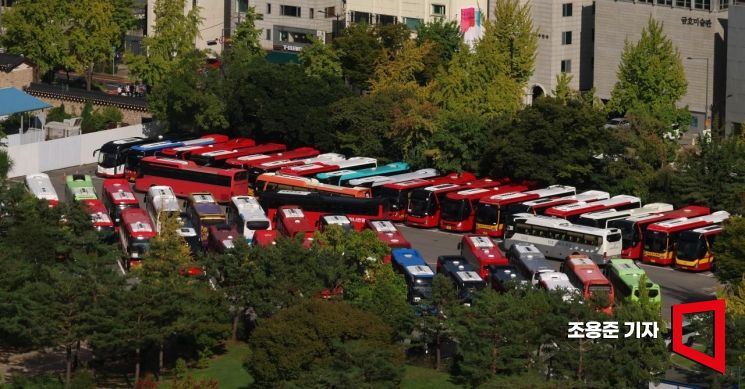
The second strategy is to overcome the "price-quality mismatch." Rather than simply lowering prices, the goal is to develop premium themed travel products that offer differentiated value worth paying a premium for. This demonstrates that it is possible to have extraordinary experiences within Korea, challenging the stereotype that domestic travel is always inexpensive.
Small-scale, customized travel products that delve deeply into specific themes such as gastronomy, art, history, architecture, wellness, and activities can target customers willing to pay more. Specifically, there is a need to actively develop unique themes tailored to the tastes of Millennials & Gen Z, such as "K-pop concerts," "K-content filming location pilgrimages," "Instagrammable photo tours," and "local Michelin dining tours." Through this, the value spectrum of domestic travel can be broadened and a high value-added market can be created.
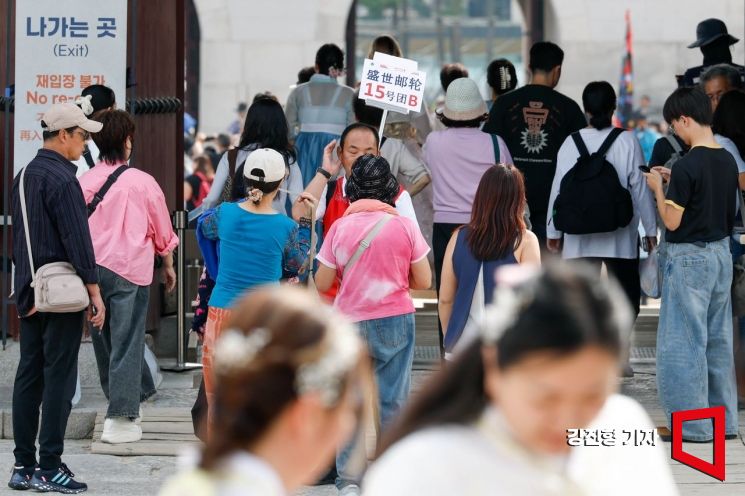
The third strategy is to resolve the "tourism concentration" issue by transforming underutilized spaces with potential into new tourism hubs. Abandoned industrial sites and old buildings in city centers scattered across the country are not wasted assets, but rather "opportunity spaces" where new value can be created through creative ideas.
Researcher Hong explained, "Local governments should build databases of underutilized spaces in their jurisdictions and actively pursue institutional support and regulatory relaxation to enable private investors and local communities to use these spaces creatively. Rediscovering forgotten spaces is not just about creating another tourist site-it can become a sustainable development model that preserves regional history and natural scenery while opening up future possibilities."
© The Asia Business Daily(www.asiae.co.kr). All rights reserved.
![User Who Sold Erroneously Deposited Bitcoins to Repay Debt and Fund Entertainment... What Did the Supreme Court Decide in 2021? [Legal Issue Check]](https://cwcontent.asiae.co.kr/asiaresize/183/2026020910431234020_1770601391.png)


















