On October 23, at the National Assembly Education Committee's audit held at the Gyeongnam Office of Education, strong concerns were raised over the shortage of essential medical residents and large-scale deficits at Busan National University Hospital and Gyeongsang National University Hospital.
Kang Kyungsook, a lawmaker from the Democratic Party, stated, "This year, the resident recruitment rate at Busan National University Hospital is in the single digits, and for most recruitments in the first half of this year at Gyeongsang National University Hospital, there were zero applicants for residency positions." She added, "It is inevitable to conclude that essential medical services such as surgery, pediatrics, and cardiovascular medicine have collapsed."
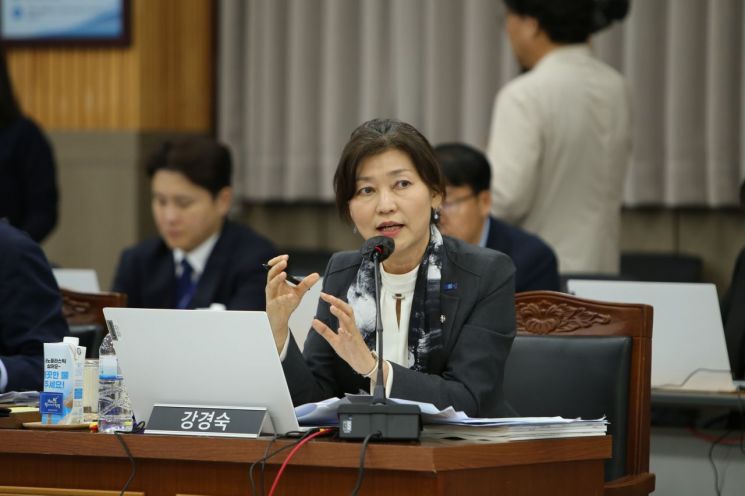 Democratic Party lawmaker Kyung-sook Kang is asking questions at the National Assembly Education Committee's audit held at the Gyeongnam Provincial Office of Education. Photo by Se-ryeong Lee
In response, Jeong Seonghoon, director of Busan National University Hospital, explained, "Young doctors seem to place great importance on work-life balance. In essential medical fields, there are many emergency situations where lives are at stake, so doctors cannot go home but must attend to patients, and the risk of dealing with patient deaths and major disputes deters applicants from even considering these fields."
He continued, "Even if allowances are increased and working conditions are improved, doctors still choose other specialties. Policy-level support is needed to address this issue," he added.
Ahn Sungki, director of Gyeongsang National University Hospital, also commented, "The avoidance of essential medical fields is not new, but it has worsened due to conflicts between the medical community and the government. Non-essential fields such as dermatology and cosmetic medicine yield high profits without legal risks, so residents feel there is no need to specialize in essential medical departments, and they also tend to prioritize work-life balance."
He further stated, "Because the region lacks infrastructure, young doctors prefer to work in the Seoul metropolitan area. Comprehensive financial support for residents working in regional hospitals and educational incentives for supervising specialists are necessary."
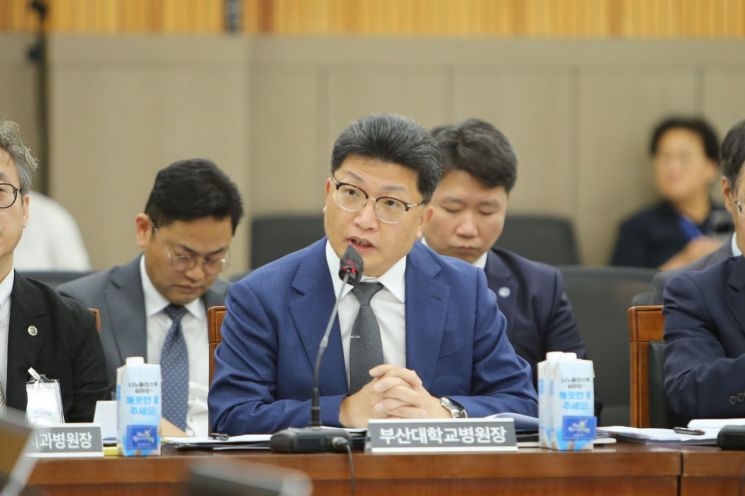 Sung Hoon Jung, director of Pusan National University Hospital, is responding at the National Assembly Education Committee's audit held at the Gyeongnam Office of Education. Photo by Se Ryeong Lee
Assemblywoman Kang also mentioned the exodus of faculty members and insufficient recruitment at the two university hospitals.
She pointed out, "In the first half of this year, Gyeongsang National University Hospital recruited 12 out of 104 openings, and in the second half, only 2 out of 22 positions were filled. Busan National University Hospital is facing a similar situation. This year alone, 20 professors resigned from Gyeongsang National University Hospital and 25 from Busan National University Hospital, indicating that faculty recruitment is not proceeding as needed."
Director Jeong of Busan National University Hospital responded, "During the conflict between the medical community and the government, the absence of residents increased the workload for professors, leading many to leave. Since September, some residents have returned, slightly improving the situation, but to prevent further faculty departures, we have created a dedicated night shift team to reduce the burden on professors."
Director Ahn of Gyeongsang National University Hospital appealed, "We are making every effort internally, but there are clear limitations. Even if we raise allowances, they do not meet professors' expectations, and the hospital is operating at a deficit, so we cannot afford to be lax."
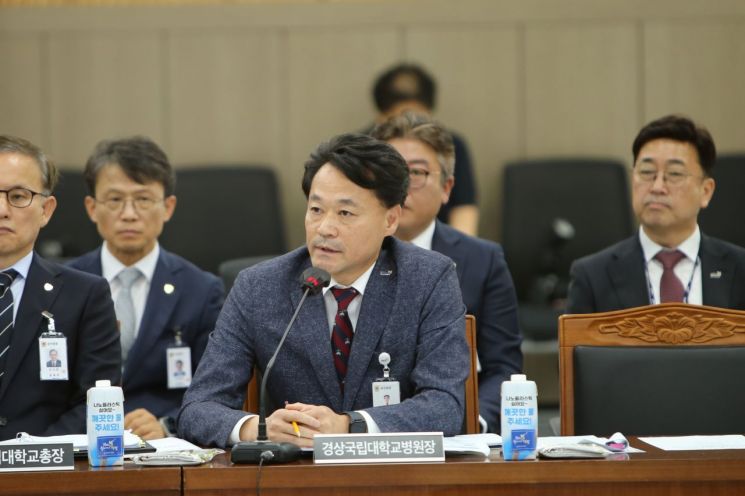 Ahn Sungki, director of Gyeongsang National University Hospital, is responding at the National Assembly Education Committee's audit held at the Gyeongnam Office of Education. Photo by Lee Seryoung
Assemblywoman Kang also addressed the large-scale deficits at Busan National University Hospital and Gyeongsang National University Hospital.
She said, "Last year, Busan National University Hospital recorded a loss of 55 billion won, and Gyeongsang National University Hospital had a loss of 30 billion won. Please clarify whether the main cause of these large-scale deficits is directly related to the absence of residents and whether the hospitals can resolve this on their own."
Director Jeong of Busan National University Hospital explained, "During the year and a half when resident positions were vacant due to resignations, professors remained, but even if anesthesiologists were available, surgeries could not be performed due to the absence of surgeons, and patients could not be admitted, resulting in no medical income and accumulating deficits. Although revenue has improved with the return of residents, the accumulated deficits are so large that substantial government support is needed."
Director Ahn of Gyeongsang National University Hospital emphasized, "Without government policy support, it is difficult for all national university hospitals to operate. The departure of residents led to a 30% decrease in patient volume and an annual loss of 53 billion won. In terms of patients, this is a significant loss, and urgent government support is needed."
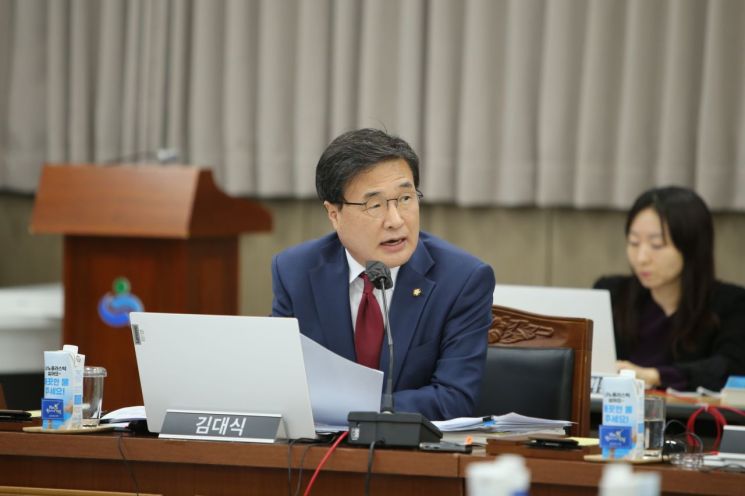 People Power Party member Kim Daesik is questioning at the National Assembly Education Committee's audit held at the Gyeongnam Office of Education. Photo by Lee Seryeong
Kim Daesik, a lawmaker from the People Power Party, also expressed concern, saying, "As of August, Gyeongsang National University Hospital's debt stood at 486.8 billion won, while its assets amounted to 465 billion won, resulting in complete capital erosion. If this were a regular company, it would be bankrupt, and if it were a listed company, it would be delisted."
Director Ahn of Gyeongsang National University Hospital expressed difficulty, stating, "We are doing our best to address the situation internally, but as a public institution, there are structural limitations, and financially, we rely on medical service revenue for 95% of our income."
Assemblyman Kim further pointed out, "Busan National University Hospital and Gyeongsang National University Hospital provide care for severe, emergency, high-risk surgeries, and rare diseases, yet neither hospital has liability insurance."
He added, "This indicates a lack of basic risk management systems, and not even purchasing basic insurance due to financial burdens creates distrust that compensation will be difficult in case of an accident."
Director Jeong of Busan National University Hospital responded, "We had insurance several years ago, but the difference between the premiums paid and the actual benefits received was so great that it was more advantageous to handle compensation, such as civil lawsuits, directly. While ideally there should be no need for compensation, when necessary, the hospital covers all costs from its own resources, and if insurance is needed, we will consider subscribing again."
Director Ahn of Gyeongsang National University Hospital stated, "We had insurance until 2006, but annual reviews showed the terms were inefficient. While we have been providing immediate compensation in the event of incidents, so it cannot be said that we do not protect patients and guardians, we will review this matter again."
© The Asia Business Daily(www.asiae.co.kr). All rights reserved.
!["The Woman Who Threw Herself into the Water Clutching a Stolen Dior Bag"...A Grotesque Success Story That Shakes the Korean Psyche [Slate]](https://cwcontent.asiae.co.kr/asiaresize/183/2026021902243444107_1771435474.jpg)


















