Pilot Program Standards for Telemedicine to Change from the 27th
Following the Lifting of the “Serious” Public Health Crisis Alert
30% Limit on All Treatments Reinstated...
Type 1 Diabetes Patients Still Allowed Hospital-Level Telemedicine
After last year’s conflict between the medical community and the government, telemedicine, which had been fully permitted, will revert to a pilot program centered on clinics. However, patients with type 1 diabetes will still be able to receive telemedicine services at hospitals, as they do now.
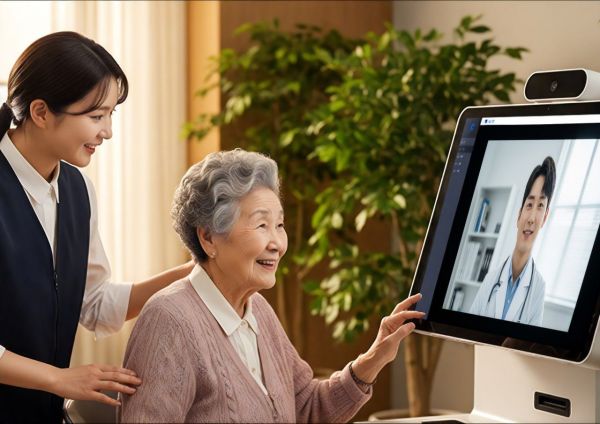
The Ministry of Health and Welfare announced on the 23rd that, following the lifting of the “serious” level of the public health crisis alert, it will revise and implement the standards for the telemedicine pilot program starting on the 27th.
The telemedicine pilot program was first implemented in February 2020 during the COVID-19 pandemic, allowing only follow-up patients at clinics to use the service temporarily. Since February last year, in order to minimize public inconvenience caused by disputes between the medical community and the government, the scope of the pilot program was expanded to include: allowing telemedicine at hospitals and higher-level medical institutions; suspending the rule that limits telemedicine to 30% of all treatments at each institution; and permitting telemedicine for first-time patients.
However, after the serious level of the public health crisis was lifted on the 20th and the emergency medical measures ended, the government decided to revise the standards so that the public can continue to access telemedicine services.
First, the standards that do not significantly affect public access to telemedicine will be implemented. Telemedicine will once again be mainly provided by clinics, and telemedicine at hospitals and higher-level medical institutions will be restricted. The rule limiting telemedicine to 30% of all treatments will also be reinstated.
Patients using telemedicine, including those with chronic diseases such as hypertension and diabetes, will be restricted to using clinics. However, certain patients will be exceptionally allowed to use hospitals and higher-level medical institutions. Even before the serious level was declared, patients with rare diseases or those requiring continuous management after surgery or treatment were permitted to use telemedicine at hospitals. Going forward, patients with type 1 diabetes will also be exceptionally allowed to receive telemedicine at hospitals.
The scope of patients eligible for telemedicine (including first-time and follow-up patients), which has a significant impact on users, will be gradually adjusted in accordance with the amendment to the Medical Services Act currently being discussed in the National Assembly. Until the law is passed, the current standards will remain in place temporarily.
The revised standards will take effect from the 27th of this month, and a two-week guidance period will be provided until November 9 to minimize confusion at medical sites.
Lee Hyunghoon, Second Vice Minister of Health and Welfare, stated, "With the end of the emergency medical system, we plan to reorganize the telemedicine pilot program, but we will proceed in a way that minimizes inconvenience to the public." He added, "We will work to institutionalize stable telemedicine services through discussions in the National Assembly."
© The Asia Business Daily(www.asiae.co.kr). All rights reserved.
![Clutching a Stolen Dior Bag, Saying "I Hate Being Poor but Real"... The Grotesque Con of a "Human Knockoff" [Slate]](https://cwcontent.asiae.co.kr/asiaresize/183/2026021902243444107_1771435474.jpg)
















