Number of Egg Freezing and Storage Cases in Korea Increases 16-Fold Over the Past Decade
On October 23, LG Chem announced that it will introduce and launch a full range of products required for in vitro fertilization (IVF) procedures, including egg and embryo freezing and thawing solutions, egg retrieval equipment, and embryo culture research supplies from Japan's Kitazato.
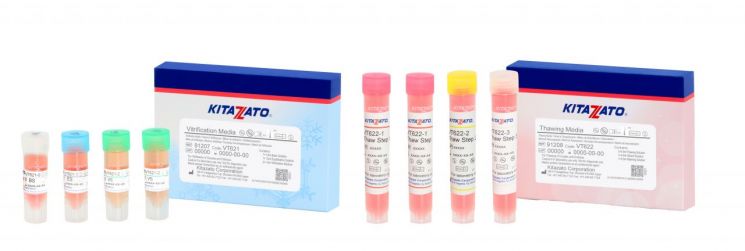 LG Chem's egg and embryo freezing kit (left in the photo) and thawing kit from Japan's Kitazato, launched domestically. LG Chem
In response to concerns about declining female fertility due to rising age at first marriage, the company has decided to expand its infertility business from its existing ovulation induction drug portfolio to a comprehensive lineup of IVF procedure products.
The egg and embryo freezing and thawing solutions that LG Chem will introduce to the domestic market have demonstrated high preservation rates for reproductive cells, as evidenced by a total of 295 studies. Based on the verified quality of these finished products, LG Chem aims to help customers who are preserving reproductive cells experience a more stable and predictable treatment process.
Starting with this partnership with Kitazato, LG Chem plans to expand its business with products that can proactively identify and address challenges faced by customers throughout the infertility treatment process. Kim Sungho, Head of LG Chem Specialty Care Division, stated, "We will become a partner who prepares together with our customers for the important moments in their lives, from the start of infertility treatment to successful pregnancy."
According to the Health Insurance Review and Assessment Service, the success rate of pregnancy through infertility procedures begins to decline for women from the age of 35, and for those aged 45 and above, the pregnancy success rate is only 4.5 to 9.4%.
In addition, overseas studies have shown that the age at which eggs are frozen has a greater impact on pregnancy success rates than the age at which preserved eggs are used. To have one child, women under the age of 38 at the time of egg preservation need to freeze and store 15 to 20 eggs, while those aged 38 to 40 require 25 to 30 eggs.
According to the Korea Institute for Health and Social Affairs, the number of egg freezing and storage cases in Korea increased about 16-fold, from 5,348 in 2013 to 85,159 in 2022.
© The Asia Business Daily(www.asiae.co.kr). All rights reserved.
![Clutching a Stolen Dior Bag, Saying "I Hate Being Poor but Real"... The Grotesque Con of a "Human Knockoff" [Slate]](https://cwcontent.asiae.co.kr/asiaresize/183/2026021902243444107_1771435474.jpg)
















