Concerns Grow Over Prolonged Shutdown as Trump Heads to Asia
Missing Economic Data Deepens Uncertainty in Monetary Policy
The U.S. federal government shutdown, which has reached its 22nd day as of October 23, 2025, has now become the second-longest shutdown in history. As the standoff between the two parties over the extension of subsidies for Obamacare continues, concerns are mounting that this shutdown could surpass the record set during the first Trump administration.
Due to the suspension of federal government operations, the release of key economic indicators has been repeatedly delayed, forcing the Federal Reserve to make monetary policy decisions without access to core statistics-a so-called "blindfolded" situation.
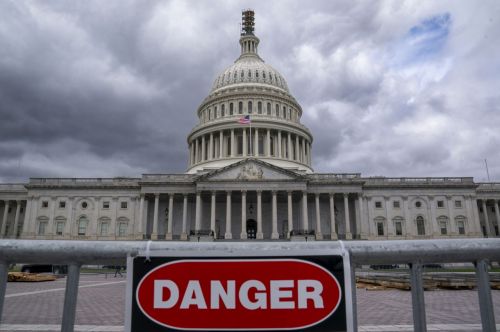
According to Bloomberg News and other sources on October 22 (local time), President Trump is scheduled to embark on an Asian tour later this week, increasing the likelihood that the shutdown will continue into November. Senate Democratic Leader Chuck Schumer and House Democratic Leader Hakeem Jeffries requested a meeting before the trip, but President Trump declined.
Although this shutdown is already the second-longest on record, there are concerns that if it drags on, it could surpass the longest shutdown, which lasted 35 days from December 22, 2018, during Trump’s first term.
President Trump met with Republican senators at the White House the previous day, but there is still no sign of a breakthrough in negotiations. The current shutdown began on October 1, after Congress failed to pass both the 2026 fiscal year budget and a stopgap funding bill. The Democratic Party insists that the temporary funding bill must include an extension of Obamacare subsidies, while the Republican Party opposes this, arguing that it provides excessive benefits to undocumented immigrants and maintaining their opposition.
President Trump stated, "Our message is very simple," adding, "We will not be fooled by their crazy schemes."
For the stopgap funding bill to pass the Senate, it would require unanimous support from Republican senators and at least eight Democratic defections, but the gap between the two parties remains wide. The temporary funding bill, which passed the House last month but was rejected in the Senate, is set to expire on November 21.
The problem is that as the shutdown continues, it is causing not only economic damage but also placing a significant burden on the Federal Reserve’s monetary policy operations.
Due to the shutdown, the Federal Reserve has not been able to obtain timely data on key economic indicators such as nonfarm employment, unemployment rate, and retail sales. Particularly, as the Fed faces the dilemma of having to respond simultaneously to slowing employment and rising inflation, the lack of data is compounding the challenges for monetary policy. The September Consumer Price Index (CPI), originally scheduled to be released on October 15, has also been postponed to October 24 due to the shutdown.
The Federal Reserve is expected to decide whether to implement an additional rate cut at the upcoming Federal Open Market Committee (FOMC) meeting on October 28-29. Last month, the Fed adjusted the benchmark interest rate to 4.0-4.25% per annum, lowering it by 0.25 percentage points from the previous level.
The economic impact is also becoming a reality. Federal government civilian employees, who received partial pay earlier this month, are expected to receive no pay at all starting this week. In particular, government contractors, suppliers, and service companies in the Washington, D.C. area, where federal government staff are concentrated, are expected to be hit in succession. The White House also warned that emergency accounting measures to pay military salaries and maintain the Supplemental Nutrition Assistance Program (SNAP) will soon reach their limits.
Anna Wong, Chief Economist at Bloomberg Economics, said, "The shutdown will temporarily raise the unemployment rate," but forecasted, "Once the government resumes operations, it could return to around 4.3%."
© The Asia Business Daily(www.asiae.co.kr). All rights reserved.
![Clutching a Stolen Dior Bag, Saying "I Hate Being Poor but Real"... The Grotesque Con of a "Human Knockoff" [Slate]](https://cwcontent.asiae.co.kr/asiaresize/183/2026021902243444107_1771435474.jpg)











