Fair Trade Commission Prepares Revision to "Consumer Dispute Resolution Standards"
Nine Sectors Targeted, Including Dining, Weddings, Lodging, and Travel
Standards for Industrial Goods, Cultural Goods, and Gift Certificates Also Updated
The Fair Trade Commission will significantly raise the penalty standards for no-shows (reservation no-shows) at restaurants and similar establishments in order to reduce damage to small business owners and prevent consumer disputes.
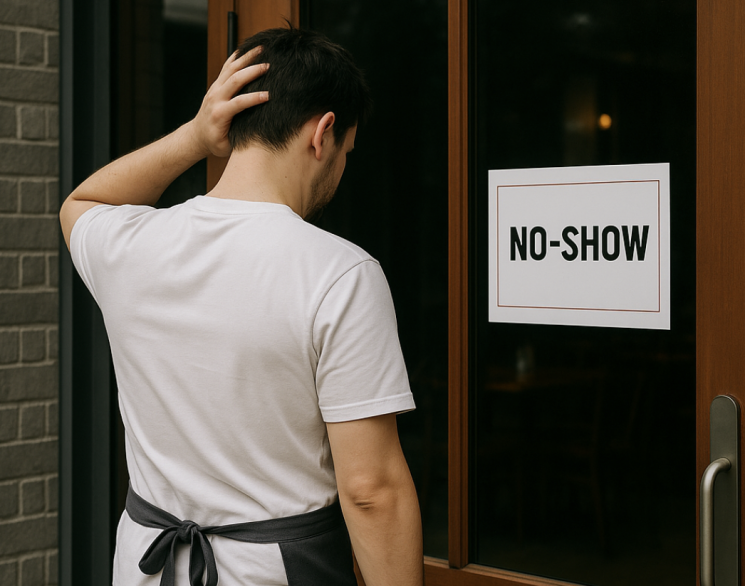 The Fair Trade Commission has raised the penalty standards to reduce the damage to small business owners caused by no-shows. An AI-generated image of a self-employed person affected by no-show damage.
On October 22, the Fair Trade Commission announced that it has prepared a revision to the “Consumer Dispute Resolution Standards” to ensure that disputes between business operators and consumers can be handled smoothly and fairly. The commission will hold an administrative notice period from today until November 11. The Consumer Dispute Resolution Standards serve as recommended guidelines for dispute settlements, applicable only when there are no separate legal provisions or explicit agreements.
This revision aims to reflect the changing consumer environment and clarify the standards for settlements. It targets nine business sectors, including study cafes, wedding halls, restaurants, lodging businesses, overseas travel agencies, sports facilities, and home appliance installation services, as well as three product categories: industrial goods, cultural goods, and new types of gift certificates.
The penalty for no-shows at general restaurants will be doubled from the current maximum of 10% of the total usage amount to 20% under the revised standards. In particular, restaurants such as omakase or fine dining establishments, which prepare ingredients and food based on advance reservations, will face even higher maximum penalties. This is because, in the event of a cancellation or no-show, ingredients may need to be disposed of that day, resulting in significant losses. The Fair Trade Commission has classified these as “reservation-based restaurants” and set the maximum penalty at 40%.
For general restaurants, in cases of large orders or group reservations-such as an order for 100 rolls of gimbap-if consumers are clearly notified in advance, a no-show penalty of up to 40% may be charged. The commission considered that the average cost ratio in the restaurant industry is about 30%. For example, if a customer orders 100 rolls of gimbap at 5,000 won each and fails to show up, the penalty could be 200,000 won, which is 40% of the total 500,000 won.
However, to prevent consumer harm, restaurants that intend to treat tardiness as a no-show must notify consumers of this criterion in advance. Also, if the penalty is less than the reservation deposit paid in advance, the difference must be refunded to the consumer. Depending on when the consumer notifies of the cancellation, the refund standard will be full, 50%, or 25% of the amount.
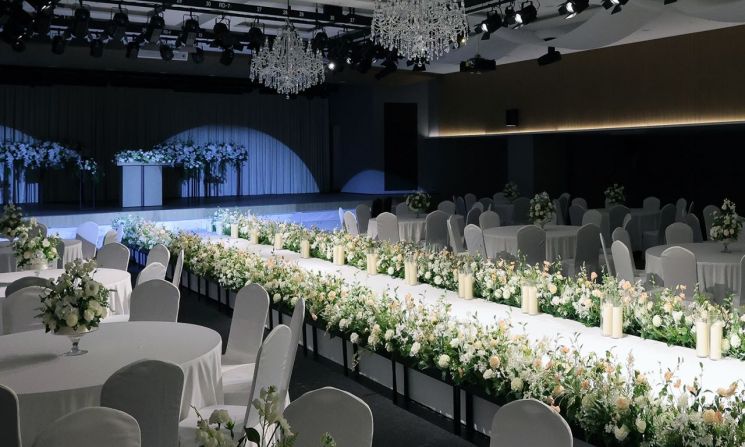
Realistic Penalty Standards for Wedding and Lodging Businesses
For the wedding industry, there have been concerns that the current standard-35% of the total cost as a penalty for same-day cancellations-does not sufficiently cover actual losses such as food waste. Accordingly, the commission will adjust the penalty standards as follows: cancellations 29 to 10 days before the wedding will incur a 40% penalty, cancellations 9 to 1 day prior will incur a 50% penalty, and same-day cancellations will incur a 70% penalty.
Additionally, in the case of hotels and lodging, if a natural disaster makes it impossible to use the accommodation, a free cancellation is allowed even on the day of the reservation. The revision clarifies that this applies not only to the location of the accommodation but also if a natural disaster occurs on any part of the route from the departure point to the accommodation.
For overseas travel agencies, the current standard allows free cancellation if a “government order” is issued. The commission has clarified that this refers specifically to Level 3 (Travel Advisory) and Level 4 (Travel Ban) travel warnings issued by the Ministry of Foreign Affairs.
Furthermore, the revision establishes new dispute resolution standards for study cafes, which have seen a rise in usage and disputes recently, and updates the standards to reflect recent changes in standard terms and conditions, such as cancellation fees for trains and express buses.
This revision is expected to take effect as early as this year after the administrative notice period.
The Fair Trade Commission stated, “This revision is intended to update the standards for fair and smooth dispute resolution in line with changes in consumer trends and industry conditions. We will continue to ensure that the Consumer Dispute Resolution Standards, established in 1985, flexibly respond to changes in the times and make a practical contribution to protecting consumer rights and improving consumer life.”
© The Asia Business Daily(www.asiae.co.kr). All rights reserved.


















