Handonghun Cites President Lee's Campaign Pledge and Remarks
"Completely Reversed in 130 Days... Must Explain to the Public"
Koo Yooncheol and Kim Yongbeom Signal Stronger Property Holding Taxes
Former People Power Party leader Han Dong-hoon criticized the government's real estate policy by referencing past remarks made by President Lee Jaemyung. On October 20, through his social media account, Han stated, "President Lee must personally explain to the public why he completely reversed his real estate policy pledges."

Han said, "President Lee's pledges were the exact opposite of those made by previous Democratic Party administrations. Instead of implementing demand-suppression measures such as heavy taxation and loan restrictions to forcibly control housing prices, he promised to expand supply. It was a clear commitment to do the opposite of the Moon Jae-in administration's real estate policy, which he acknowledged was flawed."
Han also shared President Lee's real estate-related remarks from the last presidential election. These included statements such as, "Every time we touch real estate taxes, it creates problems, so it's best not to intervene," "Let's not try to stop people who want to buy homes, nor suppress them with taxes," and, "(The national land ownership tax) lacks public acceptance."
He continued, "No matter how much President Lee is known for making false statements as a politician, he reversed a core campaign pledge just 130 days after taking office." Han added, "The Lee Jaemyung and Democratic Party administration has aggressively implemented demand-suppression measures such as making land transaction permits standard, enforcing loan restrictions, and imposing heavy taxes." He further criticized, "When public criticism mounted, Kim Yongbeom, the presidential secretary for policy, released a meaningless statement saying, 'We know the public dislikes the extreme demand-suppression policies introduced by the Democratic Party administration, but we did them because we could.'"
He added, "There was not a single word about why President Lee reversed his pledge to the public just a few months ago, nor why he lied. President Lee must not hide and should personally explain to the public why he reversed his pledge."
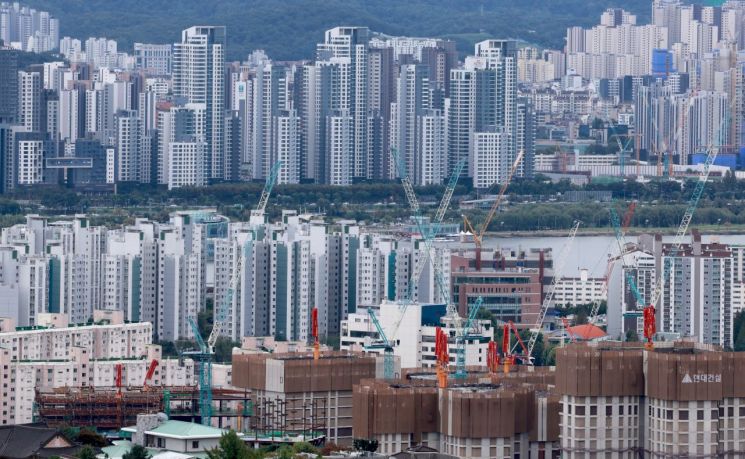
On October 15, the government announced the "10.15 Measures," which involved designating all 25 districts of Seoul and 12 areas in Gyeonggi Province as speculative zones, regulated areas, and land transaction permit zones. As a result, starting October 16, the loan-to-value (LTV) ratio for mortgages in regulated areas was tightened from 70% to 40% for those without a home (including those with one home under a disposition condition), while homeowners are now completely barred from taking out loans. Additionally, for homes valued at up to 1.5 billion won, the existing 600 million won loan cap from the "6.27 Measures" remains, but for homes valued between 1.5 billion and 2.5 billion won, the cap has been reduced to 400 million won, and for those over 2.5 billion won, to 200 million won.
Furthermore, Deputy Prime Minister and Minister of Economy and Finance Koo Yooncheol and Policy Secretary Kim Yongbeom have recently supported strengthening property holding taxes. On October 16, Deputy Prime Minister Koo stated, "In Korea, property holding taxes are low and capital gains taxes are high, so people tend to hold onto their homes instead of selling." He added, "If we were to impose a property tax of 1% on average, like in the United States, a home valued at 5 billion won would incur an annual property tax of 50 million won. In this case, the burden of holding expensive homes would prompt owners to sell, increasing market liquidity." Policy Secretary Kim also said in an interview with the YouTube channel 'SampyoTV' on October 15, "It is true that holding taxes are low," and emphasized, "We need to seriously review the entire system of acquisition, holding, and transfer taxes."
© The Asia Business Daily(www.asiae.co.kr). All rights reserved.
![Clutching a Stolen Dior Bag, Saying "I Hate Being Poor but Real"... The Grotesque Con of a "Human Knockoff" [Slate]](https://cwcontent.asiae.co.kr/asiaresize/183/2026021902243444107_1771435474.jpg)

















