Pranking Friends by Inserting Strangers into Home Photos
Experts Warn: "Not Just Harmless Fun... It Can Fuel Social Anxiety"
Recently, the 'AI Stranger Prank' has been spreading rapidly on social networking services (SNS), emerging as a social issue. This so-called 'AI hidden camera' content involves using artificial intelligence (AI) to digitally insert a stranger into photos of one's home, deceiving family members or romantic partners.
This trend reportedly began in the United States and the United Kingdom and has since spread to countries such as South Korea. For example, on TikTok, a challenge featuring AI-generated videos claiming "a homeless person entered my house" has gone viral, garnering millions of views. Domestic YouTubers and TikTokers are also creating similar videos, tricking their partners, family members, or even workplace supervisors using this format.
For instance, one YouTuber used AI to create images of an unfamiliar man eating or lying in bed inside her home and sent them to her boyfriend. Another user messaged her parents, saying, "There is a strange man in the house."
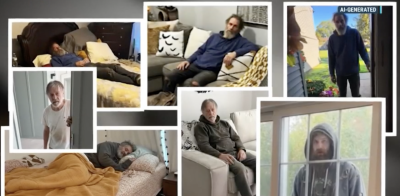
However, these pranks have become problematic as they pose real threats to public safety. In Michigan, United States, there have been several reported cases of citizens calling the police after seeing fabricated break-in photos. Similar incidents have occurred in the United Kingdom, prompting police to issue an official warning that "false AI pranks can interfere with actual crime response."
In South Korea, a TikTok user sent an AI-generated image of a homeless person entering the house to her mother, who then actually reported it to the police. The subsequent posting of the video on TikTok sparked further controversy.
Experts are warning that treating AI challenges as mere entertainment can lead to social anxiety and undermine public trust, emphasizing that these should not be regarded as simple SNS games.
One expert pointed out that, given the limited number of police officers, an increase in false reports could create gaps in emergency response, stating, "AI-generated fabricated scenes can paralyze real emergency reporting systems."
© The Asia Business Daily(www.asiae.co.kr). All rights reserved.

















