Commercial Production Targeted for 2028
Annual Output of 15.5 Tons of Gallium
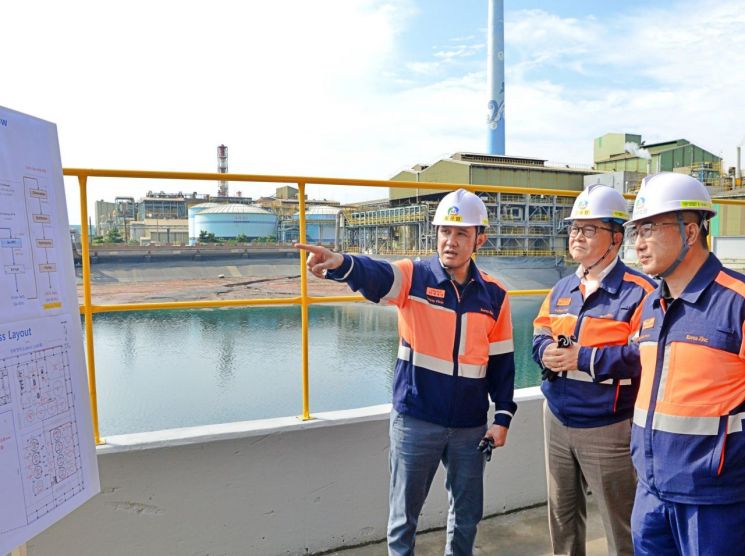
The company stated that it plans to invest approximately 55.7 billion won over two years, until December 2027, to establish a gallium recovery process at its Onsan smelter in Ulsan.
The Onsan gallium plant is scheduled to begin trial operations in the first half of 2028, with commercial production to follow. The facility aims to produce 15.5 tons of gallium annually, with expected annual revenue of 11 billion won.
Korea Zinc said, "By successfully commercializing and optimizing advanced gallium recovery technology through our in-house research center and core technical team, we have been able to reduce the cost of building the plant and expect to secure sufficient profitability."
Gallium is used as a raw material in advanced industries, including semiconductors, solar panels, lasers, night vision goggles, light-emitting diodes (LEDs), and high-speed integrated circuits. In South Korea, gallium is designated as one of 33 critical minerals under special government management in accordance with the Special Act on Resource Security.
This investment decision is expected to strengthen domestic resource security and contribute to the stability of global supply chains. Last year, China accounted for 98.7% of the world’s gallium production. Gallium is considered a critical mineral with high dependency on China in the global supply chain, and more than 70% of Korea’s gallium imports also come from China.
China imposed export controls on gallium and germanium starting in August two years ago, and further banned exports to the United States in December last year.
With securing gallium now a top priority for major countries and companies, Korea Zinc’s announcement of gallium production is expected to draw significant attention from the global advanced industry sector.
Additionally, Korea Zinc explained that it expects to secure more than 16 tons of indium-a strategic mineral and a by-product of the gallium production process-annually, which will provide additional revenue. Indium is a rare metal used in key advanced industries such as semiconductors and renewable energy. Like gallium, indium is heavily reliant on China, and its price has nearly doubled over the past five years.
As of last year, Korea Zinc produced approximately 150 tons of indium annually, accounting for about 11% of global demand. Excluding China, this is the largest production volume in the world.
© The Asia Business Daily(www.asiae.co.kr). All rights reserved.
![Clutching a Stolen Dior Bag, Saying "I Hate Being Poor but Real"... The Grotesque Con of a "Human Knockoff" [Slate]](https://cwcontent.asiae.co.kr/asiaresize/183/2026021902243444107_1771435474.jpg)
















