Purchase Volume Up 26.4% from Last Year
Freshly Harvested Rice Accepted Until End of November, Bagged Rice Until End of This Month
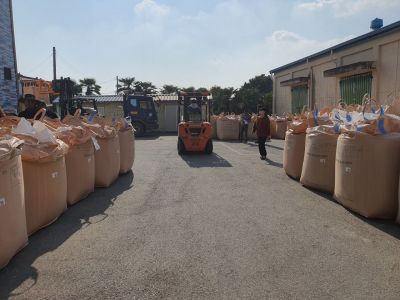 Jeollanam-do will purchase 190,000 tons of public reserve rice for the 2025 crop, the largest scale ever. Provided by Jeonnam Province
Jeonnam Province will purchase 190,000 tons of public reserve rice for the 2025 harvest. This year, the province plans to buy 101,000 tons of conventional rice, 29,000 tons of eco-friendly rice, 31,000 tons of freshly harvested rice, and 29,000 tons of rice for flour production.
This accounts for 30.5% of the national purchase volume of 625,000 tons and represents a 26.4% increase from the previous year, marking the highest volume ever. By year, the purchase volumes were 123,000 tons in 2021, 153,000 tons in 2022, 141,000 tons in 2023, and 151,000 tons in 2024.
The purchase period for freshly harvested rice is until November 30, with purchases made through local distribution facilities such as Rice Processing Complexes (RPC) and Drying and Storage Centers (DSC) for farmers' convenience. Bagged rice will be purchased until December 31. Purchases are made directly from farmers at designated locations in each township.
To enhance the quality of government rice reserves, each city and county will designate up to two eligible rice varieties. Farmers who participate in the public reserve program with varieties other than those designated will be excluded from public reserve rice purchases for five years.
To verify this, local governments will collect samples from shipping farmers (sampling up to 5% of all eligible farmers), and after the purchase period ends, private inspection agencies designated by the Ministry of Agriculture, Food and Rural Affairs will conduct varietal verification (DNA testing).
To adjust rice production, starting this year, all newly converted eco-friendly rice will be purchased if the farmer wishes. The eligible varieties for eco-friendly rice purchases are the same as those for conventional rice, with additional residual pesticide testing required.
If residual pesticides are detected, the rice will be recalled or reclassified as conventional rice. Farmers in this case will have their eco-friendly certification revoked and be restricted from participating in the public reserve program for five years, so extra caution is required.
The purchase price will be based on the national average farm-gate rice price (per 80kg) converted to brown rice (per 40kg) from October to December, and a single national price will be applied. An interim payment of 40,000 won will be made immediately after purchase, with the final settlement to be paid by December 31.
Park Hyunsik, Director of Agriculture, Livestock, and Food of Jeonnam Province, stated, "I hope that the efforts made despite the record-breaking heat and frequent rainfall this summer will not be in vain, so please ensure thorough verification of rice varieties and moisture management." He also urged, "At public reserve rice purchase sites, follow safety protocols and be mindful of traffic safety when traveling to purchase locations."
Jeonnam Province plans to survey and purchase the entire demand from farmers affected by rice kernel smut, which has been recognized as an agricultural disaster, in order to minimize losses for affected farmers and prevent low-quality rice from circulating in the market.
© The Asia Business Daily(www.asiae.co.kr). All rights reserved.

















