Supreme Court: Damaging One-Off Opinion Banners
Does Not Constitute Obstruction of Business
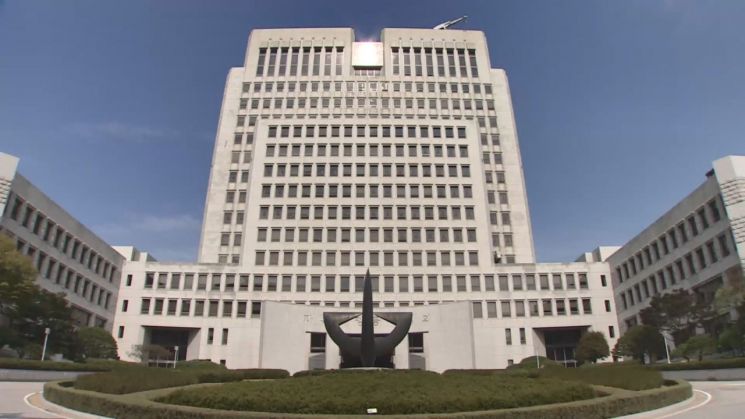
The Supreme Court has ruled that the act of the head of a redevelopment promotion committee removing a banner expressing opposition cannot be punished as obstruction of business.
According to the legal community on October 17, the Supreme Court’s third division (Presiding Justice Lee Heungku) overturned the lower court’s ruling that fined Mr. Shin, the head of a redevelopment promotion committee in Yeongdeungpo-gu, Seoul, and sent the case back to the Seoul Southern District Court.
In September 2019, the head of the landowners’ association, who was in conflict with the redevelopment committee, put up three banners in Yeongdeungpo-gu, urging landowners not to attend the committee’s residents’ meeting. Mr. Shin was prosecuted for removing these banners, on charges of interfering with the landowners’ association’s public relations work.
While the court of first instance acquitted Mr. Shin, the appellate court found him guilty of obstruction of business and imposed a fine of 2 million won. However, the Supreme Court overturned the appellate ruling, stating, “It is difficult to consider the act of the victim (the head of the landowners’ association) putting up banners to inform landowners of the association’s position as ‘work’ protected under the crime of obstruction of business,” and thus found Mr. Shin not guilty.
The Supreme Court explained, “The ‘work’ protected under the crime of obstruction of business in the Criminal Act refers to tasks or businesses that are continuously engaged in based on one’s occupation or social status.” The court further stated that “installing banners or similar items on a one-off or temporary basis as a form of simple expression of opinion, which cannot be regarded as based on one’s occupation or social status, does not constitute ‘work’ protected under the crime of obstruction of business.”
The court also determined that the content of the banners in question did not inform landowners of the original work of the association, but rather, on a one-off basis, conveyed the association’s position urging landowners not to attend the residents’ meeting. Therefore, this could not be evaluated as “tasks performed in an inseparable and close relationship with the original work of the head of the landowners’ association.”
The Supreme Court concluded, “In situations of conflict, acts that merely express one’s opinion or indicate opposition to the other party should be treated with caution when considering punishment for obstruction of business under criminal law.”
© The Asia Business Daily(www.asiae.co.kr). All rights reserved.

















