Chinese Used Cooking Oil: Key to Biofuel
Low Prices Hurt American Farmers
EU Imposes Anti-Dumping Tariffs in February
U.S. President Donald Trump has mentioned a potential "ban on imports of Chinese cooking oil" as a retaliatory measure against China's suspension of U.S. soybean imports. How did cooking oil become entangled in the vortex of the U.S.-China trade war?
"Let's Produce Cooking Oil Ourselves" - Trump Targets China
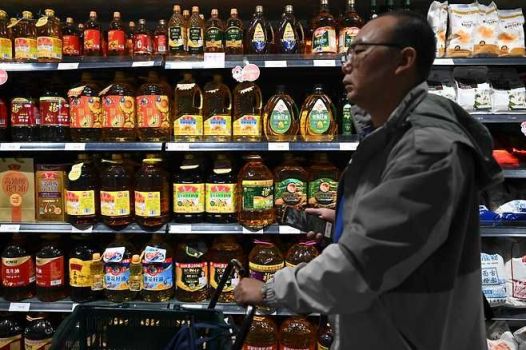 On the 15th (local time), a shopper is passing by the cooking oil display at a supermarket in Beijing, China. Photo by AFP Yonhap News
On the 14th (local time), President Trump stated on Truth Social, "China is deliberately refusing to buy U.S. soybeans, causing hardship for our farmers, which is an act of economic hostility," adding, "We can easily produce cooking oil ourselves and do not need to buy it from China." In response, China's state-run Global Times countered, "The U.S. import ban will not be effective as a means to pressure China."
Until now, the U.S. exported soybeans to China, and China processed these soybeans into cooking oil, which was then exported to the U.S. However, as the trade war between the two countries intensified, China's dependence on U.S. soybeans has plummeted. According to data from China's General Administration of Customs, the share of U.S. soybeans in China's total soybean imports dropped sharply from 39.4% in 2016 to 21.07% last year. In contrast, U.S. imports of Chinese cooking oil reached a record high last year, totaling 1.1 billion dollars (about 1.56 trillion won) and 1.27 million tons.
Chinese Used Cooking Oil: An Energy Resource in the U.S.
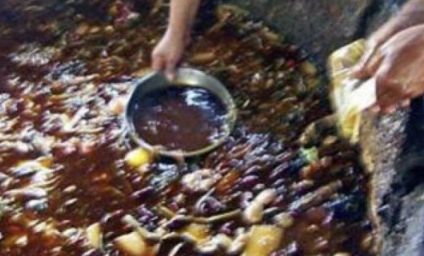 Used cooking oil turns into a brown liquid when reprocessed. This is called UCO, which serves as a raw material for biofuel. The photo shows used cooking oil being reprocessed in China. Photo by Yale Environment Review
The cooking oil imported by the U.S. from China is, strictly speaking, used cooking oil (UCO), which can be utilized as an energy resource. As Chinese cuisine traditionally relies on oily cooking methods, lard made from pork fat was once common, but after economic reforms and opening up, soybean oil became widely consumed. The UCO that China exports globally is processed from waste cooking oil discarded by households and restaurants. While UCO is not suitable for cooking, it can be blended with other raw materials to produce soap, cosmetics, or converted into biofuel.
U.S. imports of Chinese UCO surged during the Biden administration, spurred by the Inflation Reduction Act (IRA). The IRA provided tax credits and subsidies for biofuels, prompting major U.S. oil companies to actively invest in biofuel power plants to receive government support, which in turn drove a surge in demand for inexpensive Chinese UCO.
Cooking Oil Trade: A Hot-Button Political Issue
Chinese UCO has long been a hot-button issue in U.S. politics. As U.S. biofuel producers opted to import Chinese UCO instead of purchasing soybeans and corn from American farmers, domestic crop demand sharply declined. To make matters worse, China's reduction in U.S. soybean imports left American farmers facing a double blow.
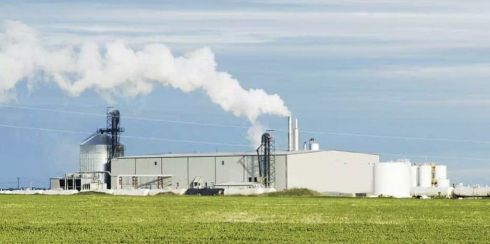
For this reason, not only U.S. agricultural organizations but also politicians with strong support from farming communities have repeatedly raised concerns. The National Oilseed Processors Association (NOPA) warned last year, "Our members announced investment plans totaling 6 billion dollars (about 8.5 trillion won) under the IRA, but U.S. biodiesel producers increasingly prefer Chinese UCO as a raw material. While we support free trade, it is absolutely undesirable for foreign raw materials to harm American farmers."
In December last year, Republican senators jointly sent a letter urging the U.S. Environmental Protection Agency (EPA) and Customs and Border Protection (CBP) to launch a thorough investigation into Chinese UCO imports. The senators stated, "Imports of Chinese UCO are replacing demand for 270 million bushels of U.S. soybeans. American farmers are at greater risk of losing major markets. U.S. farmers should not have to pay the price for an inadequate foreign raw material verification system."
The United States is not the only country clashing with China over UCO. Last August, the European Union (EU) determined that excessively cheap Chinese UCO was damaging domestic industries and imposed provisional anti-dumping duties ranging from 12.8% to 36.4%, confirming a maximum rate of 35.6% in February this year. At the time, the European Commission stated, "This measure is based on findings that unfair competition from Chinese biofuels is harming the EU diesel industry. We will protect domestic biodiesel and strengthen the EU's energy security."
© The Asia Business Daily(www.asiae.co.kr). All rights reserved.

![Clutching a Stolen Dior Bag, Saying "I Hate Being Poor but Real"... The Grotesque Con of a "Human Knockoff" [Slate]](https://cwcontent.asiae.co.kr/asiaresize/183/2026021902243444107_1771435474.jpg)
















