Readycore: The Concept of Thorough Preparation
A Step Beyond "Godsaeng" in Meaning
Driven by Rapid AI Advancement
As more young people seek to prepare for and plan their lives in advance to avoid being shaken by an uncertain future, a new term, "Readycore," combining "ready" and "core," has emerged. While the trend until now has been to diligently fill each day with a productive routine-known as "Godsaeng"-this movement is now expanding to encompass one's entire life,with a growing emphasis on preparing for unexpected variables and unstable future circumstances.
"AI Will Threaten Daily Life"... Growing Uncertainty About the Future
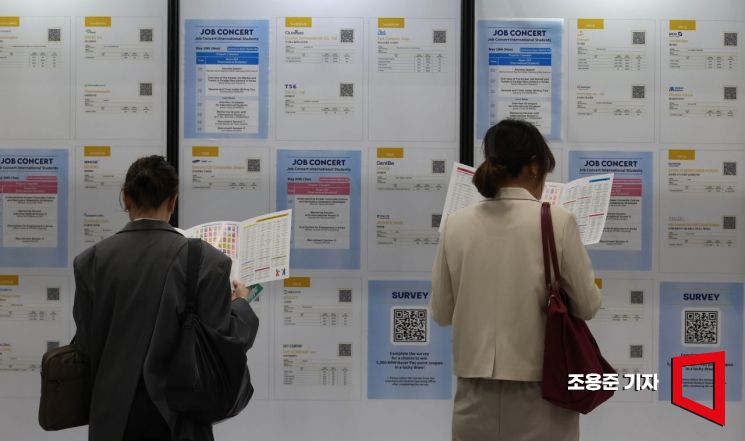 Job seekers and international students are looking at the job posting board at the "2025 Global Talent Fair" held last May at COEX in Samseong-dong, Gangnam-gu, Seoul. Photo by Jo Yongjun
Recently, Kim Nando, Professor Emeritus of Consumer Studies at Seoul National University, highlighted "Readycore" as one of the key trends to watch for next year in his book "Trend Korea 2026." In his book, Professor Kim explains, "The ultimate goal of the Readycore generation is to minimize the countless variables and risks that may arise in life and to gain complete control over their lives." He analyzes that there is a growing desire to control the future through thorough preparation, rather than wasting time and money in situations that could end in failure.
This tendency is especially pronounced among people in their 20s and 30s. Often referred to as the "self-directed learning generation," these young adults are accustomed to setting and pursuing their own goals. To prepare for an uncertain future, they are actively engaging in practical self-development activities such as acquiring certifications, taking on side jobs, and managing their finances. In fact, the number of people in their 20s and 30s who obtained the highest-level technical certification, "Master Craftsman," increased by about 1.5 times last year compared to 2020. Examples of the Readycore mindset include systematically managing schedules using data analysis tools like Excel or AI-based workspace platforms like Notion, as well as practicing mock interviews with AI before actual interviews.
Jung, a 29-year-old employee at a marketing company, also used his after-work hours to study and obtained a Level 2 Social Survey Analyst certification. He said, "These days, I feel anxious if I'm not preparing for something," adding, "After earning the certificate, I felt much more at ease and also a sense of accomplishment. Since I don't consider my current job to be a lifelong position, I need to be prepared for any changes that may come."
The background behind the emergence of the Readycore trend is rooted in social uncertainty. Economic instability, combined with the rapid advancement of AI, has heightened young people's anxiety about the future. AI is not only making it harder to find jobs but is also threatening existing positions.
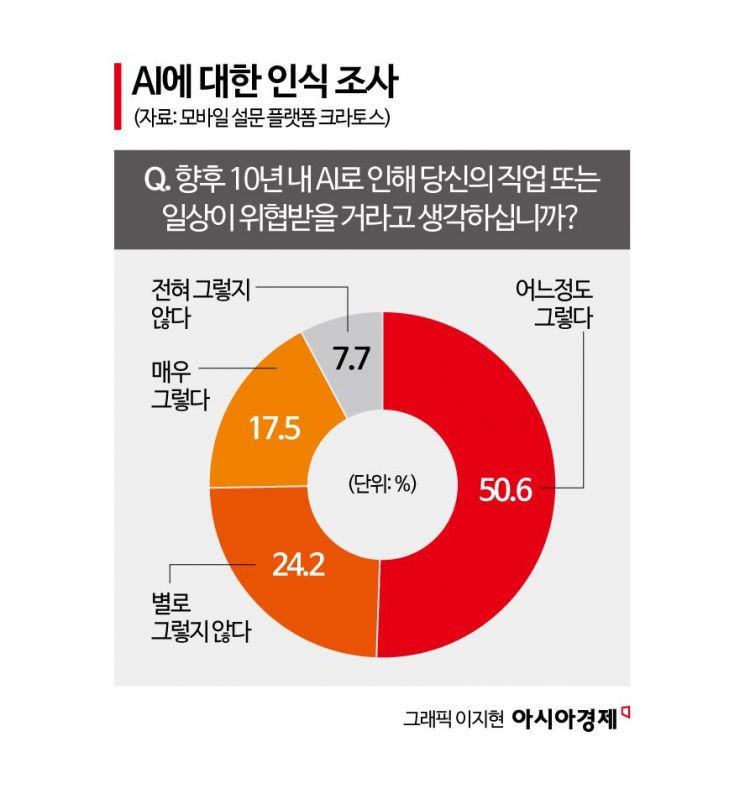
According to a survey on "AI Technology Awareness" conducted last May by the mobile survey platform Kratos with 1,000 adults, more than half of respondents (50.6%) answered that "AI will significantly threaten jobs or daily life within the next 10 years." Another 17.5% responded that "it will have some impact." In other words, 7 out of 10 adults (68.1%) perceive AI as a threat to their daily lives and jobs.
Planning Is Essential Even for Leisure... Surge in Restaurant Reservation App Users
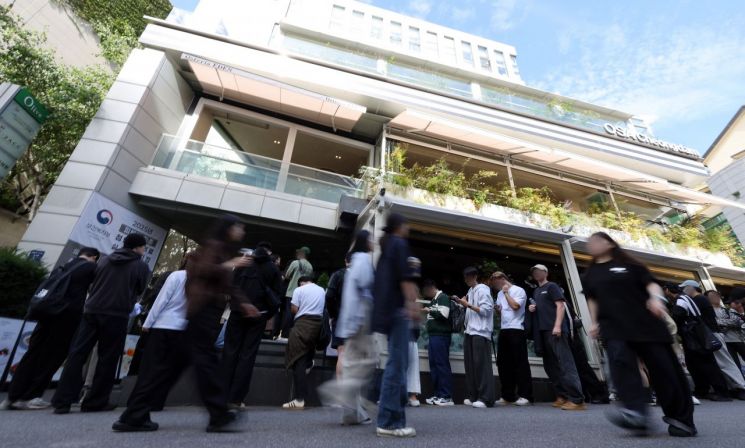 A crowd is gathering in front of the In&Out pop-up store that opened at the Schedule Cheongdam store in Gangnam-gu, Seoul, trying to purchase burgers. Photo by Yonhap News.
This attitude of preparing for uncertainty is also clearly visible in the realm of leisure. Even for gatherings with friends, there is a strong tendency toward planning, such as reserving restaurants or exhibitions in advance rather than acting on impulse. Son, a 29-year-old office worker, said, "These days, for popular pop-up stores or restaurants, you absolutely have to make a reservation," adding, "If you go without one, waiting 2 to 3 hours is the norm, so it feels like a waste of time."
As awareness of "time management" and "efficiency" grows, the number of users of reservation applications (apps) is steadily increasing. According to WiseApp Retail, a real-time app and payment-based analytics solution, the monthly active users (MAU) of major restaurant reservation apps reached 2.91 million in August, up 1.8 times (185%) compared to three years ago (1.02 million). In particular, CatchTable reached 2.5 million users as of August, marking an all-time high, and its user base has increased fivefold over the past three years.
© The Asia Business Daily(www.asiae.co.kr). All rights reserved.
![Clutching a Stolen Dior Bag, Saying "I Hate Being Poor but Real"... The Grotesque Con of a "Human Knockoff" [Slate]](https://cwcontent.asiae.co.kr/asiaresize/183/2026021902243444107_1771435474.jpg)


















