Assemblyman Yoo Yongwon:
"Must Be Concluded Within This Year"
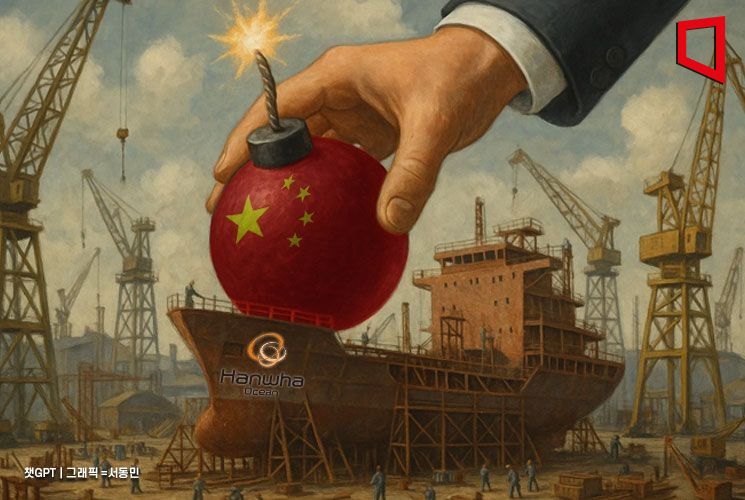
As the Chinese Ministry of Commerce recently announced a comprehensive trade ban on five U.S. subsidiaries of Hanwha Ocean, there is analysis suggesting that the resulting losses for Hanwha Ocean's Philly Shipyard could reach 60 million dollars (approximately 85 billion won) over the next one to two years.
On October 17, Assemblyman Yoo Yongwon of the People Power Party, a member of the National Assembly's National Defense Committee, stated during the Defense Acquisition Program Administration's audit, "This measure is a political move aimed at keeping U.S.-Korea cooperation in shipbuilding and the defense industry in check. The government should recognize this issue not merely as a trade dispute but as a matter of economic security, and should pursue both diplomatic solutions and industrial countermeasures."
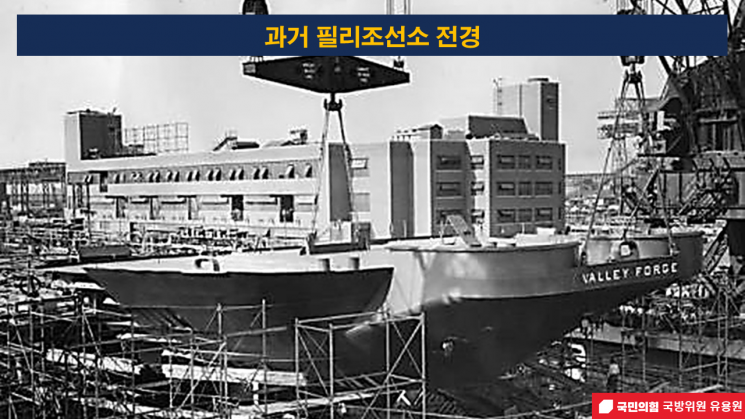
According to Assemblyman Yoo, due to these sanctions, delays in vessel construction are inevitable as Chinese-made equipment cannot be delivered and sourcing alternative parts is delayed. Brand credibility is declining, and delivery reliability concerns are becoming a reality. He explained that, especially among European clients, concerns over delivery schedules and quality are being raised, and that these sanctions are not just a trade measure but an issue involving economic security and industrial sovereignty.
Assemblyman Yoo emphasized, "Philly Shipyard is a symbolic site of industrial cooperation, combining Korean technological prowess with American defense demand. It is both a testbed and a starting point for hope in U.S.-Korea shipbuilding cooperation." He continued, "The government must urge for the lifting of these sanctions and simultaneously implement measures to stabilize the supply chain to ensure that ongoing projects are not disrupted."
He further pointed out, "Although Korea already possesses world-class shipbuilding technology, capable of independently designing and constructing advanced vessels such as Aegis destroyers and next-generation submarines, institutional barriers in the United States continue to block our industry's entry."
In the case of shipbuilding, under the Byrnes-Tollefson Amendment, only U.S.-owned shipyards within the United States are permitted to build military vessels. In aviation, the U.S. Navy's next-generation advanced trainer (UJTS) program requires that, under the Buy American Act (BAA), at least 75% of the parts must be American-made for a proposal to be submitted. Korean shipbuilding and aviation products are classified as foreign-made and, despite their world-class technology, are unable to participate in the U.S. procurement market.
Assemblyman Yoo argued that it is urgent to conclude the U.S.-Korea Reciprocal Defense Procurement Agreement (RDP-A) to resolve these structural constraints. If this agreement is signed, Korean vessels and aircraft would be recognized as "qualifying country products" and allowed to participate in U.S. government procurement projects. However, the negotiations have been stalled for two years.
Assemblyman Yoo stated, "The RDP-A must be concluded quickly so that Korea's world-class shipbuilding and aviation industries can gain practical access to the U.S. procurement market. The Defense Acquisition Program Administration should work with diplomatic and industrial ministries to take concrete steps to ensure the agreement is signed within this year."
© The Asia Business Daily(www.asiae.co.kr). All rights reserved.
![Clutching a Stolen Dior Bag, Saying "I Hate Being Poor but Real"... The Grotesque Con of a "Human Knockoff" [Slate]](https://cwcontent.asiae.co.kr/asiaresize/183/2026021902243444107_1771435474.jpg)

















