Prolonged Price Increases Amid Ongoing Memory Supply Shortages
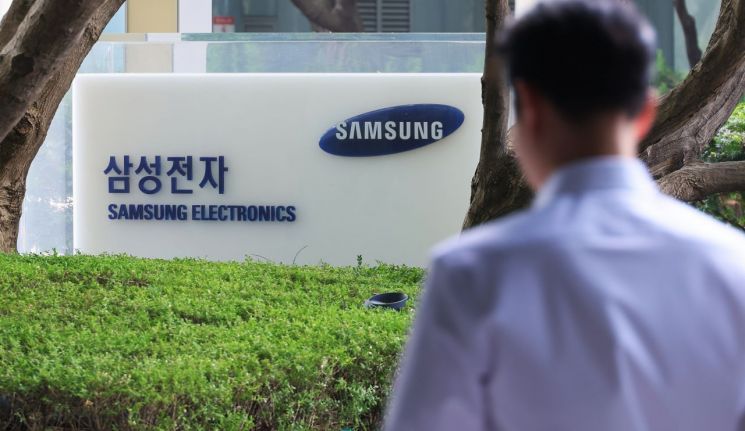
On October 17, KB Securities analyzed the semiconductor sector, stating, "The prolonged shortage in memory semiconductor supply and the resulting price increases are expected to propel Samsung Electronics and SK Hynix onto an unprecedented growth trajectory in 2026 and 2027." In particular, the company forecasted that both earnings and stock prices would show a distinct trend compared to the past, driven by a surge in DRAM demand due to the proliferation of artificial intelligence (AI) data centers.
According to the KB Securities report released on this day, DRAM prices in the fourth quarter of this year are expected to rise by 10 to 15 percent compared to the previous quarter. The report explained, "As AI architecture models transition from a training-focused phase to commercialization, the shortage in DDR4 supply and the increase in DDR5 orders are widening the scope of price increases." Currently, the average inventory level among the three global DRAM manufacturers is less than three weeks, which is significantly below the appropriate inventory level. This is even lower than the previous DRAM upcycle (2017-2018), making it highly likely that price increases will continue into next year.
Additionally, with the full-scale commercialization of AI agents, demand for all DRAM sectors is expected to expand starting in 2026. KB Securities noted, "In the early stages of AI training, demand growth was centered on high bandwidth memory (HBM) for large language model (LLM) development. However, demand for AI infrastructure composed of GPU, CPU, and DRAM is now expected to increase rapidly."
Recently, the expansion of AI technology partnerships has further accelerated memory demand growth. Since October, the AI ecosystem among major big tech companies has been rapidly expanding, with partnerships formed between Oracle and AMD, Broadcom and OpenAI, and AMD and OpenAI. As investment in AI data centers is projected to exceed 1 trillion dollars by 2028, related demand is highly likely to continue over the long term.
On the other hand, on the supply side of memory, expansion of new production capacity remains limited. The report stated, "Due to HBM-focused investments over the past three years, new DRAM production capacity expansion in 2026 will be limited to process conversions, and NAND production capacity is actually expected to decrease as a result of supply reduction strategies."
© The Asia Business Daily(www.asiae.co.kr). All rights reserved.
![Clutching a Stolen Dior Bag, Saying "I Hate Being Poor but Real"... The Grotesque Con of a "Human Knockoff" [Slate]](https://cwcontent.asiae.co.kr/asiaresize/183/2026021902243444107_1771435474.jpg)
















