"Enhancing Policy Effectiveness Through Empirical Analysis
of Private Education and Housing Costs"
Joo Hyunhwan, Vice Chairperson of the Presidential Committee on Low Fertility and Aging Society, stated on the 16th, "When jeonse prices rise by 1%, the birth rate among non-homeowners decreases by up to 4.5%," emphasizing the importance of designing low fertility policies based on empirical evidence.
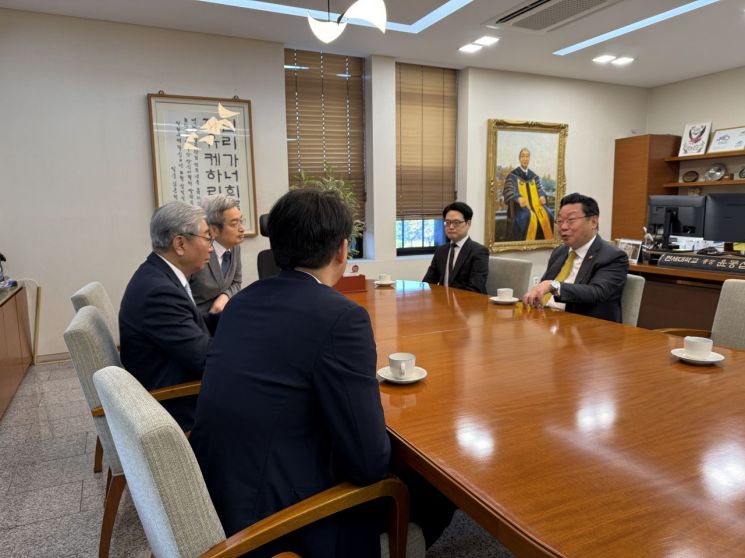
At a joint academic conference hosted by the Korean Association of Applied Economics and Yonsei University's Institute of Population and Talent at Severance Hospital in Seoul on this day, Vice Chairperson Joo said, "Although the birth rate has rebounded for the first time in nine years, it remains at the 0.7 level, which is less than half the OECD average, and the suicide rate is more than double the global average, making it the highest in the world." He reiterated, "It is crucial to design low fertility policies grounded in empirical evidence."
This academic conference, focused on evidence-based policy design in the fields of low fertility and mental health, was organized to discuss directions for evidence-based policy design to enhance policy effectiveness, based on empirical analyses of the causes and possible solutions to the population crisis, including low fertility, and mental health issues related to suicide.
Vice Chairperson Joo noted, "Research shows that a 1% increase in private education expenses leads to a decrease of about 0.2% in the total fertility rate, and a 1% rise in jeonse prices can result in up to a 4.5% drop in the birth rate among non-homeowners." He stressed, "Data must determine the direction of policy." He further stated, "To enhance policy effectiveness, it is essential to empirically identify complex factors such as economic insecurity and social isolation."
The Presidential Committee on Low Fertility and Aging Society established the Population Policy Evaluation Center last year, which monitors population indicators by linking administrative data in areas such as employment, education, health, and welfare. Vice Chairperson Joo said, "The government, academia, and the field must work together to build a data-driven ecosystem," and added, "It is necessary to conduct integrated analyses of employment, education, social insurance, and care environments to precisely identify the factors influencing marriage and childbirth decisions."
He continued, "Recently, countries like those in Northern Europe and France have been designing integrated family and mental health policies," suggesting that "Korea should also connect childbirth and mental health policies across the life cycle." He proposed linking policy indicators between these two areas and developing sophisticated, life cycle-based policy designs.
© The Asia Business Daily(www.asiae.co.kr). All rights reserved.

















