Solutions for Education, Culture, Tourism, Markets, and Urban Regeneration All in One Place
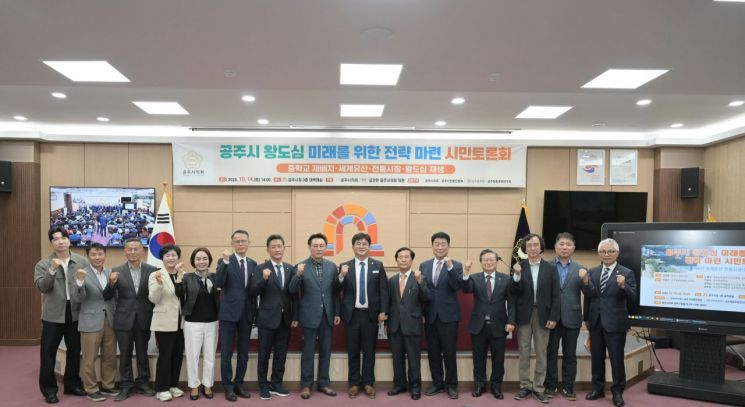
Gongju City in South Chungcheong Province has begun to envision a new future for its royal downtown, led by its citizens.
At the "Citizen Forum for Strategies for the Future of Gongju’s Royal Downtown," co-hosted by the Gongju City Council and the Gongju Journalists Association, numerous practical alternatives were proposed to overcome the crises facing the downtown area, such as population decline, changes in the educational environment, and stagnating commercial districts.
Civic participants and experts agreed that "as a city adjacent to Sejong City and home to World Heritage sites, Gongju must reinvent itself as a sustainable city where culture, education, and tourism are harmoniously integrated."
The forum, held on October 14 in the main conference room at Gongju City Hall, was attended by Lim Dalhee, Chairperson of the Gongju City Council; Song Mugyeong, Deputy Mayor of Gongju; Lee Byungin, President of the Gongju Journalists Association; and about 150 citizens.
Lee Byungin, President of the Journalists Association, stated, "We have created a public forum for citizens to collectively consider Gongju's identity and urban competitiveness," adding, "The City Council and the Association will work together to ensure that today’s proposals are reflected in actual policy."
Lim Dalhee, Chairperson of the City Council, said, "It is urgent to revitalize the royal downtown, which has been stagnating due to population decline and changes in the educational environment," and pledged, "We will implement the citizens’ opinions discussed today into policy to achieve balanced development for Gongju."
Deputy Mayor Song Mugyeong also emphasized, "Preserving and utilizing World Heritage sites, revitalizing traditional markets, and urban regeneration are the future growth pillars of Gongju."
Choi Changseok, President of the Gongju Local Culture Research Association, who delivered the keynote presentation, stated, "The key to developing the royal downtown lies in its historical, cultural, and artistic infrastructure," and proposed, "As a city adjacent to Sejong, Gongju should become a place where meetings are held in Sejong and performances and tourism are enjoyed in Gongju."
No Jongwoo, Director of Education at the Gongju Office of Education in South Chungcheong Province, revealed, "We are pursuing a plan to integrate Gongju Middle School and Gongju Girls’ Middle School and relocate them to the Wolsong District," explaining, "This is not a simple relocation, but a structural reform aimed at balanced regional development and educational innovation."
He added, "We will transform the existing school sites into cultural and tourism hubs to create a foundation for the joint growth of the region and education."
Lee Iljoo, President of the Gongju Cultural Center, pointed out, "Despite possessing World Heritage sites such as Gongsanseong Fortress, the Tomb of King Muryeong, and Magoksa Temple, Gongju lacks sufficient tourism infrastructure," and stressed, "We need to create a ‘city where visitors stay’ by attracting hotels for overnight tourists in the royal downtown, expanding the Woongjin Baekje Palace site, and restoring the modern history and culture street."
Lim Jaeil, CEO of the Social, Cultural, and Artistic Research Institute Oneul, stated, "Sanseong Market is a key hub for attracting Gongju’s resident population," and proposed, "We should develop it into a new consumption and cultural space by expanding the night market, creating a hanok-style lodging village, and installing night lighting that connects World Heritage sites and the market."
Song Dubeom, Visiting Researcher at the Gongju Studies Institute of the National Gongju University, noted, "Although Gongju has many museums, there is no city museum that embodies its identity," and suggested, "We should establish the Jemicheon Museum and network village museums to create a ‘museum city Gongju’ led by citizens."
He further emphasized, "Revitalizing the royal downtown should focus on remodeling existing spaces rather than constructing new buildings, moving toward a culturally friendly city led by local creators."
During the forum, one citizen suggested, "Repurposing closed schools as village museums would be an excellent example of urban regeneration," drawing attention from participants.
This forum served as an opportunity to re-examine Gongju’s historical and cultural identity and urban competitiveness from the citizens’ perspective, signaling substantial changes to the city’s future urban policies and regeneration strategies.
© The Asia Business Daily(www.asiae.co.kr). All rights reserved.
![User Who Sold Erroneously Deposited Bitcoins to Repay Debt and Fund Entertainment... What Did the Supreme Court Decide in 2021? [Legal Issue Check]](https://cwcontent.asiae.co.kr/asiaresize/183/2026020910431234020_1770601391.png)
















