Gaps in National Support:
Stigma and Poverty as "Invisible Punishments"
Park Kyuntaek: "Urgent Need for Systematic Identification and Support Amid Care Gaps"
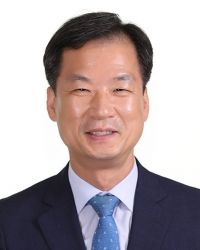
Concerns have been raised that minors whose parents are incarcerated are suffering due to falling through the cracks of national support systems.
According to an analysis by Assemblyman Park Kyuntaek of the Democratic Party of Korea (Gwangju Gwangsan-gap), based on data submitted by the Ministry of Justice for the National Assembly audit on October 13, 2025, there were 8,267 inmates with minor children and 12,791 minor children as of last year.
However, only 690 of these children (5.3%) actually received substantial support from the Ministry of Justice. Furthermore, as of August this year, the number of inmates with minor children had risen to 9,253, with 14,218 minor children. Of these, only 467 children (3.3%) were receiving support from the Ministry of Justice, indicating that the vast majority of children are left unattended and without care.
Despite the Ministry of Justice forming an "Inmate Children Support Team" in cooperation with related government agencies, there are criticisms that the current support system is not functioning effectively. According to the "2025 Survey on the Status of Inmates' Minor Children" conducted by the Ministry of Justice, 72 households have children left alone without guardians, and 191 households have children sent to foster care facilities, highlighting the urgent need for a systematic identification and management system for vulnerable children.
Currently, the Ministry of Justice's support is mostly limited to those eligible for basic livelihood security and other government assistance, and is confined to providing daily necessities worth approximately 300,000 won. Even this is far from sufficient to address the complex problems these children face, including loss of income due to parental incarceration, housing instability, and psychological trauma.
Assemblyman Park stated, "The Ministry of Justice is focusing support only on those eligible for basic livelihood security and other government assistance, which accounts for only about 5% of the total," and added, "We need to establish a comprehensive identification and management system that covers all children of incarcerated individuals, rather than just focusing on basic livelihood support."
He continued, "The suffering of children who live under stigma and prejudice simply because they are the families of offenders is like an 'invisible punishment.' We must prepare a manual for multidimensional support, including not only economic assistance but also emotional, academic, career, and safety support, and strengthen the integrated cooperation system among schools, local governments, and the private sector."
Assemblyman Park also emphasized, "We can no longer turn a blind eye to the reality where innocent children are forced to grow up facing social criticism and isolation due to their parents' mistakes. Helping these children grow up healthy and become responsible members of society is not only the duty of the state but also the most effective crime prevention policy."
© The Asia Business Daily(www.asiae.co.kr). All rights reserved.
![Clutching a Stolen Dior Bag, Saying "I Hate Being Poor but Real"... The Grotesque Con of a "Human Knockoff" [Slate]](https://cwcontent.asiae.co.kr/asiaresize/183/2026021902243444107_1771435474.jpg)















