Expanding the Birth Rate Is as Crucial as Sejong's Role as the Administrative Capital
Calls for Policies to Overcome Population Decline Among Child-Rearing Generations
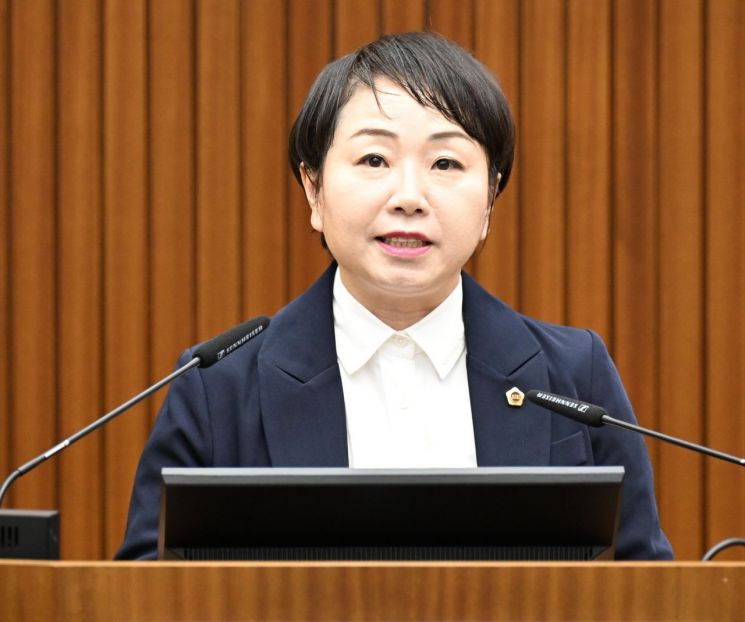
While the birth rate is rising nationwide, Sejong City is the only region where it has declined, prompting calls for countermeasures. As Sejong City is known as a women-friendly and child-friendly city, there are growing voices that the city should leverage these strengths and implement groundbreaking policies as a parenting-friendly city to boost the birth rate.
Hong Nayoung, a Sejong City Councilor affiliated with the People Power Party, emphasized, "Sejong was once a symbol of a young city, but it is now facing the shocking reality of a population decline for the first time. Now is the time to take the warning of population decrease seriously and evolve into a parenting-friendly city."
During a free speech session at the first plenary meeting of the 101st temporary session of the Sejong City Council held on the 13th, Councilor Hong expressed concern over Sejong City's population statistics, which show that households with infants, young children, and child-rearing generations are leaving the city.
She pointed out, "This reflects an environment that makes it difficult to raise children and the limitations of birth and childcare policies," adding, "Sejong can no longer rely on the momentum of growth, and it is urgent to develop more advanced measures."
In particular, Councilor Hong explained the case of Incheon, which has recorded a positive net migration rate and an increase in the infant and child-rearing population through bold support policies such as the 100 Million Dream and 1,000-Won Housing programs. She also cited Jeonnam, which introduced the nation’s first 318 Policy and surpassed a total fertility rate of 1.0 in the second quarter of this year, overtaking Sejong to rank first nationwide. She diagnosed, "While the birth rate is rising nationwide, Sejong City is the only region where it has declined. This is the result of focusing solely on large-scale development policies and neglecting the establishment of local living infrastructure."
Referring to Jeju’s ‘parenting-friendly city’ policy, she suggested, "A new paradigm is needed in which society as a whole participates, including expanding the foundation for pregnancy and childbirth, increasing public care services, implementing flexible work arrangements at workplaces, and encouraging greater participation of fathers in childcare. Sejong should leverage its strengths as a women-friendly and child-friendly city to expand into a parenting-friendly city."
She stressed, "We can no longer ignore the reality that families are leaving Sejong due to a lack of childcare infrastructure and care gaps. As the administrative capital, Sejong is the optimal city for the public sector to take the lead in establishing a culture where work and family life are balanced."
Accordingly, she emphasized that it is time to shift policy direction. Proposals included: ▲ Proclaiming the vision of Sejong as a parenting-friendly city ▲ Strengthening support for pregnancy, childbirth, childcare, education, jobs, and housing ▲ Establishing a ‘Sejong-style care cooperation model’ in which the public sector, businesses, schools, and the local community all participate.
Councilor Hong concluded, "I hope that settling down in Sejong, having children, and raising them will become a source of joy for young people, so that parents and children can enjoy a happy life together. Sejong City should truly develop into a parenting-friendly city and lead childcare policies in South Korea."
© The Asia Business Daily(www.asiae.co.kr). All rights reserved.

















