Grain Supply and Demand Committee Announces Measures for Stabilizing Rice Supply During 2025 Harvest Season
Isolation Volume Reduced from 200,000 Tons to 100,000 Tons
Isolation Volume Includes 55,000 Tons of Previously Loaned Rice
The government has decided to purchase and isolate 100,000 tons of rice harvested in 2025 from the market. This is a significant reduction compared to last year. Last year, the government isolated 200,000 tons of rice from the market to prevent excessive drops in rice prices during the 2024 harvest season. This year, however, the amount of isolated rice has been greatly reduced in an effort to stabilize the currently high rice prices.
The Ministry of Agriculture, Food and Rural Affairs announced on the 13th that it held a Grain Supply and Demand Stabilization Committee meeting and established these measures to stabilize rice supply and demand during the harvest season.
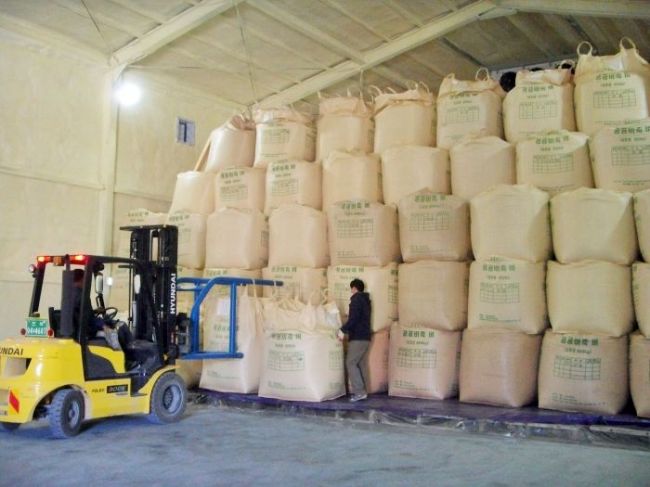
According to the National Data Office’s announcement on October 2, the expected production of rice for 2025 is approximately 3,574,000 tons. The cultivation area decreased by 20,000 hectares compared to last year (from 698,000 hectares in 2024 to 678,000 hectares in 2025). However, the yield per 10 ares increased to 527 kg, compared to 514 kg last year and 518 kg for the average year. As a result, total production decreased by about 11,000 tons compared to last year. Taking into account the ongoing decline in table rice consumption and the increase in processed rice consumption, the expected demand for rice in 2025 is 3,409,000 tons. Therefore, the projected rice surplus for 2025 is estimated at about 165,000 tons.
According to the Ministry of Agriculture, Food and Rural Affairs, the committee noted that, given the supply and demand situation for the 2024 rice crop, the volume of old rice carried over due to a lack of private stocks this year will be lower than usual. In addition, recent sunlight hours have been lower than in previous years and the average year, and the occurrence of rice kernel smut disease, which causes black spots on rice, may lead to fluctuations in the final production volume. Therefore, the committee has planned to isolate 100,000 tons of the surplus and agreed to closely monitor the final production and consumption volumes to make more precise projections and implement supply and demand measures appropriate to the situation.
Of the 100,000 tons to be isolated, 55,000 tons are rice returned to government reserves that has been loaned out since the end of August this year. With the remainder designated for processing use only, the amount to be isolated from the table rice market is 45,000 tons.
The reason for reducing the advance isolation volume is the recent sharp rise in rice prices. According to the Korea Agro-Fisheries & Food Trade Corporation, as of October 10, the retail price for 20 kg of rice was 67,351 won, up 27.1% from the same period last year.
A Ministry official stated, "Although rice prices are higher than in previous years and the average year, we expect that the production of new rice in 2025 will exceed demand. Therefore, after the main harvest begins in mid-October, farm-gate rice prices are expected to stabilize, and consumer rice prices should also experience a soft landing." The official added, "To further ease the burden on consumers, we will extend the rice discount event for consumers until the end of October and increase the discount per 20 kg from 5,000 won to 7,000 won."
Additionally, the Ministry of Agriculture, Food and Rural Affairs plans to conduct a detailed investigation to analyze the causes of rice kernel smut disease, considering the difficulties faced by farmers due to recent outbreaks. After a comprehensive review of the investigation results, a prompt decision will be made within this month on whether to recognize the situation as an agricultural disaster and provide recovery support. In the case of brown planthopper damage in 2024, the Ministry provided recovery support to farms that had completed harvesting, after verifying yield reductions. Furthermore, the Ministry will purchase all quantities of rice affected by diseases such as rice kernel smut that farmers wish to sell, in order to stabilize farm incomes and prevent a decline in the quality of rice in the market.
Kang Hyungseok, Vice Minister of Agriculture, Food and Rural Affairs, stated, "Although an oversupply of rice is expected again this year, we plan to isolate 100,000 tons of the surplus first, taking into account the possibility of some fluctuation in the final production volume." He added, "This year, as farm-gate rice prices during the off-season (July to September) have been supported, the supply and demand for rice during the harvest season are expected to be more stable compared to the average year. We will also closely monitor market trends after the harvest season to ensure stable rice supply and demand."
© The Asia Business Daily(www.asiae.co.kr). All rights reserved.
![Clutching a Stolen Dior Bag, Saying "I Hate Being Poor but Real"... The Grotesque Con of a "Human Knockoff" [Slate]](https://cwcontent.asiae.co.kr/asiaresize/183/2026021902243444107_1771435474.jpg)
















