ABC News Interview
"Peace in the Middle East Within Reach... A Great Moment for the U.S."
Second Phase Agreement Faces Hurdles Over Hamas Disarmament
Vance: "Conflicts Inevitable... Mediation and Pressure Must Continue"
U.S. Vice President J.D. Vance announced on October 12 (local time) that the Palestinian militant group Hamas is set to release 20 Israeli hostages within the next 24 hours.
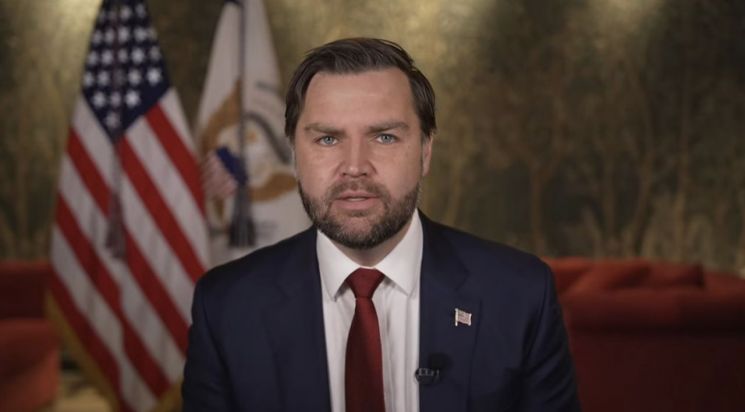
In an interview with ABC News that day, Vice President Vance stated that it has been "confirmed" that the 20 hostages are alive, adding, "Certainly, 20 hostages will return to their homes and families."
He explained, "Fortunately, we will see them alive within the next 24 hours," and added, "For the United States, it will likely be tomorrow morning (October 13), and for Israel, it will be in the afternoon (October 13)."
Vice President Vance emphasized, "We are on the verge of achieving true peace in the Middle East. This is a truly great moment for our country, and we should be proud of our diplomats who made this happen." He continued, "This is also a truly significant moment globally, and President Donald Trump will personally visit the region to celebrate this achievement with the hostages. It is a wonderful accomplishment, and I am very pleased."
The decision by Hamas to release the hostages is the result of a surprise agreement on the first stage of the 'Gaza Peace Initiative,' which includes withdrawal and hostage release, reached between Israel and Hamas on October 8, marking two years since the outbreak of the Gaza war.
President Trump, who mediated the ceasefire negotiations, embarked on a visit to Israel and Egypt that afternoon and is scheduled to preside over a summit for Gaza peace in Egypt on October 13, officially declaring an end to the war. United Nations Secretary-General Ant?nio Guterres, British Prime Minister Keir Starmer, French President Emmanuel Macron, German Chancellor Friedrich Merz, and other European leaders will also attend in large numbers. President Trump also plans to visit the Israeli parliament the same day to meet with the families of the hostages.
Previously, President Trump stated on October 9, one day after the announcement of the ceasefire agreement between Israel and Hamas, that "all remaining hostages will be released on Monday (October 13) or Tuesday (October 14)."
In relation to this, The Wall Street Journal (WSJ) reported on the same day, citing multiple sources, that Hamas is planning to release 20 Israeli hostages on the morning of October 13 through Arab mediators. According to the outlet, Israel currently believes there are 20 surviving hostages and approximately 28 bodies within the Gaza Strip. The United States is forming a multinational task force (TF) with Turkey, Qatar, Egypt, and others to recover the bodies of the hostages.
Additionally, as part of the ceasefire agreement, preparations are underway to deliver large-scale humanitarian aid supplies to the Gaza Strip on October 12.
Although the first stage of the Gaza Peace Initiative has paved the way for an end to the war, significant differences remain between the two sides on key issues, making the second stage of negotiations likely to be challenging.
The disarmament of Hamas, the composition of patrol forces in the Gaza Strip, and the speed and scope of the Israeli military withdrawal have yet to be determined. In particular, the disarmament of Hamas and the exclusion of Hamas from governing Gaza have been conditions that Hamas has consistently rejected, raising the likelihood of considerable conflict during the negotiation process. In addition, ensuring that Israel does not resume military operations in Gaza after the release of hostages is considered a core issue. Israeli Prime Minister Benjamin Netanyahu and the right-wing coalition continue to oppose the 'two-state solution' for the coexistence of Israel and Palestine, maintaining that the complete destruction of Hamas is essential.
Regarding this, Vice President Vance said in an interview with CBS News that day, "Conflicts will inevitably arise. The residents of Gaza will oppose Israel's decisions, and Israel may have differences of opinion with the Gulf Arab states. Our role is to mediate these disputes and maintain pressure so that everyone can achieve lasting and sustainable peace."
© The Asia Business Daily(www.asiae.co.kr). All rights reserved.
![Clutching a Stolen Dior Bag, Saying "I Hate Being Poor but Real"... The Grotesque Con of a "Human Knockoff" [Slate]](https://cwcontent.asiae.co.kr/asiaresize/183/2026021902243444107_1771435474.jpg)
















