Parliamentary Audit by Health and Welfare Committee Begins on October 14
Debate Expected Over Responsibility for "Medical Crisis"
Discussions to Include Resident Training Improvements,
Regional Physician System, and Establishment of Public Medical School
As the first parliamentary audit since the inauguration of the Lee Jaemyung administration begins, the National Assembly’s Health and Welfare Committee is expected to focus on key issues such as the gaps in regional and essential medical services that have emerged following conflicts between the government and the medical community, as well as improvements to resident training environments. Other major topics likely to be discussed include the introduction of a regional physician system, the establishment of a public medical school, reforms to the pharmacy system, and the overall state of public health, including the finances of the National Pension Service and National Health Insurance.
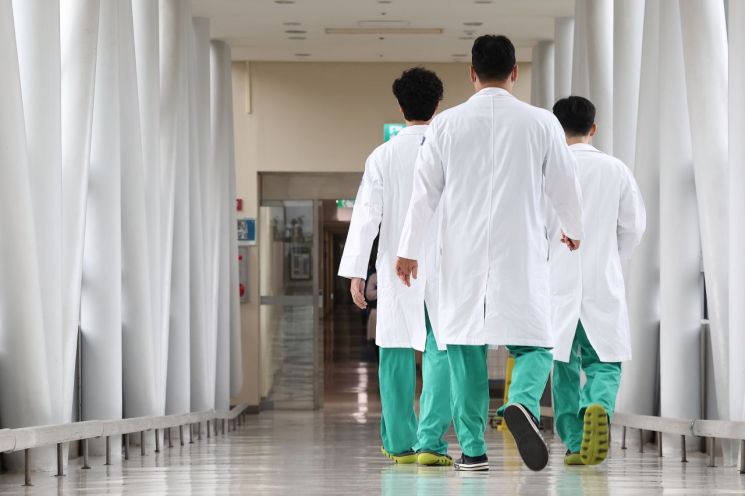 On September 1st, as a significant number of resigned residents returned to medical practice, medical staff were moving in a large hospital in downtown Seoul. Photo by Yonhap News
According to the National Assembly and the healthcare sector on October 13, the parliamentary audit will begin with the Ministry of Health and Welfare and the Korea Disease Control and Prevention Agency on October 14, followed by the National Health Insurance Service and the Health Insurance Review and Assessment Service on October 17, the Ministry of Food and Drug Safety on October 21, and the National Pension Service on October 24. In total, 44 agencies under the Health and Welfare Committee’s jurisdiction will be audited through October 30.
The most contentious issue is expected to be the development of follow-up measures to normalize the medical field and prevent a recurrence of recent disruptions. Although most residents returned to their training sites last month and the situation has temporarily stabilized, sharp disputes between the ruling and opposition parties are anticipated over who is responsible for the medical crisis triggered by the policy to increase medical school admissions. The medical community also points out that fundamental improvements in working conditions, such as addressing long working hours and poor treatment of residents, have yet to be achieved. Accordingly, issues such as limiting resident training hours, guaranteeing union activities, improving educational environments, and coordinating work between physician assistants and nurses are also expected to be key discussion points.
Discussions will also cover the government’s key policy tasks, such as establishing a public medical school, introducing a regional physician system, and expanding the workforce to address medical service gaps in local areas. However, as the medical community strongly opposes the government’s push to strengthen regional, essential, and public healthcare, both sides are expected to engage in heated debates and inquiries regarding the effectiveness and potential side effects of these policies.
Pharmacy system reform is also considered a major agenda item. As controversy grows over the recent spread of warehouse-type pharmacies, debates are underway regarding the institutionalization of public late-night pharmacies, expansion of generic name prescriptions, promotion of substitute dispensing, and the introduction of electronic prescriptions. In addition, the restructuring of the innovative pharmaceutical company certification system, allegations of rebates, the localization of pharmaceutical ingredients, improper use of clinical research funds, and issues surrounding compensation for research-related salaries are all expected to be closely examined.
In the field of social welfare, the audit will review policies supporting deinstitutionalized persons with disabilities, independence for young adults with borderline intellectual functioning, and support for young people preparing for self-sufficiency. Expanding welfare for vulnerable groups and ensuring transparency in fiscal management will be key issues.
Regarding the National Pension Service, questions are expected to focus on structural reforms agreed upon for discussion after the “parametric reform” in March, along with proposals such as automatic adjustment mechanisms and differential application by generation. Additionally, as the previous administration was criticized for accelerating deficits in the National Health Insurance by injecting substantial funds to resolve government-medical community conflicts, there is a high likelihood that criticisms regarding measures to stabilize health insurance finances and potential premium hikes will also be raised.
© The Asia Business Daily(www.asiae.co.kr). All rights reserved.
![Clutching a Stolen Dior Bag, Saying "I Hate Being Poor but Real"... The Grotesque Con of a "Human Knockoff" [Slate]](https://cwcontent.asiae.co.kr/asiaresize/183/2026021902243444107_1771435474.jpg)
















