Yen-Dollar Exchange Rate Surges Above 153
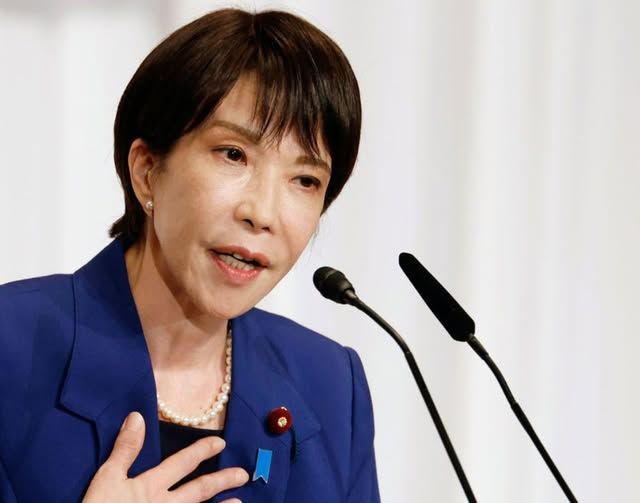
Following the victory of Sanae Takaichi, often referred to as the "female Abe," in the Liberal Democratic Party leadership election, the value of the yen plummeted to its lowest level since February. Although President Takaichi attempted to calm concerns in the foreign exchange market by stating that she has "no intention of encouraging excessive yen depreciation," market anxiety remains high.
According to CNBC, during trading on the 10th, the yen-dollar exchange rate surged to as high as 153.27 yen. This marks the highest level since early February. The exchange rate had remained at 147 yen on the 3rd, the day before the Liberal Democratic Party leadership election results were announced, but soared past the 150 yen mark immediately after the announcement. A rising exchange rate indicates a decline in the value of the yen.
The new president, Takaichi, is expected to inherit and further develop former Prime Minister Shinzo Abe's economic policy, "Abenomics," by implementing expansionary fiscal policy and accommodative monetary policy. While the Japanese stock market continues to hit record highs on expectations of economic stimulus, the weakening yen is drawing mixed evaluations, as it both increases inflationary pressure and provides a buffer for export-oriented companies.
Concerns in the foreign exchange market have intensified, with some even suggesting that the exchange rate could surpass 155 yen in the future. Japanese Finance Minister Katsunobu Kato also expressed caution during a regular press briefing on the 7th, stating that he would "closely monitor volatility."
As the yen continued its sharp decline, President Takaichi sought to reassure the market in an interview with Japanese foreign media, emphasizing that she has "absolutely no intention to deliberately drive the yen excessively weaker." She added, "There are both advantages and disadvantages to a weaker yen," and noted that for export-oriented companies, it could serve as a buffer, especially considering concerns over Trump-era tariffs. Although she criticized last year's Bank of Japan (BOJ) interest rate hike as "foolish," in this interview she refrained from further comment, saying, "Let's stop talking about that now." She also stated, "I'm not in a position to discuss whether interest rates should be raised."
Adam Button, Chief Currency Analyst at Canadian investment analysis firm InvestingLive, commented, "The brief rebound in the yen is a sign that (Japanese authorities) are watching the market, but it remains unclear what exactly constitutes 'excessive depreciation.'"
However, remarks from Takaichi's economic advisory team appear to be sending mixed signals to the market. Takuji Aida, Chief Economist at Cr?dit Agricole Japan, stated, "The defeatist view that yen weakness is bad is a serious mistake," and added, "The current yen depreciation, combined with rising stock prices and increased investor confidence, is having a positive effect on the Japanese economy."
Etsuro Honda, the economic adviser who previously designed Abenomics, also told Reuters, "The election of President Takaichi has created positive momentum," and expressed his sincere hope that the Bank of Japan will not raise interest rates.
Meanwhile, the Bank of Japan will hold its Monetary Policy Meeting on the 29th and 30th of this month to decide the direction of interest rates. The Bank of Japan ended the negative interest rate era for the first time in 17 years by raising rates in March of last year. On the 3rd, Governor Kazuo Ueda also reaffirmed the policy of raising interest rates, stating that "policy rates will continue to be raised" in consideration of inflation.
© The Asia Business Daily(www.asiae.co.kr). All rights reserved.

















