Opposition to Wall Installation from Germany and Southern European Countries
Ongoing Debate Over Budget Issues and Feasibility
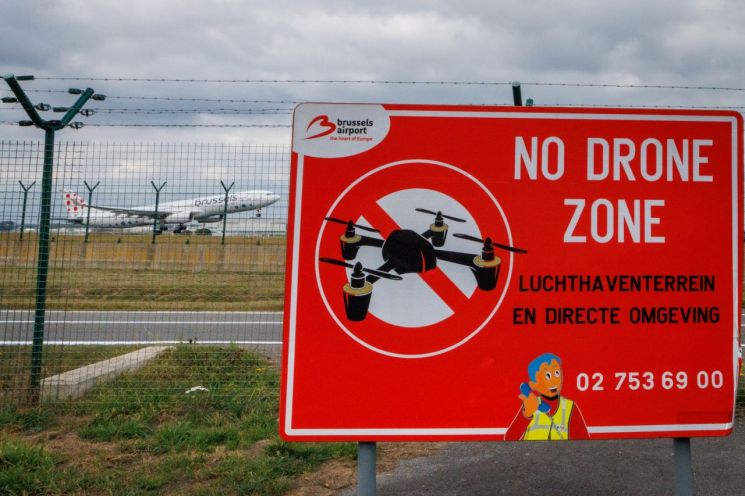 On the 26th of last month (local time), a no-drone flight zone sign installed at Brussels Airport in Belgium. Photo by EPA Yonhap News
The European Union (EU) has announced plans to install a 'Drone Wall' along the eastern border areas of Eastern European countries neighboring Russia, aiming to prevent provocations by Russian unmanned aerial vehicles (drones). This announcement has sparked controversy, as the installation of a drone wall spanning thousands of kilometers along the Russian border is expected to require a massive budget. Opposition is growing, particularly among Germany and Southern European countries. Experts have warned that if the EU pushes ahead with the installation of the drone wall without reaching a budget agreement, it will only increase resentment among member states and could actually make joint military responses more difficult.
Controversy Grows Over EU Drone Wall Plan... Opposition from Germany and Southern Europe
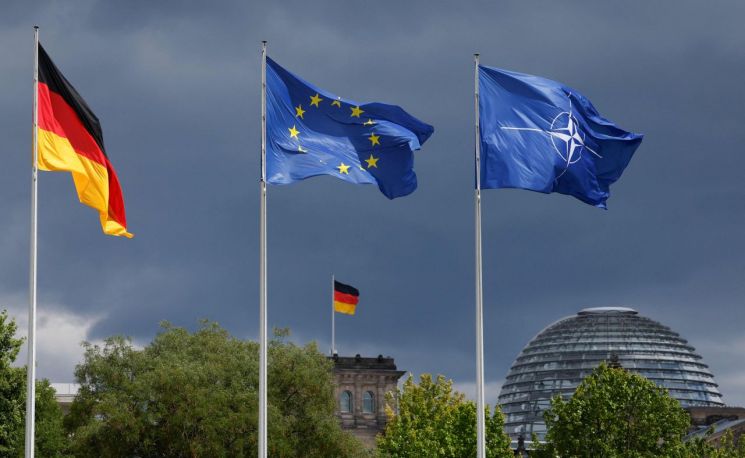
Debate continues within the EU regarding the plan to install the drone wall. According to Euronews, on the 9th (local time) at the European Parliament in Strasbourg, France, Germany, Spain, Italy, and Greece expressed their opposition to the drone wall plan. German Chancellor Friedrich Merz also publicly criticized the plan, calling it "unrealistic and financially irresponsible."
However, the EU maintains that the drone wall plan is essential for European defense. In a speech at the European Parliament, European Commission President Ursula von der Leyen emphasized, "The drone wall is a shield not only for Eastern European countries but for the entire EU," adding that "it will not only counter Russian provocations but also help address various challenges, including responses to natural disasters and the fight against terrorism and crime."
The controversial drone wall is a plan to establish a drone defense system in the border areas of NATO's Eastern European member states that share a border with Russia, in order to prevent Russian drone provocations. The main objective is to introduce new drone surveillance systems and various electronic warfare equipment, as well as to integrate each country's missile interception systems, thereby enabling immediate response and retaliation against Russian drone provocations.
2,600km of NATO-Russia Border... 1.65 Trillion Won Budget Sharing Also an Issue
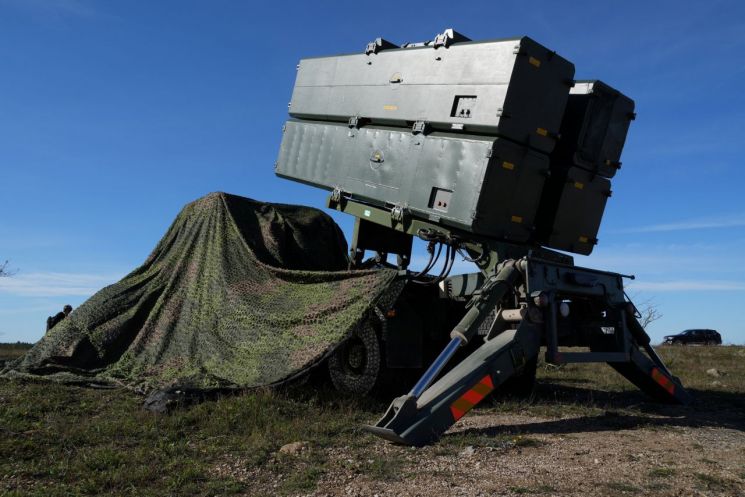
The main concern is the enormous budget required to build the drone wall. According to CNN, the border area between NATO's Eastern European countries and Russia stretches for 2,600 kilometers. Installing a drone wall across such a vast area running north to south through Europe would require at least 1 billion euros (approximately 1.65 trillion won), and is expected to take more than three years to complete.
It is also a burden that some pro-Russian countries among the Eastern European EU member states have been entirely excluded from the drone wall installation project. On the 26th of last month, Slovakia and Hungary were not invited to a high-level online meeting held by the EU to discuss the construction of the drone wall, due to their pro-Russian stance. This is because of concerns that sensitive security information related to the wall installation plan could be leaked to Russia.
As conflicts within the EU over the construction of the drone wall intensify, there are growing concerns that the plan could fizzle out, much like Ukraine's 'European Wall' project pursued in 2015. After Russia forcibly annexed Crimea in 2014, the Ukrainian government and the EU announced plans to install large-scale barbed wire fences in eastern Ukraine, but the project was never completed due to budget issues and other reasons by the time the war in Ukraine broke out. Subsequently, as these regions were all occupied by Russia during the war, the plan itself was scrapped.
Colonel Markus Reisner, a military expert from Austria, pointed out, "The European Wall plan will create an unfavorable situation for the European economy unless a drone jamming and low-cost unmanned aerial vehicle response system is developed to significantly reduce costs." He added, "Even if countries combine their missile defense systems immediately, it is not feasible to keep shooting down drones with interception missiles that are thousands of times more expensive than the drones themselves."
© The Asia Business Daily(www.asiae.co.kr). All rights reserved.



















