President Lee Receives Comprehensive Briefings on National Affairs During Chuseok Holiday
Official Annual Leave Scheduled for October 10
Presidential Office Holds 'Three Chiefs Plus Ministers' Meeting on South Korea-U.S. Tariff Negotiations
Meetings Continue on October 5, 7, 8, and 9
Final Preparations Underway for APEC Summit with Just Over 20 Days Left
South Korea-U.S. and U.S.-China Summits Anticipated as 'Major Events'
Urgent: Recovery from National Information Resources Fire
Swift Resolution Needed for Israeli Seizure of Korean Nationals
Following the long Chuseok holiday, the presidential office's national agenda is back in motion. The administration plans to accelerate discussions on follow-up measures to the stalled South Korea-U.S. tariff negotiations, as well as preparations for the Asia-Pacific Economic Cooperation (APEC) Summit to be held in Gyeongju at the end of October, and recovery efforts after the National Information Resources Management Agency (NIRMA) fire. In addition, regarding the incident during the Chuseok holiday in which a ship carrying Korean nationals was seized by Israeli forces, the government will prioritize the safety of its citizens until their safe return home.
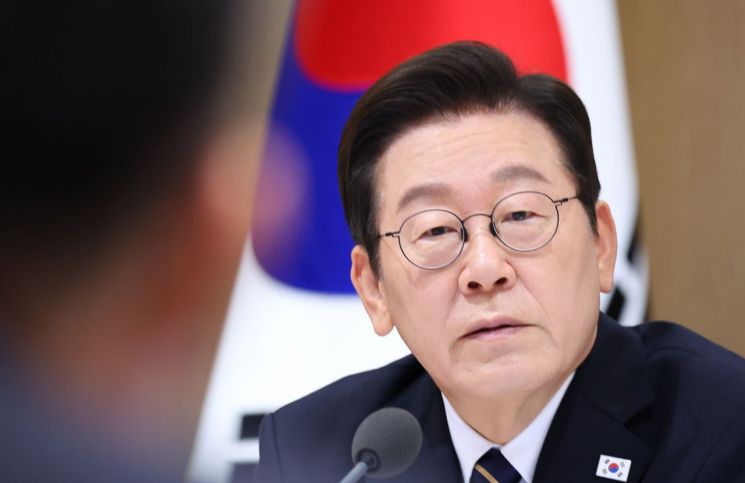
On the afternoon of the previous day (October 9) at 4:30 p.m., Kang Hoon-sik, Chief Presidential Secretary, convened a high-level meeting on the South Korea-U.S. tariff negotiations at the presidential office, joined by Kim Yong-bum, Chief Policy Secretary, and Wi Sung-rak, Chief National Security Secretary, as well as heads of relevant ministries. Attendees included Koo Yoon-cheol, Deputy Prime Minister and Minister of Economy and Finance, and Kim Jeong-gwan, Minister of Trade, Industry and Energy, among others. According to the presidential office, President Lee, who officially took annual leave on October 10, a so-called 'sandwich day,' plans to continue with necessary work after receiving briefings on current issues from the three chiefs (Chief Presidential Secretary, Chief Policy Secretary, and Chief National Security Secretary).
Although a broad agreement was reached between South Korea and the United States at the end of July, the tariff negotiations have been at an impasse for over two months. Progress has stalled because the U.S. side has made unreasonable demands regarding the details of implementation. The U.S. previously delivered a memorandum of understanding (MOU) outlining specifics for a $350 billion investment fund targeting the U.S. market, after which the Korean government responded with a revised proposal reflecting Korea's position on the excessive demands.
At the high-level and ministerial meeting held the previous day, follow-up measures were reportedly discussed in detail, based on a direct report from Kim Jeong-gwan, Minister of Trade, Industry and Energy, who met with Howard Lutnick, U.S. Secretary of Commerce, on October 4. As Minister Kim stated to reporters upon his return to Korea on October 6 that "there was significant consensus on issues such as the sensitivity of the Korean foreign exchange market," the major point of interest is whether the previously stalled tariff negotiations can now move forward. However, Kang Yoo-jung, spokesperson for the presidential office, clarified, "The presidential office and relevant ministries are meeting together on key issues such as the U.S.-Korea financial package," adding, "It is not yet time to talk about a rapid shift in the situation."
APEC Summit Approaching in Just Over 20 Days... Preparations for South Korea-U.S. and U.S.-China Summits as 'Major Events'
Preparations for the APEC Summit at the end of October are as critical as the South Korea-U.S. tariff negotiations. Scheduled to be held in Gyeongju from October 31 to November 1, the APEC Summit marks the first time Korea will lead a multilateral stage as the chair country. Leaders from 21 member countries will attend, and major diplomatic events such as the South Korea-U.S. and U.S.-China summits are expected to draw global attention. The presidential office and the government plan to focus on their role as coordinators, with key agendas including stabilizing global supply chains and restoring trade cooperation. Prime Minister Kim Min-seok stated, "We are making every effort to ensure that this APEC surpasses all previous ones and becomes a 'super-gap K-APEC.'"
There is particular interest in whether President Lee, following the South Korea-U.S. summit at the end of July, can find a new breakthrough in the tariff negotiations during his second meeting with U.S. President Donald Trump. If President Trump and Chinese President Xi Jinping both visit Korea and meet face-to-face, Korea could position itself as a 'bridge' between the U.S. and China. However, it remains a variable that President Trump, who is scheduled to visit Korea on October 29, may only attend the South Korea-U.S. and U.S.-China summits on the day of arrival or with an overnight stay, and then depart without attending the main APEC Summit events. A senior official from the presidential office commented, "Overall consultations are underway, but nothing can be predicted at this point."
South Korea-Japan relations, which have entered a new phase ahead of APEC, also depend on President Lee's actions. Sanae Takaichi, the newly elected president of Japan's ruling Liberal Democratic Party, is expected to take office soon as the successor to Prime Minister Shigeru Ishiba. Since President Takaichi is considered to have a far-right orientation, distinct from Prime Minister Ishiba-regularly visiting Yasukuni Shrine, where Class A war criminals from the Pacific War are enshrined-President Lee is expected to carefully consider ways to maintain the 'shuttle diplomacy' framework established with Prime Minister Ishiba.
Urgent: Recovery from NIRMA Fire and Resolution of the Israeli Seizure of Koreans
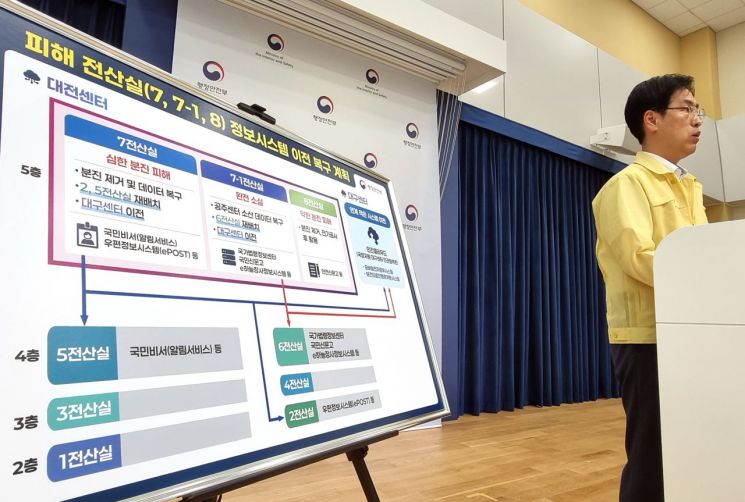
President Lee must also pay close attention to restoring the government administrative information system, which was shut down due to the NIRMA fire on September 26. Of the 709 computer systems halted by the fire, 193 have been restored, bringing the overall recovery rate to 27.2% as of 6 a.m. on October 9. During the Chuseok holiday, the government mobilized over 800 personnel-including 220 public officials, 570 on-site business staff, and 30 technical support and dust removal specialists-to focus all efforts on system recovery.
In response, the People Power Party has continued to raise suspicions throughout the Chuseok holiday regarding the timing of the recording of President Lee and his spouse’s appearance on the variety show 'Please Take Care of My Refrigerator' after the NIRMA fire. The presidential office explained that, following the fire, they received real-time reports from relevant ministries throughout the night, presided over emergency and Central Disaster and Safety Countermeasures Headquarters meetings, and spent about three hours recording the show on the afternoon of September 28 as part of efforts to globalize K-food. However, the People Power Party continued to question the 'missing 48 hours' and criticized the timing of the program recording up to the last day of the Chuseok holiday.
Follow-up measures are also needed regarding the incident in which a ship carrying Korean nationals was seized by Israeli forces while approaching the Gaza Strip. President Lee instructed, "Mobilize all diplomatic resources to ensure the safety, swift release, and early return of our citizens." According to civic groups such as Korea Palestine Emergency Action, Gangjeong Friends, and Pioneers, on October 8, 11 international relief ships approaching the Gaza Strip were seized by Israeli forces. It is known that Korean national activist Kim Ahyun was among those on board. The Israeli side has stated that they will make efforts to ensure the safety and prompt release of our citizens.
© The Asia Business Daily(www.asiae.co.kr). All rights reserved.



















