Korea Suicide Prevention Center Releases Psychological Autopsy Report
61.7% Had Outstanding Debts at Time of Death... Increase in Financial Management and Investment-Related Debt
Rate of Treatment or Counseling Before Death Rises to 61.3%... Discontinuation Rates Remain High

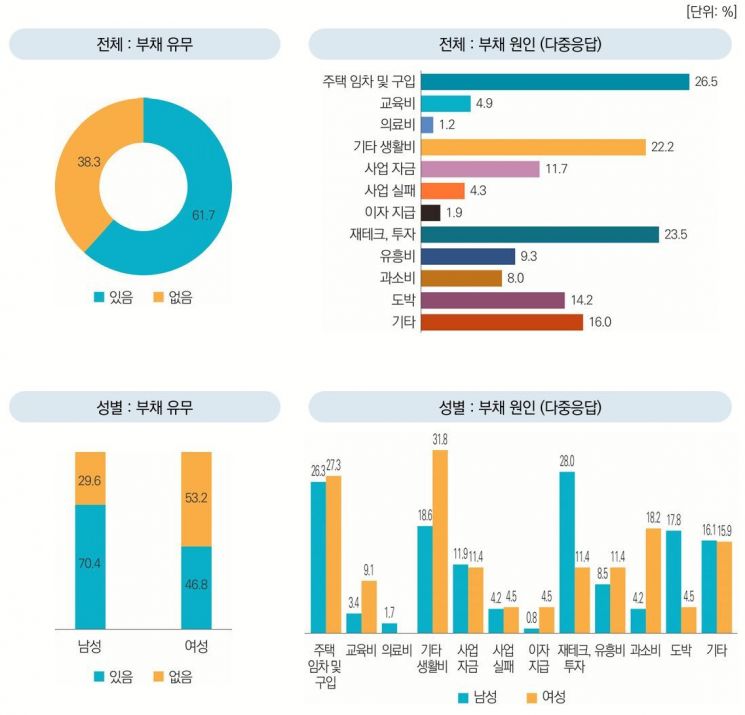
Most individuals who died by suicide exhibited "warning signs," such as symptoms of depression or verbal references to suicide, prior to their deaths. However, only 20% of those around them recognized these signs. At the time of death, more than 60% of the deceased had outstanding debts, which were found to have increased due to financial management and investment activities.
According to the "2024 Psychological Autopsy Interview Results Report" recently published by the Korea Suicide Prevention Center on October 9, individuals who died by suicide were found to have risk factors such as increased debt and deteriorating mental health. The report analyzed the characteristics of suicide victims over the past three years (2022-2024) and the past ten years (2015-2024) to identify trends and changes. A psychological autopsy is a research method that reviews statements from the bereaved or acquaintances, as well as records of the deceased, to identify psychological and behavioral changes and life stressors, ultimately estimating the causes of suicide. This analysis utilized data from interviews with 1,420 bereaved family members, covering 1,250 suicide victims (including 299 from the most recent three years).
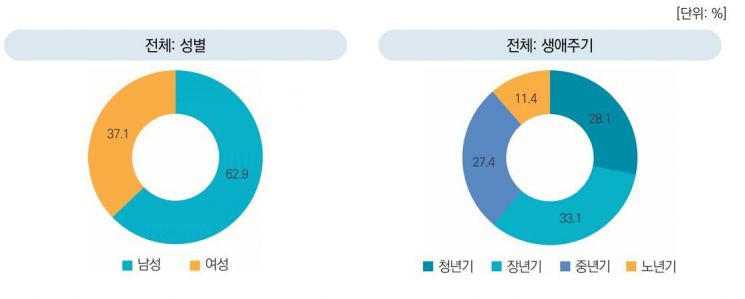
Suicide Victims: Male to Female Ratio 6:4... Most Common in Older Adults, Followed by Young Adults and Middle-Aged Adults
Examining the demographic and sociological characteristics of suicide victims, 62.9% were male and 37.1% were female. By age, 33.1% were older adults, 28.1% were young adults, 27.4% were middle-aged adults, and 11.4% were elderly. In terms of marital status, 50.2% were married, the largest proportion, while single-person households accounted for 20.1%. Regarding employment, 36.1% were employees, and 26.8% had no income at the time of death. Debt holders accounted for 61.7% (53.3% over ten years), with debts related to housing rental or purchase being the most common at 26.5% (25.0% over ten years). Notably, the proportion of debts related to financial management and investment was 23.5% (13.9% over ten years), marking the largest increase over the decade.
On average, suicide victims experienced 4.3 stressful events simultaneously. Mental health-related stress was experienced by 79.9% (85.5% over ten years), the highest proportion. Stress related to childhood and development was reported by 68.2% (50.6% over ten years), showing the largest increase in experience rate over the decade. A total of 99.3% (96.5% over ten years) of suicide victims exhibited psychological or behavioral changes (hereafter referred to as warning signs) before death, but only 20.1% (23.7% over ten years) of those around them recognized these signs. The most common types of changes were displaying a depressed mood (72.4%), talking or writing about suicide (70.4%), and changes in sleep patterns (69.7%). The rates of emotional changes such as "depressed mood" and "anxiety or nervousness" increased compared to the past ten years.
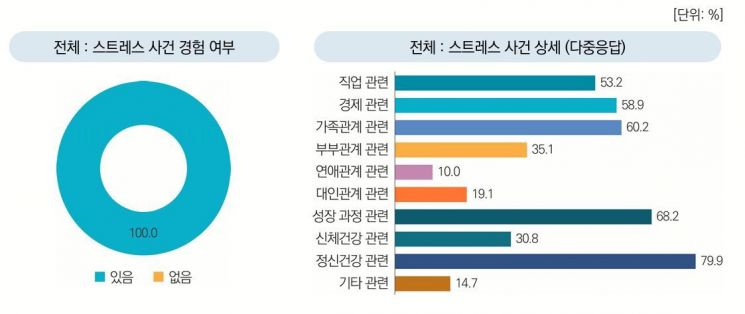
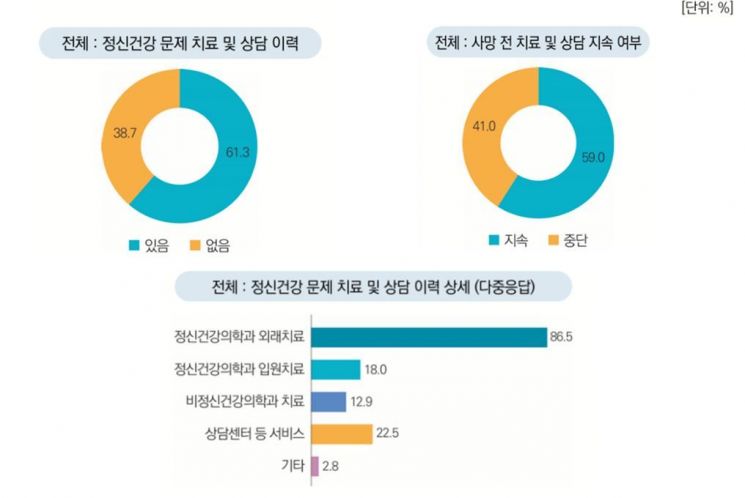
Average of 4.3 Stressful Events Experienced Simultaneously... High Rates of Treatment and Counseling Discontinuation Persist
In comparison, the rate of suicide victims who received treatment or counseling before death was 61.3% (56.0% over ten years). Outpatient psychiatric treatment was experienced by 86.5% (82.8% over ten years), and counseling services by 22.5% (16.8% over ten years), both showing increases over the decade. The rate of discontinuation of treatment or counseling was 41.0% (43.8% over ten years), which, despite a decrease, remains high.
The vast majority (99.0%) of bereaved family members who participated in psychological autopsy interviews over the past ten years experienced psychological and emotional difficulties, as well as changes in relationships and physical health, after bereavement. Mental health issues such as severe depression (19.6%), clinical insomnia (37.7%), complicated grief (37.0%), and suicidal ideation (54.8%) were also identified. In addition, more than 73.4% of bereaved families were unable to share the fact of the deceased's death with others, primarily due to social stigma surrounding suicide and concerns about the shock to close family and friends.
The foundation concluded that, based on this analysis, there has been an increase over the past three years in debt related to financial management and investment among suicide victims, an increase in the use of mental health services, and a rise in the proportion exhibiting suicide warning signs. It also noted that the increase in psychological and emotional difficulties among bereaved families highlights the need to strengthen support systems for both high-risk groups and bereaved families, suggesting that both short-term changes and long-term challenges should be considered in future suicide prevention policies.
Hwang Taeyeon, Chairman of the Foundation, stated, "The results of the psychological autopsy interviews provide important data confirming risk factors such as increased debt and deteriorating mental health, and reaffirm the importance of psychological and social support for bereaved families." He added, "We will do our utmost to expand in-depth analysis and research reflecting social changes and to incorporate these findings into suicide prevention initiatives."
© The Asia Business Daily(www.asiae.co.kr). All rights reserved.



















