Gyeonggi Province to Provide 56.21 Billion Won Annually for Rural Basic Income in Yeoncheon and Gapyeong
Government to Select Around Six Counties from 69 Population-Declining Regions Nationwide
Yeoncheon and Gapyeong to Submit Applications by Oc
As the Rural Basic Income pilot project, which Gyeonggi Province initiated for the first time in the country, is set to expand nationwide starting next year, the province is making a full-scale effort to support Yeoncheon County and Gapyeong County in being selected as target areas. Gyeonggi Province is backing these two regions by supporting budget decisions amounting to more than 50 billion KRW (approximately 37 million USD) annually for each area.
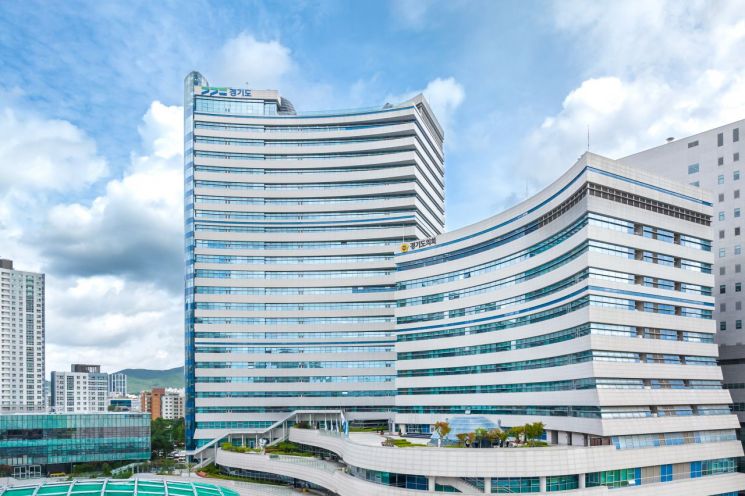
According to Gyeonggi Province on October 9, the central government plans to implement the "Rural and Fishing Village Basic Income Pilot Project" for two years starting in 2026 and is currently accepting applications from population-declining areas nationwide until October 13. The government intends to select approximately six out of 69 counties designated as population-declining areas across the country and provide a basic income pilot project by distributing 150,000 KRW (about 110 USD) per month in local currency to residents in the selected areas.
In Gyeonggi Province, Yeoncheon County and Gapyeong County are currently eligible to apply and are preparing to submit their applications.
The challenge lies in the cost-sharing requirement for the pilot project, which stipulates that 40% of the funding comes from the central government and 60% from local governments. This poses a significant burden for Yeoncheon County and Gapyeong County.
Currently, Gapyeong County has a population of 62,000, while Yeoncheon County has 41,000 residents. If selected for the rural basic income pilot project, Gapyeong County would be responsible for 60% of the total annual project cost of 112.01 billion KRW, amounting to 67.37 billion KRW. Similarly, Yeoncheon County would need to cover 60% of the total project cost of 74.47 billion KRW, which equals 44.95 billion KRW.
Gyeonggi Province recently decided to address this issue by supporting 50% of the local government’s share, considering the budgetary constraints of both regions. As a result, if both counties are chosen as pilot areas, Gyeonggi Province will provide annual support of 33.71 billion KRW to Gapyeong County and 22.5 billion KRW to Yeoncheon County, totaling 56.21 billion KRW per year.
In relation to this, the province has also recently reviewed specific implementation plans with the local currency operating agencies.
Meanwhile, Gyeonggi Province previously conducted the nation's first rural basic income pilot project in Cheongsan-myeon, Yeoncheon County, during the tenure of President Lee Jaemyung as Gyeonggi Governor in 2022.
According to an interim impact analysis conducted from January to July of this year, 39 out of 89 indicators-including life satisfaction and social interaction-showed improvement compared to before the implementation. The population increased by 4.4%, and the regional economic ripple effect was measured at 1.97, confirming positive effects on the local economy. This has become an important case supporting the need for nationwide expansion of the rural basic income program.
© The Asia Business Daily(www.asiae.co.kr). All rights reserved.
![Clutching a Stolen Dior Bag, Saying "I Hate Being Poor but Real"... The Grotesque Con of a "Human Knockoff" [Slate]](https://cwcontent.asiae.co.kr/asiaresize/183/2026021902243444107_1771435474.jpg)
















