Criticism That the Program’s Purpose Is Being Undermined
Half of the 'physician-scientists' trained for disease research and medical technology innovation are working in hospitals rather than research institutes.
On October 8, Yonhap News reported, citing the office of Kim Yongtae, a member of the National Assembly's Education Committee from the People Power Party, that it had received data from Seoul National University and other institutions. According to this data, a total of 148 students at Seoul National University College of Medicine have participated in the physician-scientist training program from 2018 to this year. A physician-scientist refers to a doctor who, instead of treating patients, conducts research on new bio-pharmaceuticals and advanced medical devices and technologies, contributing to industrial development and innovation.
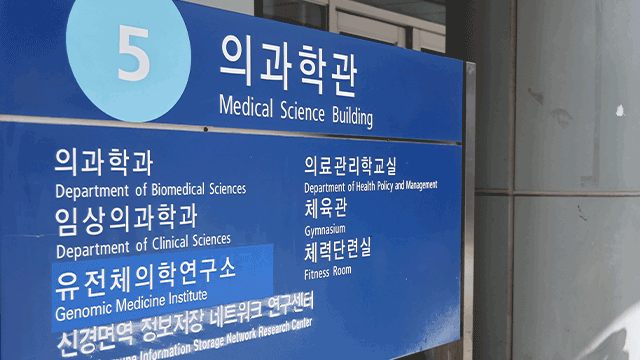
Forty-eight people have completed the program. Of these, 23 (47.9%) entered research and academic institutions, while 22 (45.8%) went to medical and healthcare institutions.
The situation is similar at other universities. As of last month, among 77 people who completed the Ministry of Health and Welfare's physician-scientist training program, 36 (46.8%) were working in clinical or research fields. Thirty-four (44.2%) were engaged in pure research, with 27 serving as postdoctoral researchers and 7 working in dedicated research organizations.
The purpose of the physician-scientist training program is to foster talent that contributes to disease research and medical technology innovation by combining clinical experience with scientific research expertise. However, there are criticisms that the program's intent has been undermined. Since 2021, the Ministry of Health and Welfare and the National Health Insurance Service have supported students interested in basic medical science from the undergraduate level, aiming to establish a foundation for the physician-scientist training system through medical science education programs.
Kim Yongtae pointed out, "The current medical school-based curriculum has limitations in training physician-scientists," adding, "Compared to doctors, research positions offer much lower income, and both the research environment and career prospects are challenging, making it difficult to attract top talent."
Some universities are seeking to train physician-scientists through their colleges of engineering. The Korea Advanced Institute of Science and Technology (KAIST) established a Graduate School of Medical Science and Engineering in 2004. Pohang University of Science and Technology (POSTECH) is pursuing the establishment of a research-oriented medical school.
Meanwhile, according to a report published last year by Kim Eunjeong, a legislative researcher at the National Assembly Research Service, titled "Tasks for Training Physician-Scientists to Foster the Biohealth Industry," only about 30 (0.8%) of the approximately 3,800 annual graduates of domestic medical schools majored in basic medical science to become physician-scientists.
© The Asia Business Daily(www.asiae.co.kr). All rights reserved.
![Clutching a Stolen Dior Bag, Saying "I Hate Being Poor but Real"... The Grotesque Con of a "Human Knockoff" [Slate]](https://cwcontent.asiae.co.kr/asiaresize/183/2026021902243444107_1771435474.jpg)
















