Six Performances Centered on the Theme of "Dance"
Running Through November 6
'The History of Tango' is a piece composed in 1986 by Argentine composer Astor Piazzolla for a flute and guitar duet. Today, it is performed as a chamber music piece, typically featuring a combination of two instruments, which may include not only flute and guitar but also piano, violin, cello, or bandoneon. At the opening concert of the 17th Seoul International Music Festival (SIMF), which will take place at Lotte Concert Hall on October 30, audiences will be able to enjoy this piece performed by a large orchestra.
Celebrating its 17th edition this year, the Seoul International Music Festival will open on October 30 and run for one week until November 6, with performances at venues including the Seoul Arts Center, Lotte Concert Hall, and Sejong Center for the Performing Arts. The theme of this year's festival is dance. There will be six performances featuring music related to various dances, including waltz, tango, and ballet. The opening concert, featuring The History of Tango, will be conducted by Radek Baborak, former principal horn of the Berlin Philharmonic.
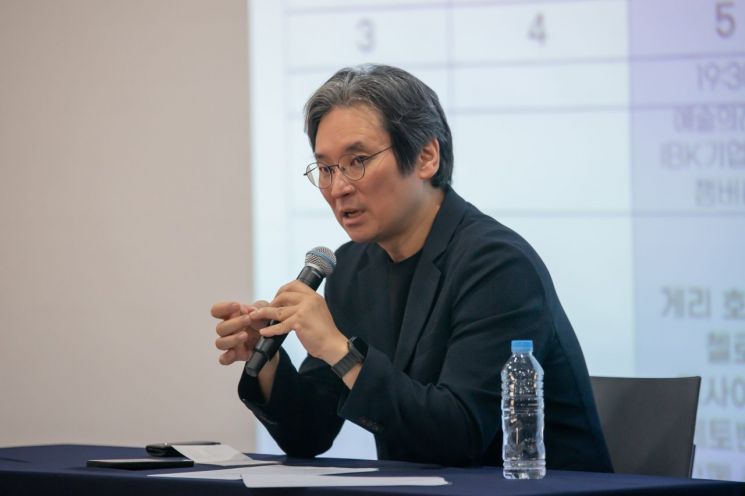
Jaejun Ryu, Artistic Director of the Seoul International Music Festival, stated at a recent press conference, "Tango was originally a dance piece often played in South American bars, but at some point, it became a major part of classical music. I think it's almost miraculous that tango entered the mainstream classical music scene in the 20th century." Director Ryu added, "I wanted to present audiences with a lively and joyful theme, which is why I chose dance. I hope people can gain energy from this year's festival."
Piazzolla is credited as the main figure who brought tango into the realm of classical music. The arrangement of The History of Tango for this concert was done by composer Kim Honggeol.
Artistic Director Jaejun Ryu emphasized that arranging can be more challenging than composing, and that the value of arrangement should be recognized.
"Writer Han Kang won the Nobel Prize because her writing is excellent, but I also believe the power of translation played a significant role. In music, arrangement is akin to translation in literature. Classical composers have attempted many arrangements to suit different venues and spaces. Schoenberg arranged Brahms's piano quartet as an orchestral piece, and Ravel's orchestral arrangement of Mussorgsky's piano suite Pictures at an Exhibition remains a model for modern composers. Piazzolla's original piece is very small in scale, but this time it has been newly arranged for a large orchestra."
On October 31 and November 1, there will be two chamber music concerts featuring German dance music and Russian dance music, respectively. Of particular note, the Russian dance concert will present Stravinsky's orchestral work The Rite of Spring, which has had a major influence on contemporary music, arranged for two pianos and two cellos.
On November 2, the theme will be the waltz, with performances of works by 'The King of Waltz' Johann Strauss II and others. On November 5, world-renowned cellist Gary Hoffman will perform all five of Beethoven's cello sonatas over a span of two hours and twenty minutes.
The closing concert on November 6 will feature the Korean premiere of Japanese composer Toru Takemitsu's viola concerto A String Around Autumn, commemorating the 60th anniversary of diplomatic relations between Korea and Japan. Violist Park Hayang, winner of the Tokyo International Competition, will perform as soloist.
Director Jaejun Ryu described Toru Takemitsu as a composer who created music ahead of his time.
"The sheet music is very modern, but the sound is extremely lyrical. He is a composer who creates such music. A String Around Autumn is a piece that encourages people to embrace one another. The composer said it contains the meaning of holding on to all memories-both good and bad-from the past as we walk a new path in autumn. I thought it was a piece that fit both the significance of the 60th anniversary of Korea-Japan relations and the purpose of the Seoul International Music Festival."
Director Ryu also shared plans to expand exchanges with Asian countries, noting that there are now many outstanding musicians not only in Japan and China but also in Taiwan, Vietnam, and Indonesia.
The final piece of the closing concert will be Sergei Rachmaninoff's Symphonic Dances, a collection of brilliant and impressive dance music.
Director Ryu explained that he prepares for the festival over a long period to ensure its quality, adding that arrangements for performances have already been completed through 2028.
He said, "I believe the role of the festival is to create a stage where performers can play the music they want, music they like, and music they can perform well. The most important thing is to give performers plenty of time and to listen to their stories."
Director Ryu also mentioned, "The 200th anniversary of Beethoven's death in 2027 and the 200th anniversary of Schubert's death in 2028 are both significant milestones approaching in succession. For the 2029 festival, the performer I most want to invite is pianist Yefim Bronfman."
© The Asia Business Daily(www.asiae.co.kr). All rights reserved.

















