US Focused on Gangnam 3 Districts, China on Guro and Yeongdeungpo: Market Polarization
Junho Jung: "Speculative Real Estate Shopping by Foreigners Must Be Blocked"
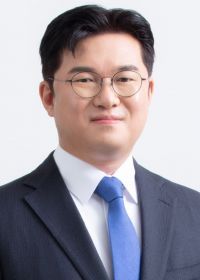 Junho Jung, member of the Democratic Party of Korea.
The number of foreigners owning apartments in Seoul has been increasing every year. The so-called "Hangang Belt," which centers on the three districts of Gangnam, Seocho, and Songpa, has emerged as a major investment destination for Americans, while the southwestern areas of Seoul, including Guro and Yeongdeungpo, have a high proportion of Chinese residents who actually live in their properties.
According to data submitted by Junho Jung, a member of the Democratic Party of Korea (representing Gwangju Buk-gu Gap), from the Korea Real Estate Board, as of December last year, foreigners owned a total of 12,516 apartments in Seoul. Among these, Americans held the largest share, with 5,678 units (45.4%), and 63% of these (3,576 units) were concentrated in so-called "high-priced housing clusters," including Gangnam, Seocho, Songpa, Mapo, Yongsan, Seongdong, and Gwangjin districts.
Americans alone owned 2,228 apartments in the three Gangnam districts, suggesting a significant influence on the local housing market. This trend reflects the perception of high-end Korean real estate as an attractive investment, especially amid the strong US dollar.
Chinese nationals owned a total of 2,536 apartments in Seoul, making them the second-largest group after Americans. Chinese-owned apartments were most concentrated in Guro-gu (610 units), Yeongdeungpo-gu (284 units), Dongdaemun-gu (150 units), and Geumcheon-gu (138 units), indicating a focus on the southwestern part of the city. Given the high proportion of Chinese nationals and Chinese compatriots residing in these areas, it is interpreted that most of these purchases are for actual residential purposes. Meanwhile, Chinese nationals owned only 159 apartments in the Gangnam area, showing a distinctly different distribution compared to Americans.
Following the United States and China, the next largest groups of foreign apartment owners in Seoul were from Canada (1,831 units), Taiwan (790 units), Australia (500 units), the United Kingdom, France, and Germany (334 units), New Zealand (229 units), and Japan (220 units). The Korea Institute of Construction Policy noted that foreign housing transactions are becoming polarized between "investment-oriented" purchases in high-priced areas and "actual residential demand" in regions with high concentrations of foreign residents.
Amid growing public concern about speculative real estate purchases by foreigners, the government implemented a "Foreigners' Housing Transaction Permit System" in August. In certain parts of the Seoul metropolitan area, foreigners are now required to provide proof of funding when purchasing a home and must reside in the property for at least two years. This measure is intended to strengthen investigations into the source of foreign funds, visa types, and residency status to prevent market disruption.
Assemblyman Jung emphasized, "During the one-year temporary period for the foreign land transaction permit system, we must closely monitor foreign housing transactions to create a balanced system that protects the actual residential needs of foreigners and the rights of overseas Koreans, while blocking speculative real estate purchases."
© The Asia Business Daily(www.asiae.co.kr). All rights reserved.
















