"What Matters More Than Tariff Cuts Is Tangible Gains"
Key Issues: Investment Structure, Currency Stability, and Visa Liberalization
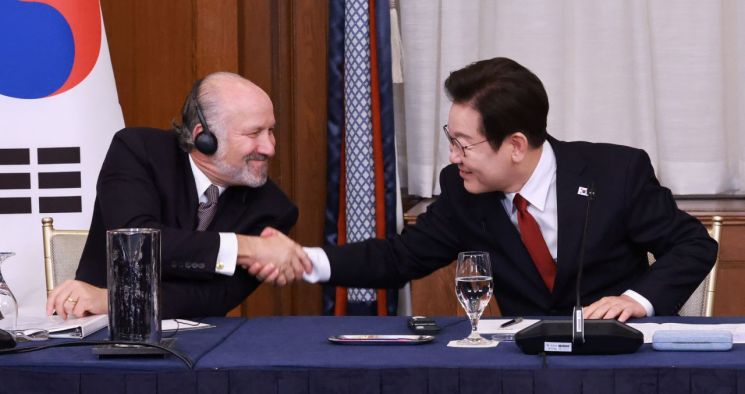
As the Korea-U.S. tariff negotiations remain at an impasse, attention is focused on the specific details of the demands the Korean government will present. There are growing calls not only for tariff reductions, but also for securing tangible benefits such as restructuring the investment framework for the $350 billion (approximately 480 trillion won) in U.S.-bound investments, concluding a currency swap agreement, ensuring fair profit distribution, and easing visa restrictions. The longer the negotiations drag on, the more critical it becomes for Korea to secure favorable terms, as these will determine the future direction of industrial competitiveness and financial stability.
According to the Ministry of Trade, Industry and Energy on October 5, Minister Kim Jeonggwan met with U.S. Secretary of Commerce Howard Lutnick in Washington on October 4 (local time) to discuss the status and key issues of the negotiations. At this meeting, it was reported that Minister Kim delivered Korea’s revised proposal. He also participated by phone in an emergency trade affairs meeting at the presidential office, where he reported the outcome of the talks and discussed the U.S. demand for "upfront investment" and the linkage between currency and visa issues. The presidential office stated, "We will maintain leadership in the negotiations under the principle of prioritizing national interests," expressing its intention to secure not only tariff relief but also financial stability measures and the liberalization of workforce mobility.
The core issue in the negotiations is the restructuring of the investment framework. The United States is demanding that the $350 billion investment and guarantee package proposed by Korea be confirmed as a "cash-equivalent commitment." The Korean government, considering fiscal and foreign exchange burdens, maintains its position of implementing the investment in stages and through a public-private partnership structure. An official from the Ministry of Trade, Industry and Energy said, "The scale is too large to be borne by government finances alone," and emphasized, "We need a realistic model that both our government and the public can accept."
The currency swap is another crucial point in these negotiations. Minister Kim is known to have proposed the conclusion of a permanent or unlimited currency swap with the United States as a key condition for tariff relief. This stems from the need for a liquidity safety net to support the inevitable large-scale outflow of dollars under the investment commitments.
The currency swap is regarded as more than a simple foreign exchange transaction; it is seen as a symbol of trust between the two countries. The $30 billion Korea-U.S. swap agreement concluded during the 2008 financial crisis is a precedent that halted the sharp decline in Korea’s foreign exchange market. However, there is currently no permanent swap line in place. Accordingly, the government is seeking to use these negotiations as an opportunity to re-establish a financial safety mechanism equivalent to those used in response to foreign exchange crises. A financial industry official commented, "Concluding a permanent swap agreement could be a more substantial measure to raise the credit rating of Korea’s financial market than lowering the tariff rate from 25% to 15%."
The profit distribution structure is also an issue that must be resolved. The draft presented by the U.S. reportedly includes provisions for U.S. companies to receive priority in the distribution of most investment profits. This creates an imbalanced structure where Korea bears the capital and risk, but profits are limited. The government has stated, "Unless fair distribution is guaranteed, the significance of the negotiations is diminished," and is demanding a restructuring of the framework. Minister Kim has also stated, "The purpose of these negotiations is not simply to lower tariffs, but to protect the structural interests of our industries."
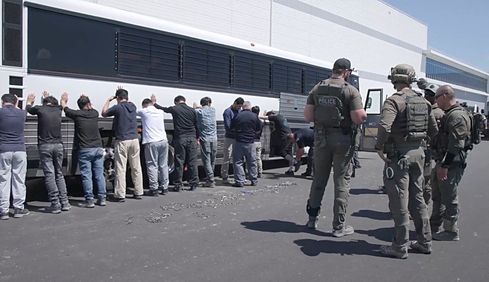
The visa issue is also a condition that Korea must secure. To facilitate the localization of advanced industries, the Korean government is demanding that the United States expand quotas and simplify procedures for professional (H-1B) and technical (E-7) visas. As the number of Korean factories in key industries such as semiconductors, batteries, and AI increases in the United States, restrictions on the stay of Korean technical personnel have become more severe. An official from the Ministry of Trade, Industry and Energy said, "Without visa liberalization, the significance of the investments is halved."
The government views the upcoming APEC summit as a turning point in the negotiations. If a summit meeting with U.S. President Trump is realized, the goal is to reach a comprehensive agreement covering the complex issues of tariffs, investment, swaps, and visas. However, given the strengthening protectionist stance within the United States, most analysts expect that a quick resolution will be difficult.
© The Asia Business Daily(www.asiae.co.kr). All rights reserved.
![Clutching a Stolen Dior Bag, Saying "I Hate Being Poor but Real"... The Grotesque Con of a "Human Knockoff" [Slate]](https://cwcontent.asiae.co.kr/asiaresize/183/2026021902243444107_1771435474.jpg)

















