16,000 Low-Income Households Exposed as Heatwaves Become the Norm
Won Kim: "Welfare Policies Must Shift Toward Seasonal Balance"
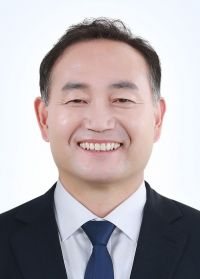 Won-Ki Kim, member of the Democratic Party of Korea.
As heatwaves become a regular part of daily life due to the climate crisis, the number of people suffering from heat-related illnesses has surged significantly. However, there are growing concerns that budgets and policies for energy welfare targeting vulnerable groups are regressing.
According to materials submitted by Assemblyman Won Kim of the Democratic Party of Korea (representing Mokpo, South Jeolla Province) to the National Assembly audit on October 4, the number of heat-related illness cases soared from 1,078 in 2020 to 4,298 as of August this year-an almost fourfold increase. Notably, the number of indoor heat-related illness cases jumped from 171 in 2020 to 888 this year, highlighting the urgent need to improve residential environments.
Meteorological data further underscores the severity of the situation. The number of heatwave advisories and warnings issued during the summer (June to August) increased from 148 times in 2020 (98 advisories and 50 warnings) to 243 times in 2025 (125 advisories and 118 warnings), a 1.6-fold rise over five years. This demonstrates the pressing need for government measures to support energy-vulnerable populations.
Nevertheless, the 2025 cooling budget for the energy efficiency improvement program for low-income households is set at 15.4 billion won, a reduction of 1 billion won compared to the previous year, and only 17% of the heating budget (89.6 billion won). Over the past five years (2020-2024), the average annual cooling budget was 11.9 billion won, while the heating budget averaged 80.4 billion won, revealing a 6.7-fold gap. The imbalance is also evident in the actual scale of support: as of 2024, cooling assistance was provided in 18,034 cases, less than half the 36,977 cases of heating support.
The outlook for next year’s budget is also bleak. The Korea Energy Foundation requested a total of 17.2 billion won from the Ministry of Economy and Finance to support cooling equipment for 20,000 households and 520 welfare facilities in 2026. However, only 14.2 billion won was allocated, covering just 19,000 households and 150 facilities. As a result, 3 billion won-enough for 1,000 households and 370 facilities-was cut from the budget.
If the current budget remains unchanged, next year’s cooling support will reach only 19,000 households, slightly more than half of the estimated real demand of 35,000 households. Among welfare facilities, only 150 out of a total of 520 will receive support, leaving a significant number of vulnerable groups and facilities at risk of being left in a “cooling blind spot.”
Assemblyman Kim emphasized, “In an era where heatwaves have become the norm, vulnerable groups are inevitably pushed to the brink of survival during extreme heat. The government must significantly expand the cooling support budget for energy-vulnerable groups and shift its policy direction toward balanced energy welfare across all seasons.”
© The Asia Business Daily(www.asiae.co.kr). All rights reserved.
![Clutching a Stolen Dior Bag, Saying "I Hate Being Poor but Real"... The Grotesque Con of a "Human Knockoff" [Slate]](https://cwcontent.asiae.co.kr/asiaresize/183/2026021902243444107_1771435474.jpg)










