The Rise of 'Modern-Day Slavery' Amid the AI Boom

The "996" work culture, a Chinese-style high-intensity schedule, is gaining traction in Silicon Valley, home to global big tech companies such as Nvidia and Google. Amid the artificial intelligence (AI) boom, this culture is spreading as a way to demonstrate loyalty to the company. In contrast, in China itself, there are signs of the opposite trend, with growing fatigue over the "overwork society" and government regulations prompting companies to launch "no overtime" campaigns.
The Emergence of a 'Modern Slavery System' in Silicon Valley
On October 2 (local time), the U.S. business news site Quartz reported that Silicon Valley startups are reviving the 72-hour workweek, which has been likened to "modern slavery" in China.
The 996 work system refers to a culture of working 12 hours a day, six days a week. This means working from 9 a.m. to 9 p.m., six days a week, a practice that originated in China's high-intensity tech industry. Well-known entrepreneurs, including Alibaba founder Jack Ma, have supported this system.

This culture began to attract attention when Martin Mignot, a partner at Index Ventures, posted on LinkedIn earlier this year that it was "quietly becoming the standard across the tech industry." His post became a hot topic on startup social networking services (SNS).
In fact, according to consumer spending data from the payments company Ramp, corporate card usage on Saturdays has increased noticeably year-on-year since the beginning of the year. Most of these expenses are for restaurants, delivery services, and in-house catering, which are typically interpreted as costs incurred "while working."
Ara Karajian, an economist at Ramp, pointed out, "In a society with a large economy like San Francisco, the average is usually stable, but this data is an exception," adding, "The 996 culture is now leaving 'measurable traces' in Silicon Valley's spending data."
The New York Times also recently introduced the 996 culture in an article, reporting that in Silicon Valley, where the AI boom is in full swing, the "996" style of overtime is seen as a shortcut to success, or at least as a way to show that one takes work seriously.
'No Overtime' Campaigns in China... Still Prevalent Despite Legislation
Meanwhile, in China, criticism of the 996 culture is growing amid concerns about an "overwork society."
Earlier this year, a new workplace trend called "no overtime" became a major topic on Chinese SNS. Some employees at certain companies shared their experiences of being required to leave work at the designated time. These posts garnered millions of views at the time.
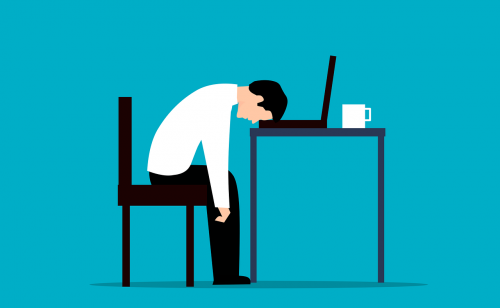
According to the Chinese state-run media Global Times, Chinese home appliance company Midea mandated that employees finish work by 6:20 p.m. as part of an effort to reduce internal administrative procedures. Major IT companies such as ByteDance, the operator of the popular Chinese SNS platform TikTok, and Tencent have also begun improving working conditions.
The Chinese government began changing the 996 culture in 2021. That year, the Supreme Court banned forcing employees to work 72 hours a week, leading to a shift in perceptions of the 996 culture. According to Reuters, a particularly shocking incident at the time was the death of a 22-year-old female employee at e-commerce company Pinduoduo, who collapsed and died on her way home after midnight.
However, overtime work remains common in China. Reuters cited multiple reasons for this, including lax enforcement of labor laws and low minimum wages.
Currently, Chinese labor law stipulates that employees cannot work more than eight hours a day or 44 hours a week, and overtime is limited to a maximum of one to three hours per day and 36 hours per month. Nevertheless, from January to May this year, the average weekly working hours of Chinese workers was 48.5 hours.
An executive in the renewable energy industry told Reuters that although he does not receive overtime pay, performance bonuses account for half of his salary, leaving him no choice but to work more than 12 hours every day. He said, "I work even more than 996 every week. I am completely exhausted."
© The Asia Business Daily(www.asiae.co.kr). All rights reserved.
![Clutching a Stolen Dior Bag, Saying "I Hate Being Poor but Real"... The Grotesque Con of a "Human Knockoff" [Slate]](https://cwcontent.asiae.co.kr/asiaresize/183/2026021902243444107_1771435474.jpg)


















