End of Temporary Telecom Fee Discounts
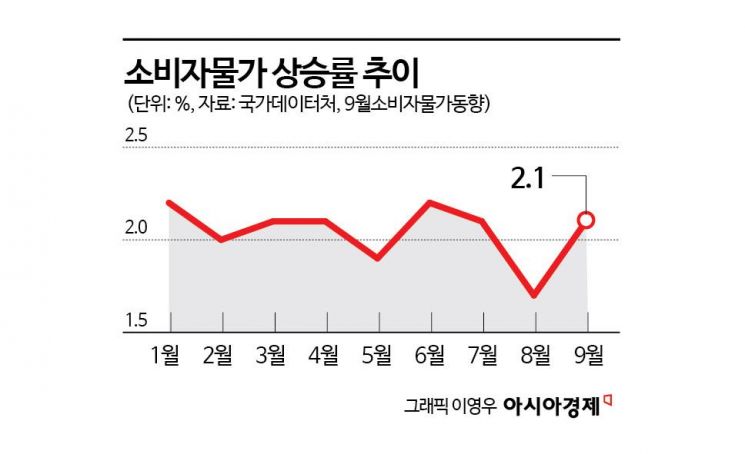
Inflation Returns to 2% Range in Just One Month
Egg Prices See Largest Increase in Three Years and Eight Months
Last month, the consumer price growth rate returned to the 2% range for the first time in two months. The main factors identified were the disappearance of the temporary effect from the reduction in telecommunications fees in August and a rebound in petroleum prices. In particular, the price increase rate for processed foods reached the 4% range, driving overall inflation higher.
According to the “September Consumer Price Trends” released by the National Data Office on October 2, the consumer price index last month rose by 2.1% compared to the same month last year. This figure is 0.4 percentage points higher than August’s 1.7%, marking a return to the 2% growth range for the first time in two months since July (2.1%).
By item, service prices rose by 2.2% year-on-year. Public service prices, which were at -3.6% in August, turned to an increase of 1.2% last month, pushing inflation higher. This shift was due to the end of fee discounts following the large-scale hacking incident at SK Telecom.
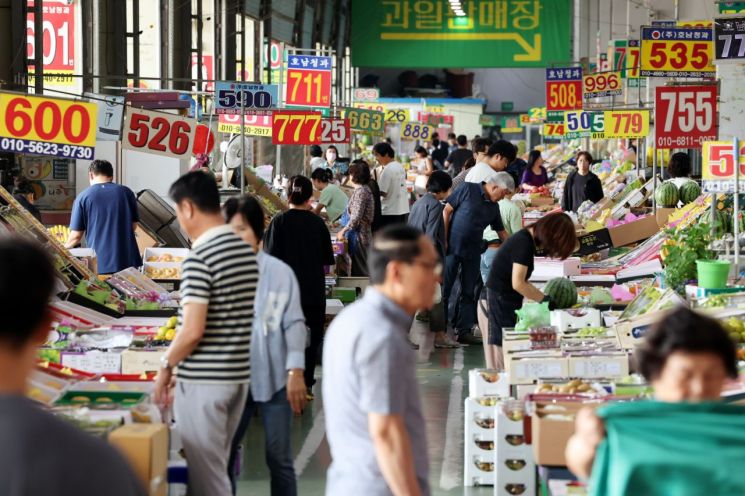
Prices of industrial goods also increased by 2.2%, driven by the rebound in petroleum prices. The price growth rate for processed foods reached 4.2% year-on-year. Coffee (15.6%) and bread (6.5%) saw significant increases, while prices of diesel (4.6%) and gasoline (2.0%) also rose.
Lee Dowon, Director of Economic Trend Statistics at the National Data Office, analyzed, “Last month, the end of the 50% discount on mobile phone fees by some telecom providers led to a rise in public service prices. For petroleum products, there was a base effect from last September’s -7.6%, and this was compounded by rising international oil prices, exchange rate fluctuations, and changes in fuel tax reduction rates, resulting in a 2.3% increase.”
Dining-out prices also rose by 3.4%, expanding from the previous month’s 3.1%. For certain items such as pizza (7.7%) and hamburgers, prices jumped due to the end of discounts and higher delivery fees. In contrast, personal services other than dining out increased by only 2.1%, a smaller rise than the previous month’s 3.1%.
The price growth rate for agricultural, livestock, and fishery products rose by 1.9%, a slowdown compared to the previous month’s 4.8%. In particular, vegetable prices fell by 12.3% year-on-year, easing inflationary pressure. This was attributed to a base effect from last year’s heatwave-driven price surge and favorable weather conditions this year. In fact, cabbage prices plunged by 24.6% compared to last year, while prices of radishes and carrots dropped by 42.1% and 49.6%, respectively.
However, prices of livestock and fishery products rose by 5.4% and 6.4%, respectively. Some items and fish species, such as rice (15.9%), pork (6.3%), domestic beef (4.8%), hairtail (3.7%), and mackerel (10.7%), continued to show high growth rates. Notably, egg prices surged by 9.2%, marking the largest increase in three years and eight months since January 2022 (15.8%).
The living necessities price index, which strongly affects household perceptions, rose by 2.5% year-on-year. Food prices climbed by 3.2%, remaining at a high level. The core inflation index, based on the OECD method and excluding food and energy, rose by 2.0%, the lowest so far this year. The Korean-style core inflation index, which excludes agricultural products and petroleum, increased by 2.4%.
The government stated, “Given the uncertainties such as international oil price volatility, we will make every effort to stabilize perceived inflation through joint measures with relevant ministries. In particular, we plan to respond swiftly to price and supply-demand fluctuations in key items closely related to people’s livelihoods, such as agricultural, livestock, and fishery products and petroleum.”
© The Asia Business Daily(www.asiae.co.kr). All rights reserved.
![From Bar Hostess to Organ Seller to High Society... The Grotesque Con of a "Human Counterfeit" [Slate]](https://cwcontent.asiae.co.kr/asiaresize/183/2026021902243444107_1771435474.jpg)

















