Trump Targets Opposition Leaders' District Budgets
Vance and Johnson Signal Federal Employee Layoffs Amid Shutdown
Stopgap Spending Bills Rejected Again in the Senate
On the first day of the U.S. federal government shutdown (Shut Down·temporary suspension of operations) on October 1 (local time), the White House and the Republican Party warned of the possibility of large-scale layoffs of federal employees, putting pressure on the Democratic Party. The White House also began taking a hardline approach by cutting budgets for Democratic lawmakers' districts, using this as leverage to secure cooperation for passing a stopgap spending bill to resolve the shutdown.
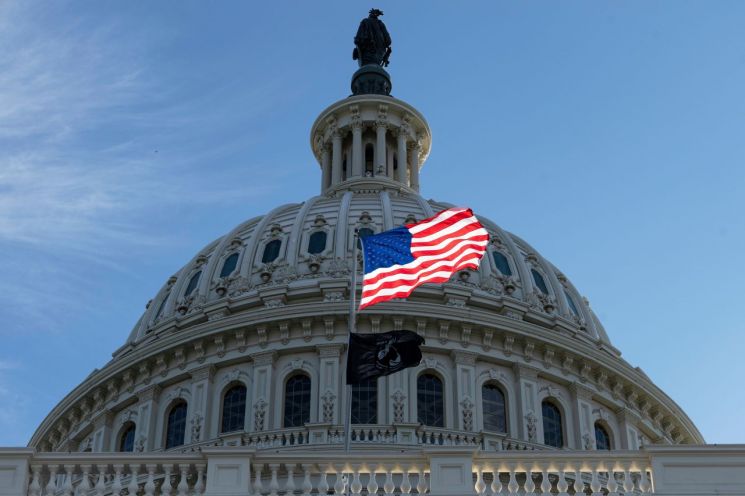
U.S. Vice President J.D. Vance stated at a White House press conference that day, "If the shutdown continues, we will have to lay off some personnel." He added that a final decision on layoffs has not yet been made and said, "No one wants to lay anyone off." He argued that the Democratic Party is responsible for the negative consequences caused by the shutdown.
White House spokesperson Karoline Leavitt also said at a briefing that day, "Unfortunately, the Democrats have shut down the government," and added, "Under the President's directive, the Office of Management and Budget (OMB) is working with all departments to identify areas where cuts are possible. We believe layoffs are imminent." Former President Donald Trump had also warned the previous day that "if there is a shutdown, there will be many layoffs."
The Republican Party also pressured the Democrats by raising the possibility of federal employee layoffs. Mike Johnson, Speaker of the House and a Republican, said in a Fox News interview, "This shutdown gives us an opportunity to do things that would normally be difficult for the Republican Party to pursue without Democratic votes," and added, "The White House will have to decide which services are essential, which programs and policies should continue, and which are not priorities."
In addition, the Trump administration directly targeted the budgets for districts represented by Democrats and projects prioritized by the Democratic Party.
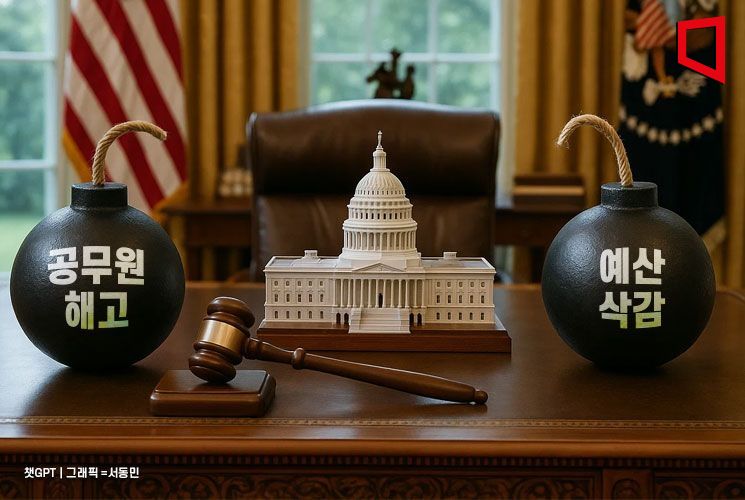
Russell Vought, Director of the White House Office of Management and Budget, announced on the social networking service X (formerly Twitter) that about $18 billion in funding for New York City infrastructure projects would be put on hold. Officially, he claimed this was due to DEI (Diversity, Equity, and Inclusion) policies that he argued violate the Constitution. However, some analysts see this as a pressure tactic aimed at Democratic leaders such as Senate Majority Leader Chuck Schumer and House Minority Leader Hakeem Jeffries, both of whom represent New York. He also referred to budget allocations for environmental policies as "the left's climate agenda" and "a new kind of green scam," announcing an $8 billion cut.
This shutdown occurred after Congress failed to pass both a new fiscal year budget and a stopgap spending bill by the last day of the 2025 fiscal year. The Democratic Party insisted that the stopgap bill include an extension of Obamacare subsidy payments, but the Republican Party opposed this, labeling it a benefit for undocumented immigrants, resulting in stalled negotiations. With Congress failing to approve the budget, most government agencies have suspended operations, and a significant number of federal employees, except for essential personnel, have been placed on unpaid leave.
On this day, the Senate held a plenary session to vote on the stopgap bills submitted by both the Democratic and Republican parties in an effort to end the shutdown. Both bills failed to reach the required 60 votes. The Democratic bill received 47 votes in favor and 53 against, while the Republican bill received 55 in favor and 45 against, resulting in both being rejected. However, as three Democratic and Democrat-leaning independent senators voted in favor of the Republican bill, there are concerns that this defection could weaken the Democratic Party's negotiating power going forward. CNN reported that the next Senate vote is expected to take place on October 3.
Meanwhile, moderate Republicans and Democrats have begun discussing a compromise plan and are exploring exit strategies to restore normal government operations.
© The Asia Business Daily(www.asiae.co.kr). All rights reserved.
![Clutching a Stolen Dior Bag, Saying "I Hate Being Poor but Real"... The Grotesque Con of a "Human Knockoff" [Slate]](https://cwcontent.asiae.co.kr/asiaresize/183/2026021902243444107_1771435474.jpg)

















