Lutnick: "Taiwan Will Be Safer if Chip Production Is Shared with the U.S."
Taiwan Deputy Premier: "We Cannot Agree"
Howard Lutnick, the U.S. Secretary of Commerce, proposed that Taiwan produce half of its semiconductors in the United States, but the Taiwanese side has stated that it cannot accept such an offer.
Previously, on September 28 (local time), Secretary Lutnick said in an interview with NewsNation, "My goal, and the goal of the current administration, is to significantly bring semiconductor manufacturing facilities onshore and produce our own chips," adding, "I proposed to Taiwan that we each make half, splitting it 50-50." This is interpreted as an intention for the United States to directly manufacture half of the semiconductors it uses domestically.
Secretary Lutnick aims to increase the domestic production share of semiconductors to 40% by the end of the current administration's term, and projected that $500 billion (about 700 trillion won) in domestic investment would be needed to achieve this goal.
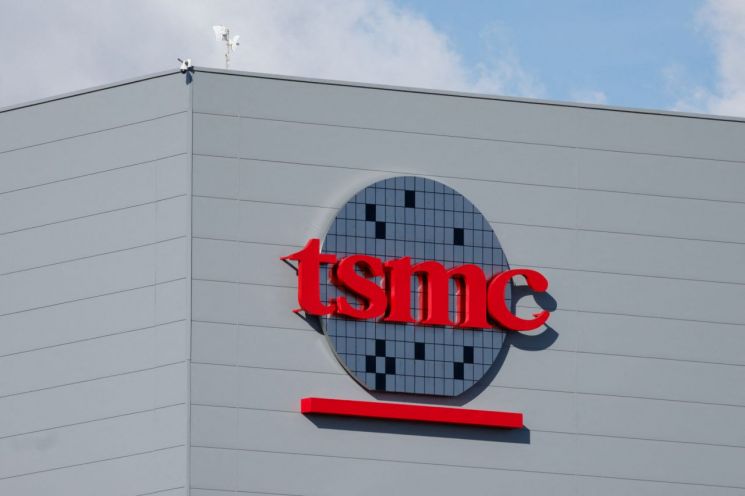
He also expressed concern that Taiwan, which produces more than 90% of the world’s advanced semiconductors, is located far from the United States and adjacent to China. Taiwan Semiconductor Manufacturing Company (TSMC) accounts for over 70% of the global foundry (semiconductor contract manufacturing) market, and is estimated to have a market share of over 90% in advanced process technologies.
TSMC’s status in the semiconductor market is unrivaled. It is even referred to as the “silicon shield” because it is seen as playing a role in protecting Taiwan from China’s military threats. However, Secretary Lutnick downplayed the silicon shield theory, arguing, “Taiwan will be safer when semiconductor production between the United States and Taiwan is balanced.”
Taiwan has made it clear that it will not accept the U.S. demand. According to Central News Agency and other sources, Cheng Li-chun, Taiwan’s Deputy Premier, told reporters at the airport upon returning from negotiations in the United States on October 1 that Taiwan would not agree to the U.S. proposal.
Deputy Premier Cheng stated, “The negotiation team will not agree to splitting semiconductor production 50-50,” adding, “This issue was not discussed in the fifth round of negotiations, and we cannot agree to such terms.” He further explained that this round of talks would focus mainly on mutual tariff reductions with the U.S. Department of Commerce and the Office of the United States Trade Representative (USTR).
Hsu Yu-jen, a legislator from the main opposition Kuomintang party, criticized the proposal in a statement, saying, “This is not a trade agreement, but an act of exploiting and plundering Taiwan.” He also warned, “If the United States forces TSMC to split its cutting-edge production capacity in half, the silicon shield will be weakened and Taiwan’s security bargaining power will disappear.”
© The Asia Business Daily(www.asiae.co.kr). All rights reserved.
![Clutching a Stolen Dior Bag, Saying "I Hate Being Poor but Real"... The Grotesque Con of a "Human Knockoff" [Slate]](https://cwcontent.asiae.co.kr/asiaresize/183/2026021902243444107_1771435474.jpg)
















