Boryeong and Shin-Boryeong Accelerate Transition Between Coal Phase-Out and New Technologies
President Lee Youngjo: "In Agreement with Government Policy... Stakeholder Consultation Essential"
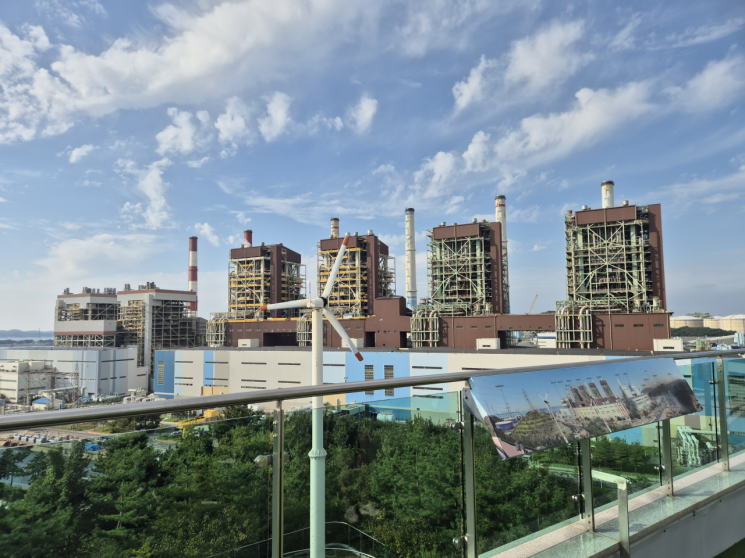
Located off the coast of Boryeong, the Boryeong Power Plant Headquarters of Korea Midland Power has long stood as a symbol of coal-fired power, supporting South Korea's industrialization for decades. However, this site is now preparing for a new transformation in response to the era's demands for "coal phase-out" and "carbon neutrality."
When visited on September 30, the Boryeong Power Plant Headquarters was a site in transition, preparing for the "post-coal" era. Built in the 1980s to meet the rapidly increasing demand for electricity, it was the nation's first large-scale bituminous coal-fired power plant. By supplying affordable coal-based baseload power, it played a key role in supporting the growth of the heavy and chemical industries. Notably, Unit 3 became the country's first standardized coal-fired power plant, driving the localization of equipment and marking the starting point for technological self-reliance in power generation.
However, amid the climate crisis and the push for carbon neutrality, the era of coal is coming to an end. Units 1 and 2 were shut down early in 2020, and Units 5 and 6 will cease operations in 2026 and 2028, respectively. Units 3, 4, 7, and 8 are also scheduled for phased decommissioning by 2038.
Lee Youngjo, President of Korea Midland Power, marking his first anniversary in office, stated during a press conference with reporters, "For the past 40 years, the Boryeong Power Plant Headquarters has been a pillar of Korea's industrial development. Now, we will transform it into a hub for eco-friendly energy in line with the era of major energy transition."
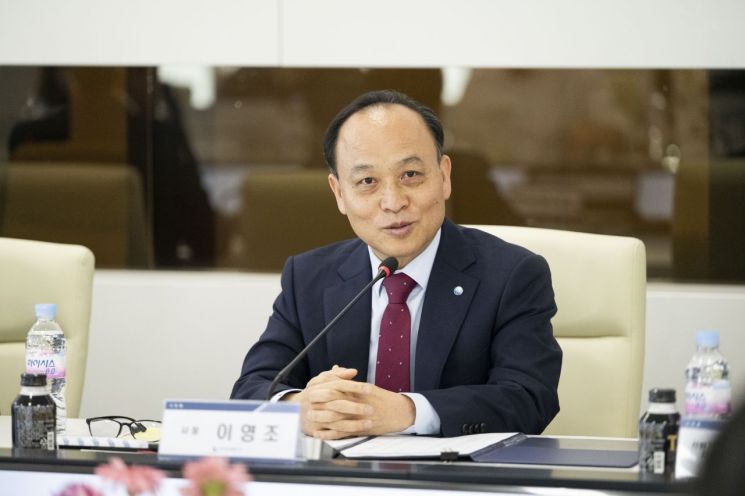
Regarding discussions on restructuring the power industry, he said, "The Korean power industry has undergone major changes every 20 years. Even when the power generation companies were separated in 2001, it took a year and a half of preparation just to divide them into five entities. Now, with each company having different systems for personnel, salaries, performance bonuses, and organizational culture, if integration is pursued, it will require even more time." He added, "While I agree with the government's policy direction, it is important to ensure sufficient consultation with stakeholders such as labor unions and local governments, rather than rushing to a conclusion."
The Shin-Boryeong Power Plant Headquarters also serves as Korea Midland Power's model for "next-generation thermal power." Built with a total capacity of 2,000MW, Shin-Boryeong is the nation's first power plant to localize 1,000MW-class ultra-supercritical (USC) technology. Equipped with state-of-the-art environmental facilities, it has recently introduced an AI-based fault prediction system on a trial basis to improve operational efficiency.
While the Boryeong Headquarters is preparing for a transition from coal facilities to hydrogen and renewables, Shin-Boryeong is a stage for maximizing the efficiency of existing thermal power and testing next-generation equipment and technologies. Although the two power plants have different characteristics, they share a common significance as "bridges in the era of energy transition."
President Lee also presented his management philosophy alongside the changes on site. He stated, "Through our three core principles-shared happiness, innovative challenge, and value creation-we will strive to become a public enterprise that meets the expectations of the people."
From coal to renewables, and now to AI and hydrogen technologies, the scenes at Boryeong and Shin-Boryeong power plants vividly encapsulate the monumental transformation facing Korea's power industry.
© The Asia Business Daily(www.asiae.co.kr). All rights reserved.


















