Greek Police Arrest Abbot On Site
After Posing as Artifact Dealers
In Greece, a monastery abbot has been arrested for attempting to traffic religious artifacts, causing widespread shock.
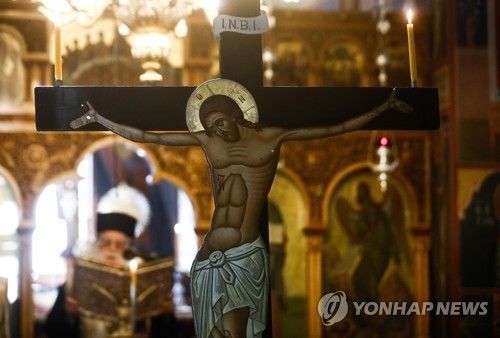
On September 29 (local time), the French daily Le Monde reported that Greek police had arrested the abbot in his 60s from the Mega Spilaion Monastery, located in the village of Kalavryta on the Peloponnese Peninsula, earlier this month. This monastery is one of the oldest in Greece and attracts many tourists and pilgrims who come to see its unique structure built atop a cliff.
The incident came to light when police from the Department for the Protection of Cultural Heritage and Antiquities in Greece received intelligence that a clergyman was selling stolen religious artifacts. Posing as artifact dealers, the police made several attempts to contact the abbot and finally met him in person earlier this month.
The abbot and his assistant showed the undercover officers 14 Byzantine-era icons and two gospels produced in 1737 and 1761, demanding 200,000 euros (approximately 330 million won) before being arrested on the spot.
Police investigations revealed that the artifacts the abbot tried to sell did not belong to the monastery and were not listed in the diocese's inventory. The abbot claimed that the items were from his personal collection and that he had simply forgotten to report them to the authorities. However, police found his statement unconvincing and are currently verifying the origin of the artifacts.
The monks of this monastery have a history of playing a significant role in the Greek War of Independence (1821-1829) against the Ottoman Empire by participating in the resistance movement. For this reason, news of the abbot’s arrest has caused great shock in the local community and the diocese. The diocese immediately dismissed the abbot and reportedly replaced the entire monastery management team.
According to data released by the Greek Ministry of Education and Religious Affairs earlier this year, there were about 4,000 cases of artifact theft or property damage nationwide between 2015 and 2023. Greece has approximately 9,830 churches and monasteries, most of which are open to the public and located in remote areas, making them vulnerable to artifact traffickers who take advantage of lax surveillance.
© The Asia Business Daily(www.asiae.co.kr). All rights reserved.

















