Only 17% of Over 18,000 Dementia Patients Required to Undergo Driver’s License Aptitude Review Submitted Medical Certificates, Says Assemblywoman Seo Myungok
It has been found that about 6 out of every 100 dementia patients are maintaining their driver's licenses through periodic aptitude assessments-a process in which driving ability is evaluated even after a dementia diagnosis to determine whether the license should be retained.
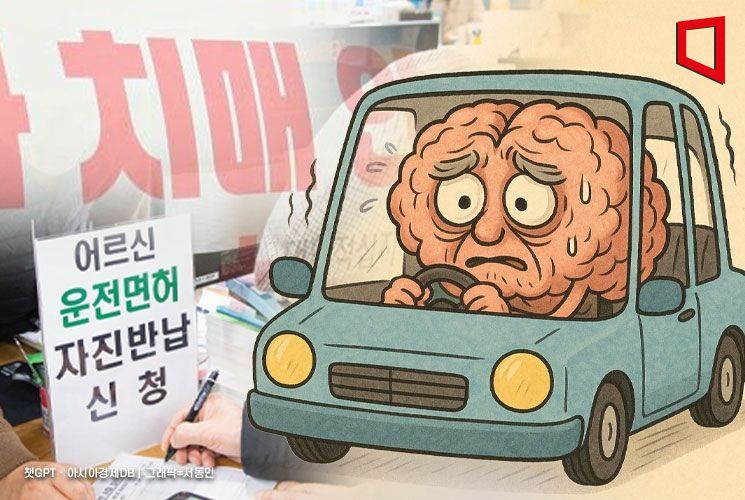
According to data received from the Korea Road Traffic Authority by Assemblywoman Seo Myungok of the People Power Party, who is a member of the National Assembly’s Health and Welfare Committee, only 4.7% (58 people) out of 1,235 individuals who underwent review by the Driver’s License Aptitude Assessment Committee due to a dementia diagnosis last year were deemed unfit to drive.
The remaining 63.1% (779 people) were judged as “fit to drive,” and 32.2% (398 people) received a “deferred” decision, effectively allowing them to keep their licenses. For those who received a deferred decision, the license is maintained but a re-examination is required after one year. In other words, more than 95% of dementia patients who underwent the assessment continued to hold their licenses.
In 2022, 95.1% (868 people) of the 913 dementia patients who underwent the assessment retained their licenses, and in 2023, 93.5% (1,286 people) out of 1,376 did so as well.
The Korea Road Traffic Authority conducts periodic aptitude assessments for patients who submit a medical certificate, convening the Driver’s License Aptitude Assessment Committee for this purpose.
Last year, a total of 18,568 dementia patients were classified as candidates for the driver’s license aptitude assessment. Of these, only 16.7% (1,235 people) submitted a medical certificate and underwent the assessment, while 43.1% (8,006 people) did not participate and had their licenses automatically revoked, and 26.9% (4,988 people) had their licenses canceled due to death or other reasons. The decisions for the remaining 23.3% (4,339 people) were put on hold. As a result, approximately 6.3% of dementia patients last year-1,177 individuals-were able to maintain their licenses.
Under the current Road Traffic Act, dementia is grounds for disqualification from holding a driver’s license. If a dementia patient receives a long-term care grade or is hospitalized for more than six months, the National Health Insurance Service notifies the National Police Agency, which then designates them as a candidate for the driver’s license aptitude assessment. If the individual does not respond to the first notification, a second opportunity is provided, and if there is no response after that, the license is revoked one month later.
Upon submission of a medical certificate, the Korea Road Traffic Authority’s Driver’s License Aptitude Assessment Committee conducts the periodic assessment. Based on the medical certificate, a self-reported illness statement, and interview content, if a majority of the seven committee members agree, driving is permitted. Those who receive a deferred decision must undergo a re-examination after one year.
Assemblywoman Seo Myungok emphasized, “As South Korea enters a super-aged society, it is essential to thoroughly manage driver’s licenses for dementia patients,” adding, “Experts from the medical field, the Ministry of Health and Welfare, and other relevant agencies must work together to discuss improvement measures.”
© The Asia Business Daily(www.asiae.co.kr). All rights reserved.

















