U.S. LNG Projects Progressing in Succession
One-Year Extension of U.S. Foreign Vessel Import Grace Period Seen as Positive Factor
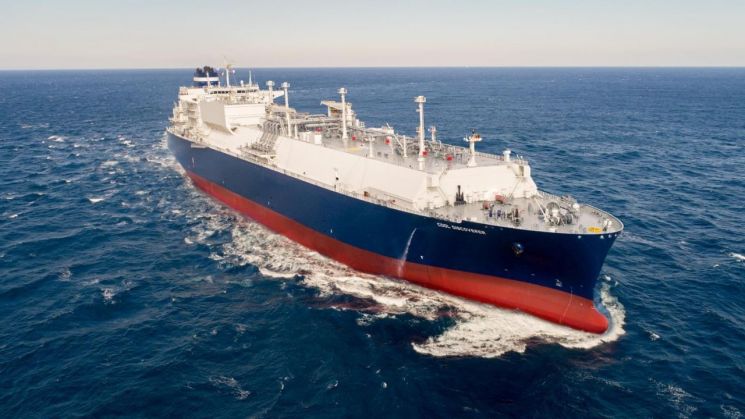
As geopolitical risks in the Middle East increase and demand for U.S.-produced LNG rises due to tariff pressures from the Trump administration, a series of LNG projects are being launched in the United States. Naturally, orders for LNG carriers from Korean shipyards are expected to increase.
In addition, the grace period for foreign-built vessels under the SHIPS For America Act, which was proposed by the U.S. Congress to encourage domestic shipbuilding, has been extended from 2029 to 2030. On September 29, SK Securities reviewed the current status of ship orders in the United States in its report, "Full-Scale Orders for North American LNG Carriers and Expectations for SHIPS Act Approval."
Continuous Orders for LNG Carriers Expected
Sempra, a U.S. energy infrastructure company, has made a final investment decision for the second phase of its Port Arthur facility. This is expected to generate demand for more than 20 LNG carriers required to transport 13 million tons of U.S.-produced LNG annually. In addition, Woodside Energy is reportedly in discussions with Korean shipyards-excluding Chinese yards-to place orders for a minimum of 16 and up to 20 LNG carriers needed for its Louisiana LNG project.
Furthermore, Greek shipping company GasLog is preparing to finalize a second LNG carrier order with Hanwha Ocean. This vessel is an option from the first LNG carrier order secured by Hanwha Ocean on September 4 and is scheduled for delivery in 2028.

Benefits Expected from U.S. Shipbuilding Legislation
On September 23 (local time), five U.S. labor unions, including the United Steelworkers, issued a joint statement supporting the SHIPS For America Act, which was jointly reintroduced by both the Democratic and Republican parties in April, and called for its swift passage. If this legislation passes, Korean shipyards are expected to benefit from orders for the Strategic Sealift Fleet (SCF).
The SHIPS For America Act aims to expand the number of U.S.-flagged vessels used for international transport from the current 96 to up to 250, out of a total of 188 U.S.-flagged ships. One notable change is the extension of the period during which foreign-built ships can be incorporated into the Strategic Sealift Fleet, from fiscal year 2029 to 2030. In addition, if the U.S. Transportation Command (TRANSCOM) under the Department of Defense confirms a shortage of tankers, the Maritime Administration (MARAD) is required to prioritize the incorporation of tanker vessels. From 2031 onward, all shipbuilding tax benefits and incentives will be granted only to "U.S.-built" vessels.
Han Seunghan, an analyst at SK Securities, stated, "Full-scale orders for North American LNG carriers have begun," and maintained an "overweight" view on the shipbuilding sector, adding, "If shipbuilding and naval-related bills such as the SHIPS For America Act and the Ensuring Naval Readiness Act-which would allow U.S. Navy shipbuilding to take place overseas-are approved in the future, further multiple expansion can be expected."
© The Asia Business Daily(www.asiae.co.kr). All rights reserved.


















